

Few consumer packaged goods (CPG) have transcended the commodity threshold to become a global cultural touchstone quite like Nutella. Engineered out of extreme post-war rationing in Italy, the product was never intended to be a global status symbol; it was a cheap culinary stopgap. Today, the parent company, Ferrero Group—which also commands iconic confectionery lines like Ferrero Rocher, Kinder, and Tic Tac—reports consolidated annual turnover exceeding €14 billion to €19.3 billion, operating more than 30 production facilities worldwide with over 41,000 employees. Nutella alone generates an estimated $3 billion annually, accounting for roughly 20% of the group’s total revenue.
| Metric / Dimension | Strategic Figure / Status | Business Impact |
|---|---|---|
| Annual Production | ~365,000 tons (~1 jar per US citizen eq.) | Global market ubiquity; jar footprint circles Earth >1x |
| Global Reach | 160+ countries | Category-defining morning staple across 5 continents |
| Hazelnut Absorption | 17% to 25% of total global supply | Direct price-maker power; massive procurement moat |
| Corporate Structure | Privately owned, multi-generational family firm | Zero quarterly Wall Street pressure; ultra-long capital cycles |
| Brand Equity | Proven price inelasticity and consumer cult status | In-store consumer hysteria and price wars (e.g., Intermarché riots) |
This case study deconstructs the quietly brilliant market strategy of Nutella across five core operational and commercial disciplines: origin and reformulation, distinctive brand assets and ergonomic design, supply chain monopolization and agricultural geopolitics, emotional positioning versus health pushback, and the long-horizon governance of a multi-generational private empire. In an industry often distracted by ephemeral digital tactics, analyzing Nutella provides timeless lessons for founders exploring modern Advertising & Strategy and foundational Case Study playbooks.
The Genesis: Turning Crisis into a Category Moat
Every dominant corporate strategy begins by addressing friction. Nutella’s narrative began not in a modern consumer lab, but in the devastation of post–World War II Italy.
The 1946 Post-War Cocoa Deficit
In 1946, Europe’s industrial infrastructure and trade lines were shattered. Cocoa was strictly rationed, heavily taxed, and prohibitively expensive for working-class households. In Alba, a town nestled in the Piedmont region of Northern Italy, pastry maker Pietro Ferrero faced an existential business constraint: his customers craved the luxury and sweetness of chocolate, but raw cocoa was commercially unviable.
Rather than shutter his enterprise or dilute his margins, Pietro analyzed local resource availability. Piedmont was flush with local hazelnut groves, a plentiful and cheap regional crop. Pietro formulated an ingenious blend: roasted hazelnut paste combined with a trace amount of scarce cocoa, vegetable oil, and sugar. He titled this creation Pasta Gianduja.
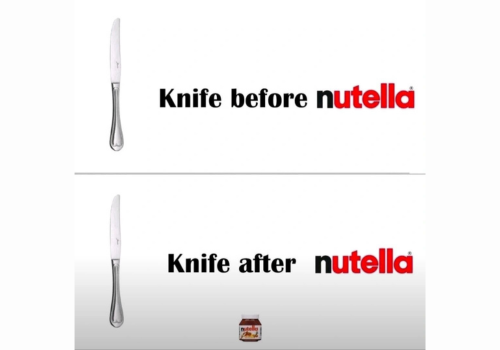
Crucially, this early prototype was not a creamy spread. It was manufactured as a solid loaf wrapped in foil, engineered to be cut with a knife and laid between slices of rustic bread. The product composition was roughly 70% hazelnut and under 20% cocoa—stretching a costly raw commodity with an abundant regional nut. It offered working-class families an accessible, sweet treat during an era of extreme scarcity.
The Formulation Evolution: From Super Crema to Nutella
Pietro Ferrero died suddenly in 1949, leaving his 24-year-old son, Michele Ferrero, to direct the enterprise. Lacking an executive pedigree, Michele operated on an innate commercial insight: convenience, texture, and everyday accessibility drive consumption velocity far faster than confectionery tradition.
[1946: Pasta Gianduja]        --> Solid loaf sliced with a knife; foil-wrapped
       ↓
[1951: Super Crema Gianduja]  --> Creamier, oil-stabilized spread sold in bulk jars
       ↓
[1964: Nutella Rebrand]       --> Regulatory alignment + international phonetic genius
Michele observed that cutting solid slices of Pasta Gianduja onto bread caused friction for parents and children alike. In 1951, he altered the lipid and oil emulsion, creating Super Crema Gianduja—a shelf-stable, soft, spreadable paste sold by weight in counter-top glass containers.

By the early 1960s, European food regulation began restricting exaggerated prefixes like “Super” in food product marketing. Michele seized this regulatory constraint as an international scaling opportunity. In 1964, he renamed the product Nutella.
The moniker was a calculated linguistic triumph:
YouTube
- “Nut”: Immediately grounded the product in its core ingredient for English and European markets. YouTube
- “-ella”: An Italian diminutive suffix conveying affection, warmth, and sweetness. YouTube
The name rolled off the tongue in Paris, London, Frankfurt, and Rome alike. Michele did not merely rename a product; he coined an entirely new grocery category.
Distinctive Brand Assets & Ergonomic Positioning
In contemporary marketing literature, sustainable brand growth relies on creating and defending Distinctive Brand Assets (DBAs)—sensory cues that make a product instantly recognizable in cluttered environments without requiring consumer cognitive processing. Nutella is an operational masterclass in DBA architecture.
The Unmistakable Silhouette: Ergonomics as a Brand Shield
A central reason Nutella commands grocery aisles is its bespoke jar geometry. Most mass-market spreads, peanut butters, and jams default to generic, straight-sided cylindrical glass jars. Ferrero engineered an idiosyncratic oval-waisted container topped with a flat, bright-white cap.
- The Blind Recognition Test: The physical silhouette is so deeply etched into consumer memory that consumers can spot a jar on a pantry shelf turned backward or angled inside a television scene without ever seeing the label. The visual outline alone triggers immediate recall.
- Tactile Ergonomics: The container is specifically engineered to rest comfortably in smaller hands. By tapering the waistline of the jar, Ferrero solved a basic human interface problem: parents and children can easily secure their grip on large, family-sized containers without the jar slipping.
- The Wide-Mouth Aperture: The opening accommodates broad butter knives and spoons, reducing the friction of scraping down the corners. As any product strategist knows, reducing physical friction increases daily product usage.
The Power of Frictionless Utility
Consumers do not adopt products simply for their messaging; they adopt products that eliminate minor daily annoyances. Product adoption requires immediate usability:
+-------------------------------------------------------------------------------+
|                      THE FRICTIONLESS CONSUMER CONTINUUM                      |
+-------------------------------------------------------------------------------+
|  Sprouting Lids       --> Solves the hassle of seed drainage by integrating   |
|                           stabilizing legs and fine mesh into standard jars.  |
|                                                                               |
|  Gorilla Mounting Tape--> Eliminates packaging frustration via "pinch and     |
|                           stretch" instructions directly on the roll.         |
|                                                                               |
|  Nutella Spread       --> Delivers instant, ultra-smooth spreading at room    |
|                           temperature without tearing fragile morning toast.  |
+-------------------------------------------------------------------------------+
Nutella’s entire recipe matrix—relying heavily on palm oil fractions—was protected precisely to guarantee that consumers could smoothly drag a knife across soft morning toast, pancakes, or fruit straight out of the pantry without shredding the surface. Ferrero turned physical ease-of-use into an irreplaceable morning habit. Marketers evaluating how physical design influences retention can draw direct parallels to the foundational UX principles covered across All Marketing Updates.
Supply Chain Domination: The Hazelnut Monopsony
Most food manufacturers function as price-takers on open commodity markets. Ferrero flipped this paradigm upside down, transforming its procurement wing into an agricultural juggernaut.
┌─────────────────────────────────────────────────────────────┐
│             GLOBAL HAZELNUT PRODUCTION BASE                 │
│         Black Sea Coast of Turkey (Giresun, Ordu, Samsun)   │
│             ~70% - 80% of Entire Global Crop Yield          │
└──────────────────────────────┬──────────────────────────────┘
                               │
                               ▼
┌─────────────────────────────────────────────────────────────┐
│                 FERRERO GROUP PROCUREMENT                   │
│             Absorbs 17% to 25% of Global Supply             │
│                 ~50 Hazelnuts per 400g Jar                  │
└──────────────────────────────┬──────────────────────────────┘
                               │
                 Strategic Shift Post-2014 Frost
                               │
                               ▼
┌─────────────────────────────────────────────────────────────┐
│           GLOBAL HEDGING & COUNTER-SEASONAL ORCHARDS        │
│          Chile • South Africa • Georgia • Australia • US    │
└─────────────────────────────────────────────────────────────┘
The 25% Market Squeeze
Every single year, Ferrero procures between 17% and 25% of the planet’s total hazelnut harvest. Each standard 400g jar of Nutella contains approximately 50 individual hazelnuts. When a single commercial buyer commands a quarter of an entire global agricultural sector, it ceases to be an ordinary market participant; it becomes an effective monopsony capable of dictating global baseline pricing.
The vast majority of the world’s hazelnuts originate in Turkey, along the steep, rainy mountain slopes flanking the Black Sea (provinces such as Ordu, Samsun, and Giresun). By locking up long-term agricultural arrangements across these regions starting in the 1950s, Ferrero insulated itself from retail cocoa price volatility. When global cocoa prices spike to historic highs, Nutella’s bottom line remains shielded because cocoa represents a modest fraction of its overall raw-material volume compared to hazelnuts and sugar.
The 2014 Crisis and Hemispheric Diversification
In early 2014, disaster struck the Black Sea agricultural corridor. A severe, unseasonal late freeze devastated the flowering hazelnut groves. Almost overnight, global hazelnut prices rocketed upward by 60%.
For a product reliant on thousands of metric tons of hazelnuts every month, an unchecked regional weather event represented an existential risk. Michele and Giovanni Ferrero responded by treating global agriculture like an investment portfolio:
- Hemispheric Hedging: Ferrero acquired massive agricultural acreages in the Southern Hemisphere, funding and planting dense hazelnut orchards in Chile, South Africa, and Australia. Because harvest calendars in the Southern Hemisphere run inverted to the Black Sea cycle, Ferrero established year-round fresh supply flows.
- Eurasian and North American Spreads: The company expanded processing hubs and farm networks across the Republic of Georgia and partnered with family hazelnut operations in Oregon’s Willamette Valley.
This capital deployment acted as structural insurance. By decentralizing its supply footprint across both hemispheres, Ferrero ensured that a freak frost in any single country would never again paralyze global Nutella production.
Operational Controversies and Strategic Crisis Response
Nutella’s global growth has encountered severe reputational and regulatory hurdles. How a brand responds to controversy often defines its strategic longevity far more than its standard PR messaging.
The Palm Oil Paradox & The French “Nutella Tax”
Palm oil is the technical linchpin of Nutella’s physical texture. Unlike cocoa butter or alternative vegetable oils, refined palm oil remains naturally semi-solid and velvety at room temperature without requiring industrial hydrogenation (which generates trans fats). It yields zero competing scent or flavor, allowing the roasted hazelnut aroma to lead.
However, palm oil extraction has historically served as a prime catalyst for catastrophic deforestation and biodiversity loss across Southeast Asia. In 2016, French lawmakers proposed a steep 300% tax hike on palm oil products, dubbed in the press as the “Nutella Tax”. Concurrently, a 2017 study by the European Food Safety Authority (EFSA) raised alarms regarding processing contaminants created when palm oils are refined at sustained high temperatures.
┌─────────────────────────────────────────────────────────────┐
│                 CRISIS: PALM OIL SCRUTINY                   │
│         Deforestation, French Tax Hike, EFSA Reports        │
└──────────────────────────────┬──────────────────────────────┘
                               │
               THE CONVENTIONAL CORPORATE PLAYBOOK:
            Reformulate quietly, swap ingredients, pander
                               │
                               ▼
┌─────────────────────────────────────────────────────────────┐
│                THE FERRERO COUNTER-STRATEGY                 │
│                                                             │
│  1. Uncompromising Recipe Defense: Stood firm on taste,     │
│     texture, and mouthfeel consistency.                     │
│  2. Controlled Refining: Kept temperatures strictly below   │
│     EFSA danger thresholds.                                 │
│  3. Supply Chain Ringfencing: Mandated 100% RSPO-certified  │
│     sustainable, fully traceable oil.                       │
│  4. Legal & Political Lobbying: Fought the French tax until │
│     the amendment was ultimately struck down.               │
└─────────────────────────────────────────────────────────────┘
By refusing to alter its century-old flavor profile with second-rate substitutes, Ferrero protected its primary customer value proposition: uninterrupted sensory consistency.
The Turkish Agricultural Labor Challenge
A darker systemic vulnerability stems from manual harvesting conditions in Turkey. Hazelnut harvesting is grueling manual labor, carried out on steep mountain terraces by seasonal migrant labor forces. Human rights investigations, including multiple BBC exposés, repeatedly revealed that children under 18 were working these mountain farms in hazardous conditions.
To safeguard its social license to operate, Ferrero allied with the International Labor Organization (ILO) beginning in 2013. The company invested heavily in tracking programs across Turkish provinces (such as Ordu and Giresun), directly subsidizing regional schooling initiatives, mobile education centers, and seasonal care camps designed to keep migrant children out of the fields during peak harvest windows. While labor monitors note that systemic supply chain remediation remains an ongoing process, Ferrero’s proactive intervention prevented major consumer boycott campaigns from gaining institutional momentum.
The 57% Sugar Conundrum: Breakfast Staple vs. Confectionery Treat
Nutella is approximately 57% refined sugar by volume. For decades, Ferrero leaned into advertisements showing children cheerfully eating Nutella on toast alongside glasses of milk and fresh fruit, softly positioning the product as part of a balanced, nutritious breakfast.
When global health agencies and national regulators pushed back—most notably in Australia, where public health frameworks handed Nutella bottom-tier health star ratings—Ferrero pivoted its narrative. Instead of defending nutritional parity with eggs or oatmeal, Ferrero subtly adjusted its emotional framing:
- Nutella ceased claiming functional nutritional superiority.
- It leaned deliberately into the psychology of the mindful indulgence: an uplifting morning ritual to be savored in moderation.
- By occupying the high ground of family joy, warmth, and nostalgia, Nutella avoided the commercial penalty box of “junk food” without needing to alter its beloved, sugary formula.
The Consumer Cult: Price Inelasticity & The Intermarché Case
The real litmus test of brand strategy is price elasticity. When a company slashes or hikes prices, does the consumer base react rationally, or does it cross the threshold into irrational devotion?
+-------------------------------------------------------------------------------+
|                       THE INTERMARCHÉ EXPERIMENT (2018)                       |
+-------------------------------------------------------------------------------+
|  Promotion: French retail giant Intermarché unilaterally slashes Nutella      |
|             from €4.70 down to €1.41 (70% discount).                          |
|                                                                               |
|  Outcome:   - Supermarket aisles descend into physical brawls and chaos.      |
|             - Police mobilized across France to restore civil order.          |
|             - French Finance Minister forced to intervene on loss-leader laws.|
|                                                                               |
|  Takeaway:  Nobody brawls over discounted generic store-brand hazelnut paste. |
|             Consumers riot over Nutella.                                      |
+-------------------------------------------------------------------------------+
In January 2018, French supermarket chain Intermarché ran an unsanctioned, aggressive promotional stunt, cutting the retail price of a 950g jar of Nutella by 70%—from €4.70 to just €1.41.
Within minutes of store doors opening, retail outlets across France were engulfed in chaos. Shoppers shoved, tackled each other, and traded blows over armfuls of jars. Eyewitnesses described the aisles as resembling an unhinged frenzy; shoppers exited with black eyes and bloody hands, prompting emergency calls to French law enforcement. The promotion caused such severe civil disorder that the French government’s Directorate General for Competition, Consumer Affairs and Fraud Control stepped in, and the Minister of Economy and Finance opened an investigation into predatory loss-leader discounting.
Critically, Ferrero had not sanctioned the discount. The company immediately issued statements distancing its brand from the chaotic price-slashing.
The lesson is stark: Commodities compete on price; icons command emotional obsession. Generic spreads go on clearance unnoticed, but an extreme price drop on Nutella triggers run-on-the-bank consumer behavior. Ferrero has spent over six decades cultivating that psychological equity. Exploring high-impact campaigns in our Advertising & Strategy section reveals why emotional anchoring beats pricing gimmicks every single time.
The Long Game: Generational Governance and Future Outlook
Nutella’s strategic consistency is anchored in its corporate ownership structure: Ferrero Group is privately held and family controlled.
Insulated from the “Quarterly Capitalism” Trap
Publicly traded food conglomerates face constant pressure to hit short-term EPS targets, driving them to cut costs, reformulate products with cheaper alternatives, and chase every fleeting diet trend. Ferrero operates entirely outside this dynamic.
The company is run by Giovanni Ferrero, son of Michele and grandson of Pietro. Under Giovanni’s stewardship, the family has deployed its immense Nutella-generated cash flow to execute patient, multi-decade capital allocations:
- Funding decade-long tree-maturation cycles for international hazelnut groves.
- Guarding proprietary industrial machinery built by in-house engineering units that external contractors are barred from ever viewing.
- Acquiring mature confectionary assets—including US heritage brands like Butterfinger, Baby Ruth, and the former Nestlé confectionery portfolio—without jeopardizing Nutella’s core brand equity.
The Innovation Horizon
As Ferrero looks toward the coming decades, it faces a market shaped by plant-based diets, severe climate fluctuations, and tighter ingredient scrutiny[cite: 1, 2]. In response, the group has begun trialing new formats, such as dedicated plant-based formulations for dairy-sensitive consumers, Nutella-filled bakery innovations, and portable single-serve formats designed to capture emerging on-the-go snacking habits[cite: 1, 2]. Readers interested in technological shifts in production and consumer research can check out the latest breakdowns in AI & Automation.
Throughout these shifts, the fundamental recipe and visual presentation of the core jar remain untouched, standing as an immutable monument to product consistency.
Strategic Playbook: 5 Core Takeaways for Modern Operators
Nutella’s journey from a wartime kitchen experiment to a $3 billion single-product franchise provides clear, actionable lessons for modern entrepreneurs, brand managers, and business strategists:
1. Transform External Constraints into Proprietary Moats
Pietro Ferrero did not lament the scarcity of expensive cocoa; he engineered an entirely new value proposition out of cheap, abundant hazelnuts. Friction is the ultimate catalyst for differentiated product design. When supply shocks, regulations, or market shifts threaten your standard operating model, look for local, underutilized resources to create a resilient product structure.
2. Design for Total Physical and Tactile Usability
A product’s packaging is not mere wrapping; it is a primary touchpoint and your first line of brand defense. Nutella’s waisted, hand-friendly jar and shelf-stable, easy-to-spread emulsion removed daily friction for breakfast tables globally. Make your offering effortless to adopt and simple to use. If your customer experience causes friction, you leave the door open for competitors.
3. Build Upstream Agricultural & Operational Moats
Ferrero’s operational dominance rests on controlling up to 25% of the global hazelnut crop. By securing supplier volumes, purchasing regional processors, and hedging risks across the Northern and Southern Hemispheres, the group transformed an agricultural input into a competitive fortress. Whenever feasible, secure your critical inputs to safeguard margins against raw-material shocks.
4. Compete on Core Emotions, Not Functional Utility
Nutella’s advertising campaigns rarely center on functional claims or nutritional metrics. Instead, they focus on family connection, morning comfort, and shared rituals. Competitors can easily match an ingredient list, but replicating six decades of warm breakfast memories is nearly impossible. Sell the emotion, and the product becomes a household staple.
5. Protect Your Core Identity Against Fleeting Trends
When competitors reformulated their lines to chase low-fat, low-carb, or hyper-trendy diets, Ferrero held firm on Nutella’s recipe and appearance. That relentless consistency cultivated deep consumer trust across generations. Great businesses are built over decades through disciplined patience, calculated supply management, and an uncompromising commitment to the core customer experience. For more detailed breakdowns of market-tested branding, explore our editorial library on All Marketing Updates.
Sources
- Source 1: Nutella: The Strategic Spread of a Global Food Giant — Comprehensive documentary breakdown of Ferrero Group’s economic metrics, post-war origins, global scale (365,000 tons annually across 160+ countries), and five strategic pillars of long-term branding.
- Source 2: The Business Behind Nutella: Post-War Rationing to Supermarket Brawls — In-depth analysis of supply chain monopolization (absorbing 17%–25% of the global hazelnut harvest), the 2014 frost crisis, Black Sea seasonal labor remediation, palm oil taxation battles, and the 2018 Intermarché retail riots.
- Source 3: Marketing Lessons: Nutella, Gorilla Tape, and Sprouting Lids — Strategic evaluation of ergonomics, distinctive packaging assets (DBAs), immediate tactile usability, and friction-free consumer problem solving.