

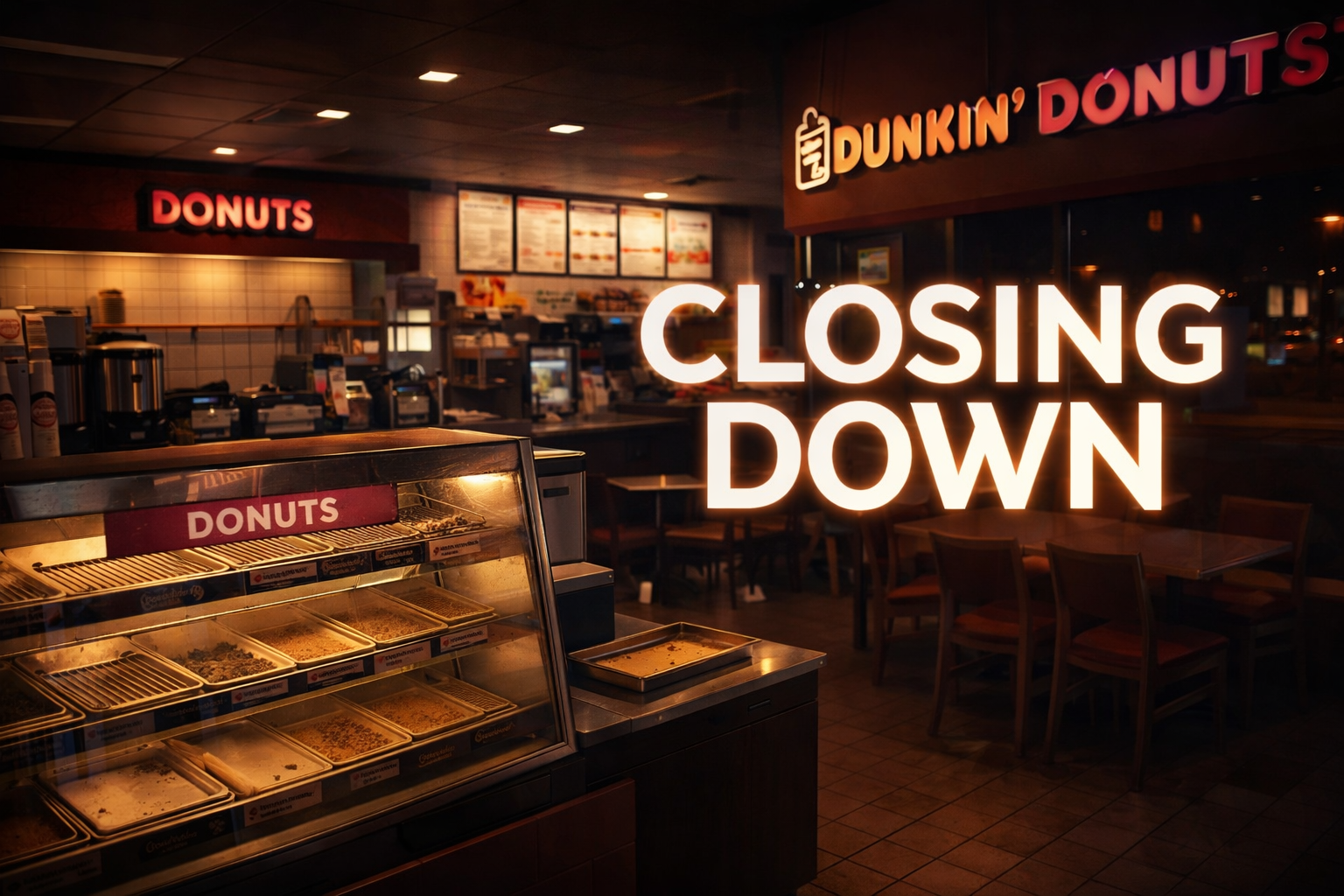
In February 2011, executives gathered at the Oberoi Hotel in New Delhi to unveil what was celebrated as the largest international franchising transaction in Dunkin’ Donuts’ corporate history. Nigel Travis, then global CEO of Dunkin’ Brands, took the stage alongside the senior leadership of Jubilant FoodWorks Limited—the master franchisee that had successfully transformed Domino’s Pizza into one of the most lucrative and culturally ubiquitous quick-service restaurant (QSR) chains in India.
The mood was ebullient. Jubilant’s co-chairman, Hari Bhartia, laid out an aggressive blueprint: Dunkin’ Donuts would scale to between 80 and 100 outlets within five years, setting the stage for a nationwide network of 500 restaurants across a 15-year master franchise agreement. The venture was designed to capitalize on India’s burgeoning urban middle class, swelling disposable incomes, and the modernization of consumer food preferences. By cutting the ribbon on its first flagship store at Connaught Place, New Delhi, in 2012, Dunkin’ even managed to beat its primary American coffee rival, Starbucks (partnering with the Tata Group), into the subcontinent.
Dunkin' India Footprint: Ambition vs. Reality

Planned Target (by 2026):     [ 500 Outlets                                      ]
Peak Footprint (2016–2017):    [ 77 Outlets ]
Rationalized Base (2018):      [ 37 Outlets ]
Terminal Network (2025–2026):  [ 21 Outlets ]
Fifteen years later, that ambitious vision ended in a quiet corporate retreat. By early 2026, Dunkin’s retail footprint in India had collapsed to just 21 stores, the vast majority operating at an unsustainable cash burn. In fiscal year 2025, after nearly a decade and a half of operational pivots, Dunkin’ generated a negligible ₹37.24 crore in revenue—contributing a mere 0.61% of Jubilant FoodWorks’ top-line revenue—while generating ₹19.12 crore in net losses. Faced with a portfolio brand that was actively destroying enterprise value while its primary Domino’s and Popeyes engines demanded capital, Jubilant declined to exercise its 10-year renewal option, setting the stage for a wind-down of the brand’s footprint.
Much like our analysis of institutional endurance in the Case Study: The Wagh Bakri Tea Group — Semiotics, Operational Transformation, and Strategic Dominance, consumer alignment is the bedrock of market survival. Dunkin’s trajectory in India serves as a cautionary corporate case study illustrating how an internationally revered QSR powerhouse can misdiagnose native consumer behavior, confuse market entry with sustainable product-market fit, and violate core branding and positioning principles explored across our Advertising & Strategy and Case Study archives.
The Architectural Roots: Industrial Convenience vs. Cultural Foodways
To unpack Dunkin’s structural disconnect with India, one must examine the operational DNA of its parent model. The brand was founded in 1948 by William Rosenberg in Quincy, Massachusetts. Operating amid the post-World War II industrial expansion, Rosenberg observed that shipyard and factory laborers had few fast, affordable options for morning sustenance. He served simple drip coffee and freshly fried donuts, discovering that these two high-margin items represented the vast bulk of his daily receipts. This realization prompted the birth of the Open Kettle restaurant, soon rebranded as Dunkin’ Donuts.
Over the following seven decades, Dunkin’ scaled to more than 12,600 locations across 46 countries, operating over 9,300 outlets in the United States alone. Its domestic success relied on a fundamental consumer paradigm: the grab-and-go morning routine. In the American ecosystem, breakfast is largely functional, individualistic, and compressed by commuting schedules. Time-poor professionals, laborers, and students patronize drive-thrus and retail counters to purchase high-caffeine beverages paired with portable, ready-to-eat baked goods to consume in transit or at their desks.
When Dunkin’ entered India in 2012, its leadership assumed that modernizing urban professionals in Delhi, Mumbai, and Bengaluru would mirror Western consumer behavior. The master franchisee opened large-format stores at 7:00 AM, bracing for early morning rush-hour lines.
           Morning Paradigm Clash
---------------------------------------------------------
US Fast-Food Paradigm      | Indian Cultural Reality
---------------------------|-----------------------------
Grab-and-Go transit habit  | Sit-down, domestic ritual
7:00 AM rush hour driver   | Deserted early morning retail
Sweet, carb-heavy pastry   | Warm, savory regional cuisine
Beverage + snack breakfast | Full, structured hot meal
---------------------------------------------------------
The expected morning rush never arrived. In India, breakfast is not a transaction; it is an ingrained culinary ritual. Across socio-economic classes and geographical territories, Indian breakfast is heavily skewed toward freshly prepared, warm, and savory foods:


- In Northern regions: stuffed parathas, poori bhaji, and poha.
- In Southern regions: idlis, vadas, and dosas accompanied by warm sambar and chutneys.
- In Western pockets: theplas, missal, and savory upma.
A cold or room-temperature sugary ring of fried dough did not register as a legitimate morning breakfast to Indian consumers. Furthermore, Indians rarely consume early morning meals out of home. Working professionals either ate breakfast cooked domestically before departing for the office or relied on hyper-local corporate cafeterias, roadside tea stalls, and neighborhood udupi joints.
Consequently, Dunkin’ stores stood empty during the morning hours—the precise daypart that generated the majority of cash flow across its Western store network. The brand’s primary engine was idle before the retail day had even begun.
Category Misclassification: The Indulgence Trap and High-Rent Overhead
Because donuts could not capture the breakfast daypart, Indian consumers organically reclassified the product into an entirely different category: an occasional, impulse luxury dessert.
In consumer psychology, product categorization dictates frequency of purchase, acceptable price thresholds, and purchase triggers. When an item is recognized as a daily breakfast staple, consumers demonstrate repeat purchase behavior five to six days a week. When a product is classified as a dessert or novelty indulgence, purchase frequency plummets to once a month, an erratic weekend treat, or an occasional children’s party celebration.
A donut represents an energy-dense, sweet indulgence loaded with fats, icings, and fillings. Amid a rapidly emerging public health conversation in urban India around metabolic wellness and calorie consumption, health-conscious consumers increasingly avoided sugary baked items for everyday dining. As explored in our deep-dive on Haldiram’s Global Expansion: The Leicester Square Case Study, entering new territories demands seamless integration with the everyday dining behavior of consumers rather than banking solely on occasional footfall.
  Frequency Problem: Staple vs. Dessert
  --------------------------------------
  Daily Breakfast Staple   ==> 20–25 visits/month (High CLV)
  Impulse Confectionery    ==> 1–2 visits/quarter (Low CLV)
  *Result*: Revenues failed to cover prime metro commercial rents.
Compounding this consumer perception problem was Jubilant’s real estate expansion strategy. Between 2012 and 2016, the franchise rapidly opened company-operated outlets across high-street commercial hubs, prime shopping malls, and premium metropolitan transit nodes. By 2016–2017, the store count hit its historical high-water mark of 77 units.
However, these were large-format, high-capex stores designed to offer an inviting dine-in atmosphere. In Tier-1 Indian metros, commercial real estate in high-street corridors commands exorbitant fixed rents and steep common-area maintenance charges. A retail model burdened with substantial square-footage costs requires high transaction volumes, healthy average order values (AOVs), and consistent footfall across the morning, afternoon, and evening dayparts.
Instead, Dunkin’ locations were saddled with:
- Dead floor space from 7:00 AM through 12:30 PM due to breakfast rejection. YouTube+ 1
- Low afternoon ticket sizes dominated by solitary students or curious patrons ordering a single donut or cold beverage. YouTube+ 1
- High kitchen and store footprint costs dedicated to specialized bakery displays and food prep zones that did not generate commensurate revenue per square foot. YouTube
The underlying unit economics were heavily underwater. Stores lacked the daily footfall volume necessary to amortize their prime leases, causing operating cash flows to run negative across the network.
The 2016–2018 Bloodletting: The Failure of Tactical Retraction
By early 2016, Jubilant FoodWorks realized that Dunkin’s unit economics could not support a 100-store target, let alone the long-term 500-store projection. The management team initiated a drastic operational restructuring.
Between 2016 and 2018, Jubilant permanently closed more than 50% of all Dunkin’ locations across India, abruptly cutting the store footprint down from 77 to 37. The brand completely pulled out of several non-metro and secondary markets to consolidate its geographic presence in Delhi-NCR and a handful of major metro nodes.
               Dunkin' India Store Rationalization (2012–2026)
  80 +--+-------------+
        |             * (Peak: 77 stores in 2016-17)
  60 +--+            / \
        |           /   \
  40 +--+          /     * (Mass closure to 37 stores by 2018)
        |         /       \
  20 +--*        /         \___________* (21 stores remaining in 2026)
        | (2012 entry)
   0 +--+-------------+-------------+-------------+-------------+
       2012          2016          2018          2022          2026
Simultaneously, the chain modified its store formats. Instead of signing expensive long-term leases for sprawling, full-service retail shops, Jubilant shifted toward compact layouts, express storefronts, and small food-court kiosks. This strategy reduced lease liabilities, slashed upfront capital expenditures per unit, and reduced on-site staffing requirements.
By June 2018, Jubilant publicly reported that these aggressive rationalization measures had halved operational losses for the Dunkin’ division. Yet this operational triage merely slowed the cash drain; it did not fix the top line. Reducing store square footage reduced fixed overhead, but it could not overcome consumer indifference toward the core product. Dunkin’s growth had hit an intractable ceiling.
The Brand Identity Crisis: Diluting the Core
Faced with consumer resistance to morning sweets, Dunkin’ embarked on a series of rapid, contradictory menu and brand pivots that alienated existing customers and confused prospective ones. Managing an evolving product portfolio requires surgical brand architecture—a theme detailed in our Strategic Case Study: The Institutional Transformation of Honasa Consumer Limited. In Dunkin’s case, each successive pivot further obscured the brand’s core purpose. Readers looking to explore broader industry positioning frameworks can also browse the AI & Automation section for emerging consumer research playbooks.
The Localization Pitfall: Saffron, Chickpeas, and the “Mithai” Trap
Dunkin’s initial instinct was to aggressively localize its core donut menu to cater to Indian palates. Product development teams rolled out mango-glazed donuts, lychee coladas, and seasonal festival items. The most high-profile experiment occurred around the Diwali festive season, when Dunkin’ unveiled savory and spiced donuts incorporating saffron, crushed chili, chickpeas, and kesar-badam infusions.
                       The Frame of Reference Trap

 [Desi Mithai (Traditional Sweets)]  <--- The Cognitive Bar
  - Deep emotional/cultural equity
  - Centuries-old recipes (pure ghee, mawa)
  - Accepted vehicle of festive exchange

               VS.

 [The "Diwali Donut"]
  - Seen as synthetic "glazed bread"
  - Failed parity with traditional sweets
  - Failed parity with celebratory cakes
This initiative backfired due to a classic marketing error: misjudging the consumer’s internal frame of reference. In cognitive marketing, a consumer evaluates a new offering against an established category anchor. By explicitly framing donuts as festive Indian gifts or alternatives to Diwali sweets, Dunkin’ forced a direct comparison between its fried dough and traditional desi mithai.
Centuries of culinary tradition establish authentic mithai—handcrafted using mawa, chhena, nuts, saffron, and pure desi ghee—as the socially acceptable medium for festive hospitality and gifting. A processed, western donut flavored with chickpeas and saffron felt synthetic, novel, and culturally hollow. At the same time, it lacked the celebratory grandeur and visual theatre of a layered European cake. Rather than elevating the donut, the comparison lowered its perceived value: consumers simply dismissed it as overly sweet, artificially flavored “glazed bread”.
The Burger Diversion: Abandoning Strategic Focus
Realizing that dessert adaptations were failing to drive lunch and dinner business, Dunkin’ undertook an even more radical repositioning: it added non-beef savory burgers, toasted subs, and spicy sandwiches to its menu.
To attract foot traffic during the afternoon and evening, Dunkin’ repositioned itself as an all-day casual dining restaurant. The brand introduced vegetarian and chicken burger ranges tailored to local spices, launching national marketing and television campaigns that heavily showcased burgers rather than coffee or confectionery.
       Dunkin's Positioning Paradox
  +------------------------------------+
  |      Global Brand Identity:        |
  |         "DUNKIN' DONUTS"           |
  +------------------------------------+
                   |
            Pivots to Menu:
                   |
                   v
  +------------------------------------+
  |       Heavy Burger Campaigns       |
  +------------------------------------+
                   |
            Consumer Dilemma:
                   |
                   v
  "Why buy burgers from a pastry shop
   when McDonald's & KFC are next door?"
While this menu pivot initially boosted store foot traffic, it ran counter to a foundational law of strategic brand management: focus.
- Brand Architecture Dissonance: The company was globally registered and marketed as Dunkin’ Donuts. Plastering hoardings with pictures of spicy burgers under a brand name explicitly advertising Donuts created deep cognitive friction. Consumers found the messaging confusing: Why would a customer seeking a savory lunch walk into an American pastry shop to buy a burger?
- Direct Competition with Entrenched Giants: By emphasizing burgers, Dunkin’ abandoned its differentiated specialty status and voluntarily entered the hyper-competitive Western QSR fast-food space. It found itself competing head-to-head with McDonald’s, Burger King, and KFC—chains that commanded multi-decade supply chain efficiencies, vast scale advantages, aggressive value menus, and clear, non-confused market positioning. Dunkin’s burgers were perceived as peripheral, overpriced, and non-specialized.
By attempting to be a breakfast café, an impulse donut counter, and an all-day savory burger joint simultaneously, Dunkin’ lost all distinctiveness. It stood for everything, and consequently stood for nothing.
The Late Beverage Pivot and Modern Coffee Landscape
In international markets—most notably in the US—Dunkin’ is fundamentally a beverage company. Hot and iced coffees, cold brews, and seasonal drinks consistently account for roughly 60% of Dunkin’s global sales. The donut, while culturally iconic, frequently serves as an impulse companion to a high-margin liquid purchase.
In India, however, Dunkin’ initially downplayed its beverage program, treating coffee as a secondary accessory to its food and dessert counter. This miscalculation ceded immense strategic ground.
                                The Coffee Chasm
+------------------------------------+     +------------------------------------+
|       Dunkin' India Platform       |     |   Specialty Café Entrants (Tata    |
|                                    |     |  Starbucks, Blue Tokai, Third Wave)|
+------------------------------------+     +------------------------------------+
| * Transactional counter pickup     |     | * Experiential "Third Place" lounge|
| * Perceived as fast-food bakery    |     | * Premium lifestyle status symbol  |
| * Footprint: Scaled down to 21     |     | * Footprint: Hundreds of locations |
+------------------------------------+     +------------------------------------+
Following the COVID-19 pandemic, the urban Indian beverage landscape experienced an unprecedented specialty coffee boom. Driven by remote work trends, digital café culture, and changing consumer preferences among younger demographics, coffee consumption exploded.
However, this growth took a distinct direction:
- Tata Starbucks expanded past 300 stores, cementing its position as an aspirational “third place” for professional meetings, social gatherings, and upwardly mobile leisure. YouTube
- Domestic third-wave specialty chains such as Third Wave Coffee and Blue Tokai secured substantial venture backing, each scaling beyond 100 outlets by educating consumers on artisanal roasts, single-origin pour-overs, and upscale, architecturally distinctive spaces. YouTube
- International players like Tim Hortons and a revitalized Costa Coffee moved aggressively to capture prime urban real estate. YouTube
In response, Dunkin’ attempted one final repositioning. The chain refreshed its branding, heavily truncated the “Donuts” moniker to mirror its global parent, redesigned its menus, and presented itself as a contemporary, “coffee-first” destination.
The move was too little, too late. In modern India, consumer expectations around coffee are sharply bifurcated:
- The Experiential Lounge: Consumers spend ₹250 to ₹400 on a specialty beverage because they are purchasing the ambiance, status, and comfortable seating of an elevated social space. YouTube
- The Hyper-Value Routine: Consumers access routine coffee through quick-service local kiosks or neighborhood options at accessible price points.
Dunkin’ was trapped awkwardly between these two models. It operated primarily as a fast-food counter service brand, but charged prices nearing premium café levels without providing the corresponding lounge amenities. Consumers refused to re-index Dunkin’ as a craft coffee brand. To the broader Indian public, Dunkin’ remained a bakery that sold sweet pastries—and not a particularly compelling one.
Sibling Contrast: Why Baskin-Robbins Conquered While Dunkin’ Collapsed
The most definitive proof that Dunkin’s failure was rooted in strategy rather than a structural Indian hostility toward foreign brands lies within its own corporate family.
Until their 2020 acquisition by Inspire Brands, Dunkin’ Donuts and Baskin-Robbins operated as sister concepts under the umbrella of Dunkin’ Brands Inc. Yet their trajectories in the Indian market diverged completely. Franchised in India by the Graviss Group, Baskin-Robbins systematically built a retail network exceeding 725 parlors across the country, establishing itself as the largest specialized ice cream retail chain in India.
| Strategic Vector | Dunkin’ India (Jubilant FoodWorks) | Baskin-Robbins India (Graviss Group) |
|---|---|---|
| Core Offering | Donuts, savory burgers, breakfast, and coffee | Premium ice cream, sundaes, and dessert tubs |
| Category Discipline | Continual identity pivots; added burgers and savory lunch meals | Strict adherence to core signature category; no menu dilution |
| Cultural Alignment | Clashed with savory breakfast and traditional mithai | Aligned directly with post-dinner dessert habits and social treats |
| Real Estate Model | High-capex, large-format dining spaces (retracted to kiosks late) | Compact, highly standardized parlors and mall kiosks |
| Final Network Size | Peaked at 77; collapsed to 21 stores before exit | Scaled to 725+ stores nationwide |
Market intelligence data highlights the structural tailwinds Baskin-Robbins capitalized on: India’s ice cream consumption has historically expanded at double-digit compound rates, with annual volumes surpassing 650 million liters. Crucially, ice cream fulfills a clear, established habit in Indian daily life: an after-dinner family treat, a celebratory outing, or a hot-weather indulgence.
Baskin-Robbins never confused its target demographic. It never introduced burgers, pizzas, or complex savory meals to juice afternoon footfall. It focused exclusively on high-margin ice cream flavors, cold treats, and branded take-home tubs. By keeping its physical stores compact, operational complexity low, and product positioning clear, Baskin-Robbins achieved national scale while Dunkin’ continually struggled to define its basic purpose.
Strategic Framework: The Straddle Positioning Breakdown
To understand Dunkin’s marketing collapse through formal corporate theory, one must look at Straddle Positioning.
Straddle positioning is an advanced marketing strategy where a brand attempts to position itself simultaneously in two distinct categories. To execute this successfully, the firm must balance two forces:
- Points of Parity (POPs): Attributes or benefits that are not unique to the brand, but are necessary to be viewed as a legitimate player within an established category.
- Points of Difference (PODs): Unique attributes, associations, or competitive advantages that clearly differentiate the brand from alternative choices.
                     The Failed Straddle Strategy

   Premium Specialty Cafés                       Fast-Food QSRs
   (Starbucks, CCD, Third Wave)                  (McDonald's, KFC, Burger King)
         \                                             /
          \                                           /
           \                                         /
            v                                       v
         Failed POPs:                            Failed POPs:
    * Lacked luxury ambiance               * Slower, non-specialized
    * Transactional counter setup            savory preparation
    * High price for poor seating          * Lacked scale-driven value
                            \             /
                             \           /
                              v         v
                         +-------------------+
                         |   DUNKIN' INDIA   |
                         |  (Identity Void)  |
                         +-------------------+
                                   |
                             Failed POD:
                   Donut perceived as novelty sweet,
                   not a staple breakfast food.
In theory, Dunkin’ had an opportunity to establish a powerful straddle position:
- It could establish Points of Parity with premium café lounges like Starbucks and Café Coffee Day by offering reliable, freshly brewed espresso beverages and clean, contemporary seating.
- It could establish Points of Difference through its proprietary bakery infrastructure, offering quick, affordable donuts and breakfast items that full-service cafés could not match in speed or price.
Instead, Dunkin’ inverted the framework and broke both sides of the equation:
- Failed Points of Parity: When consumers sought an upscale café experience, Dunkin’s transactional, fast-food-style counter layout and fluctuating interior themes failed to match the premium, lifestyle ambiance of dedicated coffee houses. When consumers wanted a fast, savory meal, Dunkin’s burger menu lacked the consistency, pricing value, and operational focus of McDonald’s or KFC.
- Inverted Points of Difference: The brand’s primary Point of Difference—its signature line of American donuts—was an item that most Indian consumers simply did not want to buy with any regular frequency.
Dunkin’ was caught in a strategic void: it was neither an aspirational, comfortable third place nor an efficient, focused fast-food operator.
The Financial Reckoning: Why Jubilant Walked Away
For Jubilant FoodWorks, walking away from Dunkin’ in 2026 was a measured capital-allocation decision.
Jubilant is India’s preeminent food-service operator, managing an empire of more than 2,000 Domino’s Pizza stores. The management team has repeatedly articulated a long-term goal to build a 5,000-store multi-brand food platform across India and high-growth international markets. Achieving that objective requires relentless capital discipline, operational efficiency, and supply chain synergy.
  Jubilant FoodWorks Brand Performance Divergence (FY25 Context)
  -------------------------------------------------------------
  Domino's Pizza  ==> Massive scale (2,000+ stores), highly profitable cash cow
  Popeyes         ==> High growth trajectory, aggressive expansion runway
  Dunkin' India   ==> 21 stores, ₹37.24 Cr revenue (0.61% of parent), ₹19.12 Cr net loss
By fiscal year 2025, Dunkin’ had become a persistent operational drag:
- Generating ₹37.24 crore in annual revenue meant that the entire chain accounted for just 0.61% of Jubilant’s consolidated corporate turnover.
- Generating ₹19.12 crore in net losses meant that the business consumed senior executive bandwidth, store-level management, and supply chain resources entirely out of proportion to its commercial value.
- Jubilant’s overall corporate stock had faced valuation headwinds and periods of multiple contraction over the preceding five-year window, heightening shareholder pressure to eliminate unprofitable subsidiaries and focus on core growth drivers.
With its promising rollout of Popeyes—a brand whose core offering (fried chicken) enjoys vast, proven, and growing demand across Indian consumer segments—Jubilant had far more compelling avenues to deploy growth capital. Waiting for the original 15-year master franchise agreement to conclude in 2026 allowed Jubilant to wind down operations cleanly without incurring early termination penalties, closing the chapter on an unprofitable experiment.
Strategic Takeaways for Operators and Expanding Brands
The demise of Dunkin’ in India offers vital lessons for founders, venture investors, and multinational retail executives expanding into developing consumer markets:
1. Demographics and Market Size Are Not Product Demand
It is easy to construct an intoxicating investment deck highlighting that India has over 1.4 billion residents, a rising middle class, and an underpenetrated chained QSR segment where organized chains make up only 3% of food service establishments (compared to over 50% in Western markets). However, macro demographics do not equal micro-market product-market fit. If your business model requires millions of consumers to fundamentally abandon ancient, culturally reinforced morning routines, the customer acquisition and market education costs will outpace lifetime value.
2. Never Confuse Initial Novelty With Sustainable Retention
Dunkin’s early surge to 77 stores was fueled by urban novelty and curiosity: cosmopolitan consumers wanted to try the famous American donut brand they had seen in Western media. But initial footfall is not a business model. Once the curiosity subsided, repeat transaction frequencies collapsed. A business must validate authentic, high-frequency retention metrics before deploying capital into nationwide real estate leases.
3. Protect Your Strategic Core
When a brand encounters headwinds in a new geography, its natural instinct is often to frantically modify the product lineup. Dunkin’ diluted its distinctiveness by chasing everything: morning coffee, festive Indian sweets, afternoon burgers, and fast-casual lunch combos. In doing so, it confused its customer base, eroded its global brand equity, and entered unwinnable battles against entrenched incumbents.
Great retail businesses scale through disciplined specialization. As Baskin-Robbins illustrated across India, dominating a single, well-defined consumer ritual with operational excellence is far more lucrative than continually morphing your brand identity to chase unaligned footfall.