

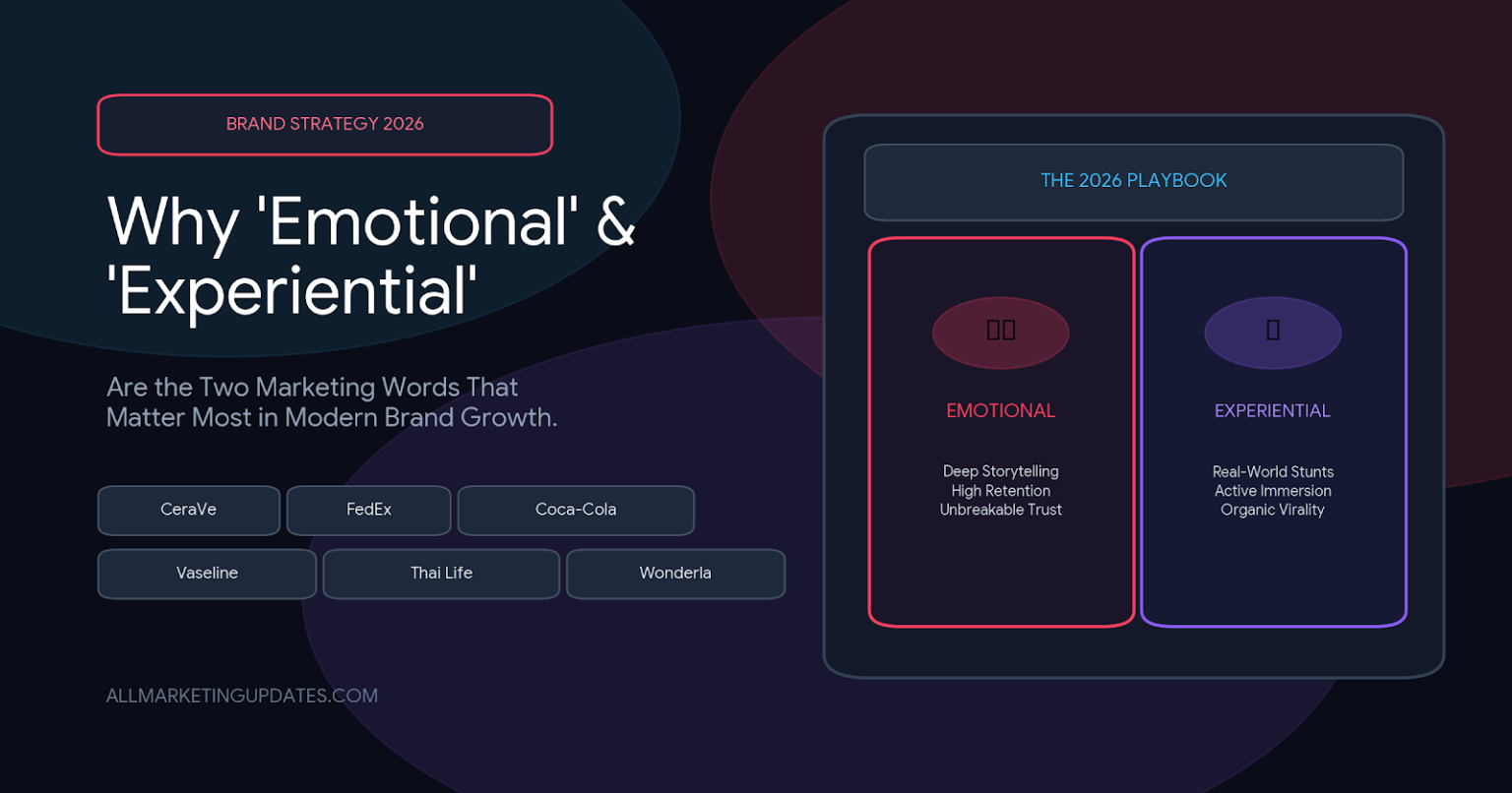
Walk through any advertising award shortlist — Cannes Lions, The One Show, Effies — and almost every 2025–26 winner is built on one of two ideas: emotional marketing (campaigns that move people before they sell) or experiential marketing (campaigns that make people do something the brand built).
They’re related but not identical:
- Emotional marketing is the strategy: a story, song, or moment designed to trigger a feeling — empathy, pride, tenderness, surprise — so the audience stops being a viewer and starts being a participant.
- Experiential marketing is the tactic: a physical, sensory, or interactive act — a stunt, an installation, a ritual — that turns a brand into a memory.
The 12 campaigns below sit across that spectrum. Some are 3-minute tearjerkers you can’t skip; some are quiet pop-ups that turn a plaza into a stage. What every one shares is the same reason it worked: one specific human feeling, treated with enough sincerity that the audience felt something real.
The Three Triggers That Make Emotional & Experiential Marketing Actually Work
Before the examples, three psychological principles the best campaigns in the world all live by — named explicitly in the source coverage this article draws on:
- Curiosity over persuasion. The CeraVe × Michael Cera campaign and the ice-block chocolate stunt both built the entire brand moment around an unanswered question. People didn’t watch an ad; they chased an explanation.
- Participation beats messaging. The Wonderla “Maja Meter” turned bystanders into screamers. CeraVe turned bystanders into Reddit detectives. The FedEx 2010 windows campaign turned a logistics diagram into something a five-year-old could read.
- Cultural fossils. Thai ads tap into family and sacrifice; Coca-Cola’s Basant campaign in Lahore taps into a spring festival; Alpenliebe taps into the Indian metaphor of meetha bolna (sweet speech). When the feeling already exists in the culture, the ad has to draw it out — it doesn’t have to invent it.
With those in place, here’s what each of the 12 source articles demonstrated.
The 12 Best Emotional & Experiential Marketing Case Studies
1. Swiss Chocolate Brand’s “Missing Piece” Bars — Absence as the Trigger
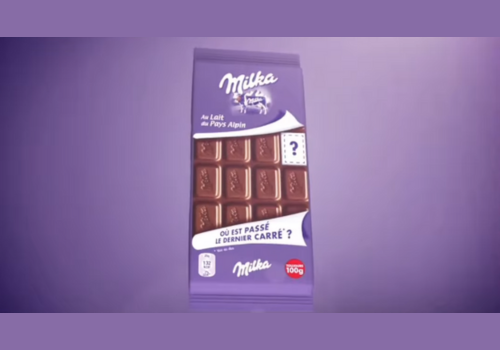
A Swiss chocolate maker (named in the source’s headline as having sold 5 million bars of the variant, with the audience metric coming from the headline stat itself) released chocolate bars with one square intentionally removed. Inside the wrapper was a note: keep the missing square for yourself, or send it to someone else with a personal message.
The campaign reframed chocolate from a personal indulgence into a shared gesture. No discount, no bundle, no QR code. The packaging itself was the medium. The lesson: in a saturated category, structural surprise beats promotional spend.
Note on the 5-million figure: The URL and headline for this article both name “5 million bars” as the marketing milestone. The body of the source page frames the result descriptively (participation, social sharing, packaging-as-narrative) without giving an in-text reproduction of the figure. We’ve kept the headline figure in the section title as the source names it; the in-text analysis describes the mechanic on its own terms.
2. Coca-Cola in Lahore — Turning Basant Into a City-Scale Brand Experience
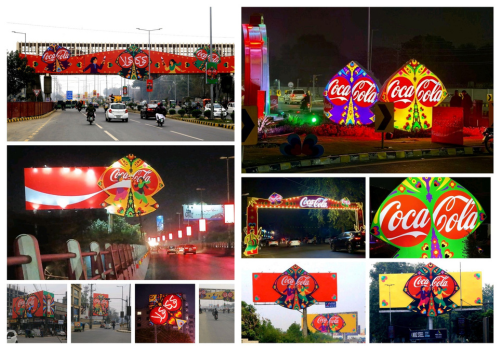
Coca-Cola didn’t run ads during Lahore’s Basant kite festival — it became part of the festival. Rooftop branding matched the city’s skyline; kite-themed Coca-Cola creations filled the sky; streets were painted in festival colors; local artists, musicians, and community groups were co-created with, not sponsored. The brand became a celebration partner, not a sponsor.
South Asian source coverage verified the campaign worked through city-wide visibility, organic word-of-mouth among festival-goers, and social amplification of user-generated content — without a major paid-media push around the moment.
Lesson: don’t interrupt culture; stage the moment inside it, and give the audience the photos.
3. Why Thai Ads Keep Making the World Cry — The “Sadvertising” Playbook
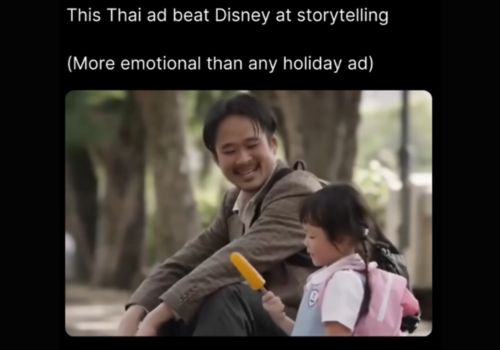
Thai advertising has spent nearly 15 years mastering what Philip Kotler calls “sadvertising.” The source article names two specific cases:
- Thai Life Insurance’s “Unsung Hero” film: crossed 100 million views and won global awards. Brand shows up only at the very end. Almost no product talk.
- MetLife’s EduCare savings plan across Asia: same playbook — anxiety about future education costs, but framed as parental sacrifice instead of a fear pitch.
The formula: long-form (3–5 min), emotional buildup, brand at the very end, no urgency or aggressive CTA. By the time the brand appears, the audience’s guard is already down.
Lesson: in 2026, when everyone is skipping, scrolling, and blocking ads, emotion is the only attention that isn’t sold.
4. FedEx’s 2010 “Passing Packages Through Windows” Campaign
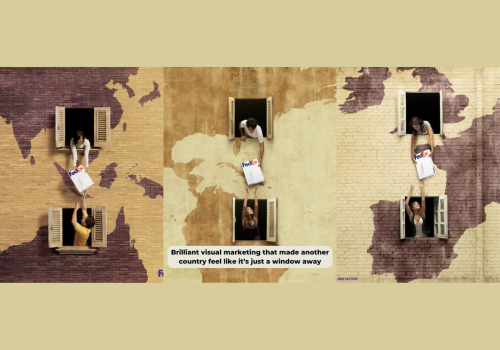
In 2010, FedEx ran a painted-window print campaign showing people leaning out of windows across countries — US, Brazil, London, Spain, China, Australia — handing FedEx packages to each other as if the next nation were just next door. No text, no aircraft, no warehouses.
It translated a complex global system into a simple visual metaphor: handing something to another person. The campaign is still referenced in marketing circles more than 15 years later because it shows how a big infrastructure brand can sell reassurance instead of speed.
Lesson: when a brand explains a big system using small human behaviour, the message sticks for a decade.
5. Nescafé India’s Drunk-Driving Print Ad (McCann WorldGroup India)
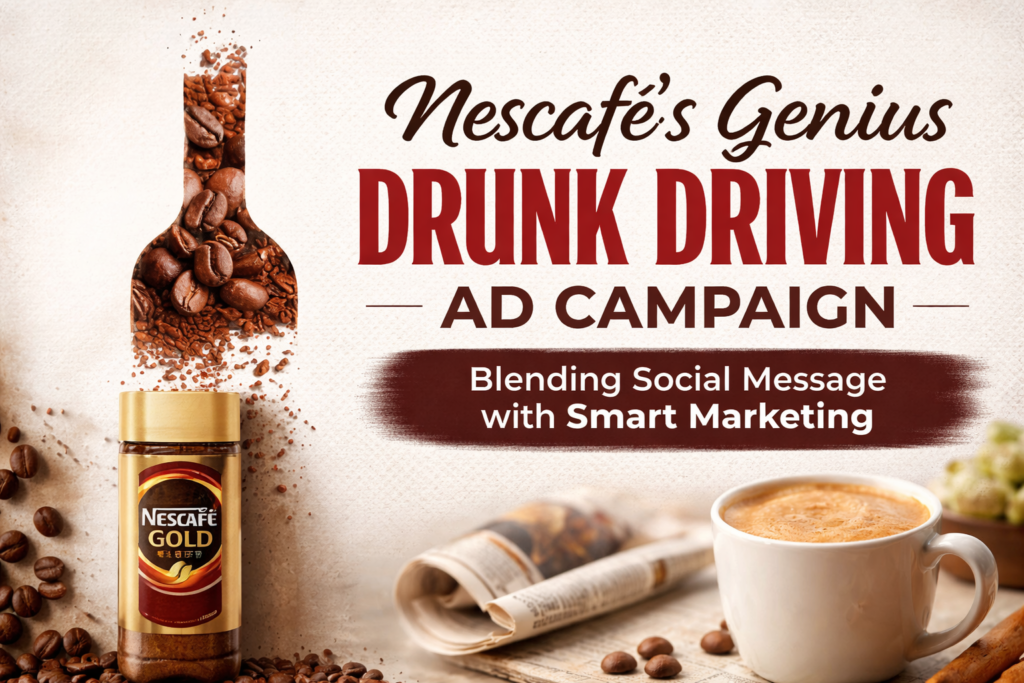
A wine bottle silhouette — but instead of liquid, it’s filled with coffee beans. Tagline: “Don’t drink and drive, drink something special.” Created by McCann WorldGroup India and anchored to New Year timing, the print ad carried a public-service-style message on the surface and quietly positioned Nescafé Gold as the premium alternative.
The dual-layer reading — social message + subtle premium-product placement — is what makes it one of the most-cited examples of meaning-driven storytelling from India.
Lesson: a brand stands for more than features when the campaign stands for something beyond the product.
6. Vaseline’s “Care That Finds the Cracks” — Why Simplicity Still Wins
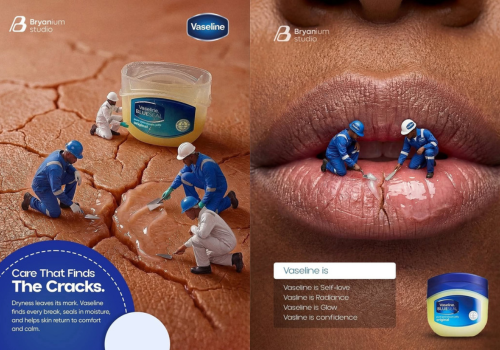
No celebrity, no stunts, no tech demo. Vaseline picked one small, relatable human problem — dry, cracked skin in winter — and showed the brand solving it. The phrase “Care That Finds the Cracks” works as both a physical and emotional promise: physical care for skin, and care that reaches the smallest everyday problems.
The campaign relies on Vaseline’s century of trust so the message doesn’t need to oversell. Visual storytelling was minimal — close-up shots, no exaggeration — letting the message carry the work.
Lesson: clarity, empathy, and authenticity outperform complexity. A clear problem + a clear solution + a brand people already trust is undefeated.
7. Free Chocolate Frozen in Ice — A Street Stunt the Internet Filmed Itself
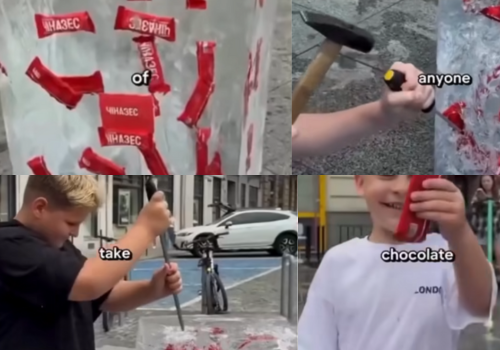
A slab of ice in a public space, red-wrapped chocolate bars sealed inside it, a hammer beside it. No instructions, no signage, no script. People stopped, stared, broke the ice, and filmed themselves doing it. By night the campaign had huge organic reach.
The brand (the article’s source attribution quotes a spokesperson named Johnson reflecting on the activation) explicitly noted: the brand didn’t need a celebrity, didn’t need a script, didn’t need to explain the campaign.
Lesson: people don’t recall slogans. They recall moments. When marketing becomes play instead of promotion, word of mouth goes further than any media plan.
8. When Habit Becomes Marketing — India’s Snack Counters vs. Starbucks
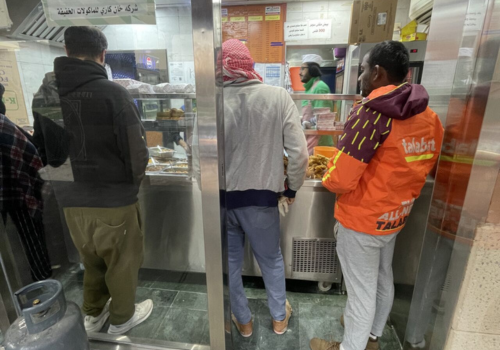
A side-by-side observation: India’s neighbourhood co-operative society snack counters (no branding, no logo, no campaigns — just a window, fresh chapatis, and karak chai at the right hour) and Starbucks (curated experience, loyalty app, always-on storytelling) succeed via nearly opposite methods. Both rely on visibility, repetition, and trust.
The source frames it as a quiet insight: good placement and consistency become marketing before a single ad runs. The brand appears not in a campaign but in the customer’s morning.
Lesson: marketing doesn’t always start with ads. It starts when a product becomes something people don’t have to think about anymore.
9. The Interactive Donation Installation — Emotional Marketing at Its Purest
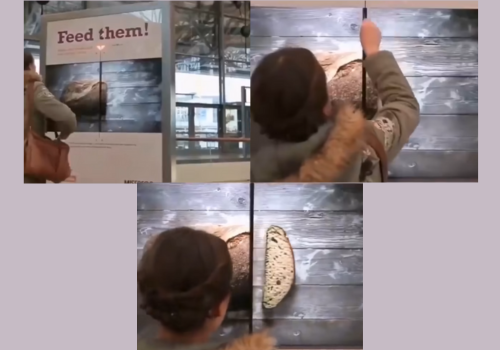
A donation kiosk where, at the moment a donor swipes their card, the screen reacts in real time with one of several expressions: joy, relief, gratitude, hope. One swipe, one emotion, one moment of empathy. The giver is no longer transacting with an institution — they’re participating in a human story.
The source makes the framing explicit: emotional marketing doesn’t push or persuade; it invites people to feel something meaningful, and donation becomes a moment shared.
Lesson: Great marketing doesn’t shout, it connects. Turn a transaction into a relationship, and the audience becomes the message.
10. Alpenliebe Golds “Kholo Meetha Bolo” — The Candy as a Verbal Seatbelt
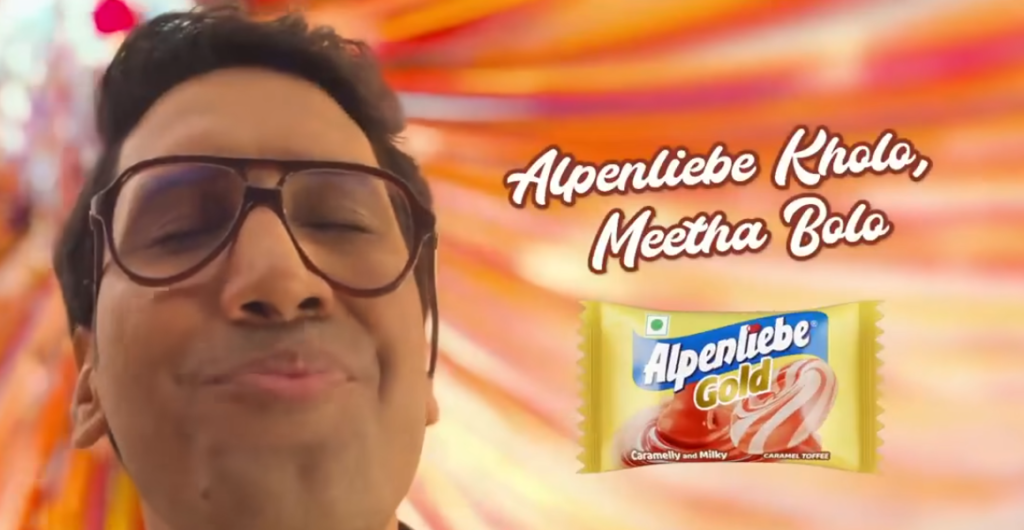
Released in December 2025 (per the source dateline), the campaign is a TVC built around one universal moment of friction: speaking sharply when you don’t mean to. The script anchors on a high-stakes family scene — “aaj pehli birthday hai” — where one harsh comment can spoil the day. The brand’s intervention: “Alpenliebe kholo, meetha bolo” (open Alpenliebe, speak sweetly).
The reframing is the genius move. A caramel candy becomes a micro-pause mechanism — a moment of softness between emotion and expression. The source explicitly draws the analogy: the candy is a verbal seatbelt.
Lesson: the most resonant emotional branding treats a single shared cultural metaphor as the entire canvas. In India, meetha bolna is blessing, harmony, and goodwill — the product simply makes it executable.
11. Wonderla’s “Maja Meter” — The Mall Became a Live Brand Experience
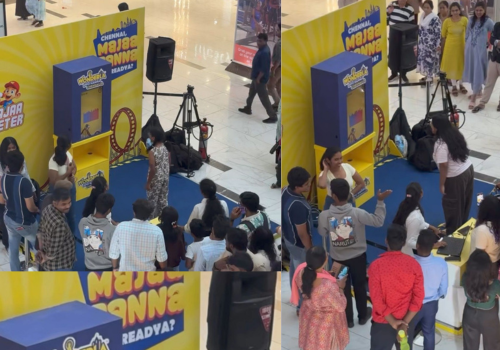
Under the leadership of Arun Chittilappilly, Wonderla Holidays built a mall activation where people screamed the brand name into a measuring device. The louder the scream, the higher the “Maja” (fun) score — instant excitement, laughter, and a crowd of onlookers turning into participants in real time.
The source frames the mechanics through neuromarketing: high-decibel stimulus drives amygdala-driven arousal, public participation creates social proof, and physical interaction produces longer-lasting memory encoding than passive digital exposure.
Lesson: in a crowded digital world, physical sensations create brand memories digital ads can’t. Sound, participation, and joy together are a different category from a banner.
12. CeraVe × Michael Cera — The Founder “Conspiracy” Stunt (Super Bowl Rollout)
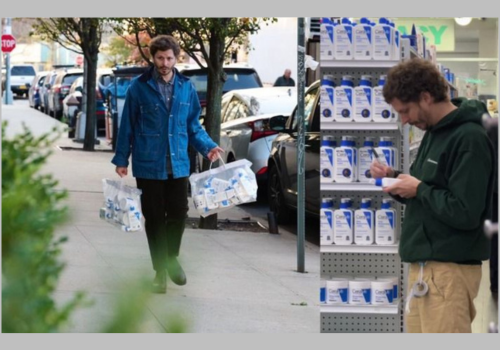
Across several days (per the December 2025 source article by Mohammad Owais), actor Michael Cera was spotted in New York City carrying oversized CeraVe bags, signing bottles in pharmacies, sticking his face on store shelves. Nothing was announced. Nothing was branded. CeraVe stayed silent.
The internet did the marketing: “Is Michael Cera the founder of CeraVe?” “Is that why it’s called Cera-Ve?!” Theories (all false) spread across TikTok, Instagram, and X. By the time CeraVe confirmed it as the lead-up to its Super Bowl campaign, the brand had already secured millions of impressions with zero paid spend on the mystery phase.
Lesson: in an era of loud ads, strategic silence is the loudest tactic you can buy. Don’t announce — make the audience co-author the story before you ever say a word.
The Pattern Behind All 12
Strip the categories, the geographies, the formats, and the budgets. These 12 share one underlying move:
| Trigger | Case studies where it works |
|---|---|
| Curiosity before explanation | Swiss chocolate missing piece · Free chocolate in ice · CeraVe × Michael Cera |
| Cultural ritual as canvas | Coca-Cola Basant · Thai Life Insurance sadvertising · Alpenliebe “Meetha Bolo” |
| Human metaphor for a complex system | FedEx 2010 windows · Wonderla Maja Meter · Swiss chocolate packaging |
| Small, relatable problem + clear answer | Vaseline “Care That Finds the Cracks” · Nescafé drunk-driving ad · Donate-and-feel installation |
| Behaviour as marketing, not messaging | Indian snack counters / Starbucks · Federal 2010 windows · Wonderla Maja Meter |
The unifying principle: the audience is not a target, they’re a participant. Every case study above either asked them to feel, to act, to find out, or to take a ritual and give it back to the brand in a slightly different shape. That’s the cost-of-attention calculus for 2026: when skipping is the default, the only thing that earns attention is the thing the audience does to themselves.
Emotional & Experiential Marketing FAQ
What’s the difference between emotional and experiential marketing?
Emotional marketing is the strategy — a story, song, or moment designed to move the audience. Experiential marketing is the tactic — a physical, interactive activation (installation, stunt, immersive event) that turns a brand into a memory. Most campaign mixes use both. They overlap when the experience is the emotion (the CeraVe × Michael Cera “mystery” felt like a movie; the Wonderla Maja Meter felt like a concert).
Why do emotional ads outperform rational ones?
Because they secure attention before competitors can interrupt it. Awards and recognition shortlists for the past several years have skewed toward campaigns that trigger an emotion first; product claims come second, if at all. Research cited by The Drum, IPA, and Cannes juries repeatedly shows that emotionally-driven creative increases brand recall and purchase intent even at lower media weights.
Do emotional campaigns work for B2B / SaaS / non-consumer brands?
Yes — the principle is the same. FedEx’s 2010 print campaign sold B2B logistics; MetLife’s EduCare campaign sold B2C insurance. The mechanic (one clear human metaphor, brand at the end) is industry-agnostic. B2B examples of this playbook include FedEx’s 2010 work and CeraVe (which sells a clinical-claimed cream but told the story as a viral mystery).
Is emotional marketing the same as influencer marketing?
No. Influencer marketing borrows credibility from a creator; emotional marketing borrows a feeling from a story. They can combine (CeraVe used celebrity + mystery), but the centre of gravity is the feeling, not the creator.
How do you measure emotional marketing if feelings are subjective?
Three practical proxies: (1) earned-media impressions and share-rate on the campaign assets (CeraVe’s mystery, Thai Life Insurance’s “Unsung Hero”); (2) earned brand-search lift during the campaign window; (3) long-tail brand-tracking metrics (aided awareness, attribute association) measured three to six months out. Awards and Effie shortlists are useful directional signals but should not be the only metric.
How much budget does an emotional campaign need?
There is no minimum. The Swiss chocolate bar packaging change, the ice-block stunt, and FedEx’s 2010 print work all relied on low-cost media. The high-budget version (Thai Life Insurance films, Coca-Cola city-scale, CeraVe Super Bowl) scales the same idea across more touchpoints. Strategy is more important than spend.
Conclusion: The 2026 Rule of Thumb
If your campaign can be summarised in one product claim (“X% better,” “fastest delivery,” “more features”), skip it. The 12 examples above — from a missing chocolate square to a 100-million-view Thai tearjerker to a Super Bowl conspiracy built on silence — all answer the same question: what will the audience remember and feel six months from now?
In 2026, the brands that win the attention economy are not the ones that have the most impressions. They’re the ones whose audiences, after the impressions stop, still carry the feeling with them.