

When consumers walk down the brightly lit snack aisles of convenience stores and supermarkets across Japan, they are conditioned to look for an unmistakable visual language: vibrant primary reds, radiant yellows, and rich metallic accents signaling savory indulgence. On retail shelves dominated by fast-moving consumer goods (FMCG), color is not merely aesthetic decoration; it is the cornerstone of brand identity, mental availability, and sensory persuasion. In contemporary brand design, visual cues operate as an essential vehicle for experiential and emotional consumer connection.
Yet, against the backdrop of an intensifying conflict in the Middle East and a blockade around the Strait of Hormuz, the familiar colors of everyday commerce are disappearing.
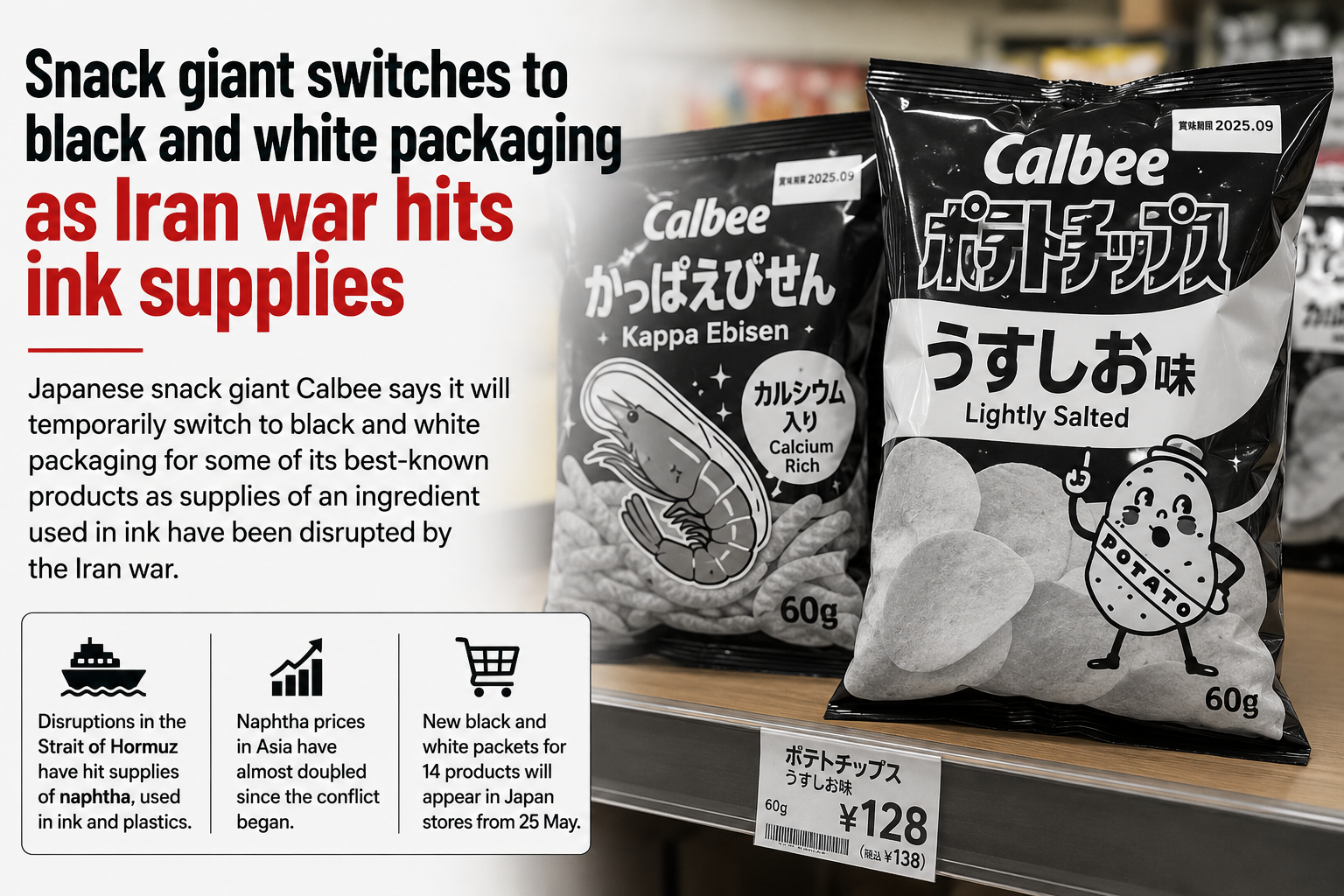
In an unprecedented operational and visual pivot, Calbee, Japan’s foremost snack and confectionery manufacturer, announced that it will temporarily strip its flagship product lines of their iconic full-color packaging, replacing them with stark, monochrome, black-and-white alternatives. Starting on May 25, 14 of the brand’s most celebrated staples—including its household-name potato crisps and Kappa Ebisen prawn crackers—will roll onto supermarket shelves clad in what observers have christened “petrol-saving packets”.
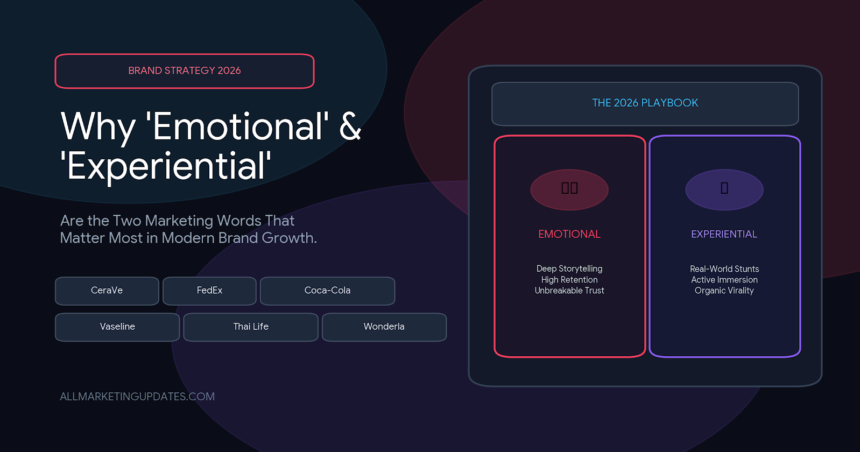
While this decision might seem like a niche operational contingency, it serves as a watershed moment for modern corporate strategy, supply chain management, and brand communication. It demonstrates how geopolitical conflict upstream violently disrupts downstream marketing, forcing corporate strategists and advertising directors to fundamentally rethink how brands communicate value, maintain loyalty, and manage consumer sentiment when the physical mediums of marketing collapse. Similar structural resets can be found across modern brand strategy, from Nutella’s quiet market repositioning
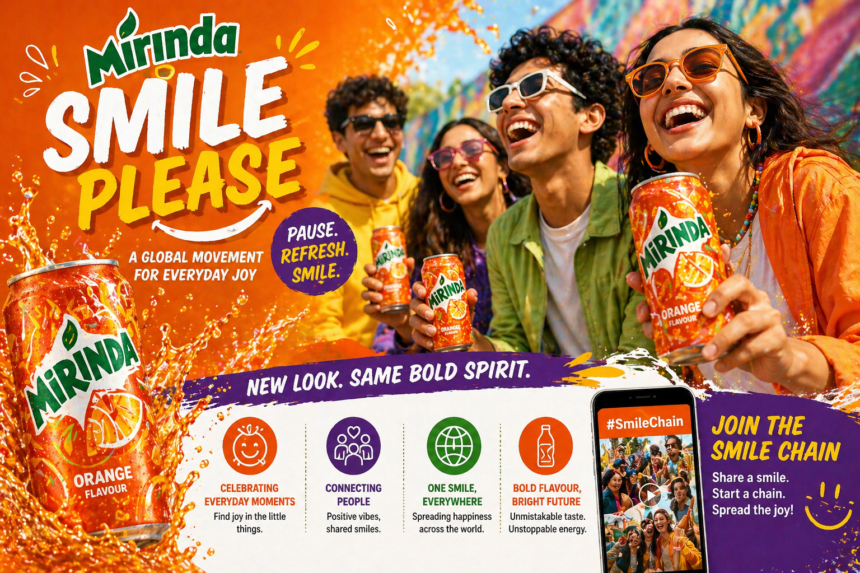
to global overhauls like Mirinda’s worldwide visual refresh.
Upstream Shockwaves: How the Strait of Hormuz Strained Global FMCG
To understand the sudden monochrome makeover of Japanese snack bags, one must look halfway across the world to the maritime choke point of the Strait of Hormuz. The escalation of the Iran war has transformed global commodity distribution overnight, destabilizing core supply chains and unleashing severe inflationary shocks across global markets.
The immediate commercial impacts of the conflict have been sweeping:
- The Energy Crunch: Brent crude has rapidly escalated toward $118 a barrel, with West Texas Intermediate (WTI) breaching the critical $100 benchmark as negotiations stall and diplomatic ceasefires falter.
- Liquefied Natural Gas (LNG) Bottlenecks: With commercial transponders ordered shut near Qatar’s Ras Laffan port for safety and Iranian strikes damaging infrastructure, an estimated 20% of global liquefied natural gas flows have been effectively trapped inside the Persian Gulf, triggering force majeure declarations on long-term export contracts extending up to five years.
- Runaway Global Inflation: In major Western economies like the United States, consumer price inflation surged to an annualized 3.8% in April—the highest rate recorded since May 2023—propelled almost entirely by an 18% spike in energy costs, with retail gasoline rising 28% and fuel oils surging by an astounding 54%.
Yet, the raw material crisis confronting consumer packaging is far more specific and insidious than top-line oil prices. It revolves around a critical petrochemical byproduct: naphtha.
Distilled directly from crude oil, naphtha is the chemical backbone of modern manufacturing. It is the irreplaceable building block used to produce industrial plastics, automotive components, medical equipment, agricultural packaging, and—most crucially for consumer goods—the specialized solvent inks required to print multi-layered, photorealistic, high-gloss designs onto flexible plastic films.

Historically, Japan imported approximately 40% of its naphtha directly from the Persian Gulf. With commercial tanker traffic halted in the Strait of Hormuz, naphtha supplies evaporated virtually overnight.
This sudden petrochemical famine exposed what industrial commentators describe as a structural energy policy blind spot. While the Japanese government has methodically built and maintained massive national crude oil reserves, it lacks dedicated strategic reserves for secondary distillates like naphtha. Consequently, although high-level government spokespersons attempted to reassure the public that national supplies remained secure, the private sector encountered immediate, friction-filled production bottlenecks. From standard bread loaves seeing price hikes due to rising protective film costs to crisp manufacturers running dry on industrial printing dyes, consumer-facing businesses found their day-to-day packaging lines directly compromised.
The Packaging Paradox: Packaging as Media and the Cost of Monochrome
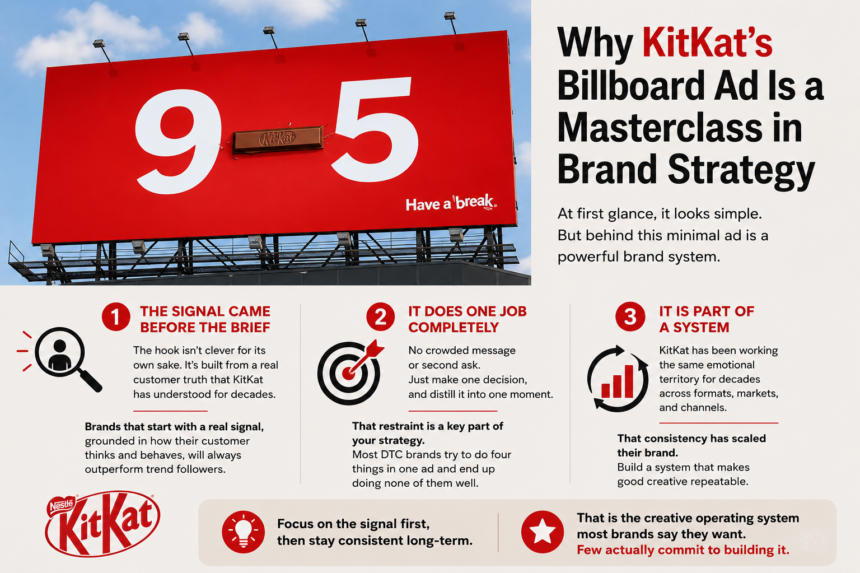
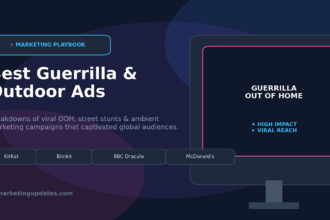
In classical marketing theory, packaging is frequently categorized as the “silent salesman” or the “fifth P” of the marketing mix. On modern supermarket shelves, where a customer takes between three and seven seconds to make an in-aisle buying decision, packaging functions as the most cost-effective, high-frequency advertising medium a brand possesses. It builds distinct visual assets, conveys emotional benefits, and maintains vital mental availability. Exploring outdoor and unconventional physical placements demonstrates just how critical unexpected visual disruption is to arresting buyer attention.
Printing high-speed, multi-color flexible packaging for salty snacks is a precision engineering feat. It demands specialty, high-adhesion naphtha-derived inks capable of sticking to barrier films designed to block moisture, air, and ultraviolet light. When Calbee lost access to the stable petrochemical feedstocks required for these inks, corporate leadership faced an existential marketing fork in the road:
- Halt or throttle production lines until color ink raw materials could be rerouted at exorbitant spot-market rates.
- Institute sharp across-the-board retail price hikes to offset the astronomical cost of specialized materials.
- Strip away the design layer entirely, pivoting to minimalist, low-ink, monochrome black-and-white printing to conserve raw materials while preserving shelf availability and keeping unit volumes flowing.
Calbee chose the third path. Yet, in doing so, they accepted unprecedented branding and visual risks.
       Conventional Packaging vs. Crisis Monochrome Strategy
┌──────────────────────────────────────┬──────────────────────────────────────┐
│ Standard Color Packaging             │ Emergency Monochrome Packaging       │
├──────────────────────────────────────┼──────────────────────────────────────┤
│ • Full-spectrum petrochemical inks   │ • Single black-ink application       │
│ • Appetite appeal via color cues     │ • High aesthetic shelf contrast      │
│ • High material & resource reliance  │ • Raw material conservation (naphtha)│
│ • "Business-as-usual" messaging     │ • Transparent corporate signaling    │
│ • Traditional impulse-driven buying  │ • Collector's item novelty appeal    │
└──────────────────────────────────────┴──────────────────────────────────────┘
By eliminating primary color codes, a brand voluntarily sacrifices appetite appeal. Saturated reds stimulate hunger; golden yellows communicate crisp, savory indulgence; distinct chromatic hues distinguish salt-and-seaweed from sour cream or barbecue. A black-and-white snack bag risks looking sterile, medical, or stale—running entirely counter to the sensory-rich visual grammar of the snack category.
Furthermore, stripping color disrupts what branding experts define as the “heuristic pathway.” Consumers on autopilot reach for shapes and colors, not blocks of text. In normal market conditions, taking color off a bag of crisps could cause retail velocities to collapse instantly.
However, under conditions of systemic supply chain crisis, Calbee transformed an operational necessity into a masterclass of structural strategy. By deliberately framing these changes as temporary “petrol-saving packets,” the brand anchored the visual shock not in corporate cost-cutting or cheapness, but in adaptive crisis management and communal resource conservation.
The Psychology of the “Collector’s Item”: Transforming Scarcity into Brand Equity
When a heritage brand fundamentally alters its physical presentation, consumer reaction generally defaults to skepticism or disappointment. Yet, early reception in the Japanese retail landscape reveals that Calbee’s monochrome gamble tapped into an unexpected cultural and marketing dynamic: manufactured scarcity and instant collectibility.
As domestic media outlets extensively broadcasted images of the incoming black-and-white bags, the impending release transformed from an industrial shortage story into a viral cultural moment. Rather than alienating consumers, the bags were immediately discussed as temporary, historically unique “collector’s items”.
This dynamic provides critical insights for brand strategists managing emergency product alterations:
1. Reversing the Framing: From “Deficit” to “Historical Milestone”
Had Calbee quietly diluted its ink ratios, degraded print resolution, or made piecemeal changes without public dialogue, the market reaction would have framed the move as brand degradation. Instead, by boldly going completely monochrome and making an honest public disclosure regarding Middle Eastern raw material constraints, Calbee took total control of the brand narrative. The design shift was framed not as a compromised product, but as an emblem of corporate resilience in an extraordinary historical era.
2. Exploiting Inverted Shelf Disruptiveness
In a supermarket aisle where every competing brand screams for attention through saturated neons, high-gloss metallics, and primary color palettes, an austere, matte black-and-white bag acts as a visual anchor. Through reverse contrast, monochrome packaging commands instant attention. The absence of color becomes louder than color itself, commanding stop-and-stare curiosity from aisle shoppers who might otherwise walk past standardized packaging on autopilot. This aligns closely with techniques seen in guerrilla and disruptive outdoor marketing.
3. Fostering Collectibility and Social Sharing
In modern digital commerce, product packaging must serve a dual purpose: it must function in the physical aisle and reproduce compellingly on smartphone screens. The dramatic anomaly of an iconic, cheerful snack bag rendered in grim black-and-white provides frictionless social media currency. Consumers hunt down anomalous packaging variants for peer-group sharing, effectively offloading distribution of the marketing message onto organic user-generated content.
                  VIRAL ADAPTATION FLYWHEEL

           [ Geopolitical Supply Shock ]
                         │
                         ▼
        [ Raw Material / Naphtha Scarcity ]
                         │
                         ▼
       [ Strategic Shift to Monochrome Bags ]
                         │
                         ▼
       [ Inverted Shelf Contrast & Disruption ]
                         │
                         ▼
      [ Public Framing as Rare "Collector's Item" ]
                         │
                         ▼
      [ Organic Social Media Buzz & Cultural Cachet ]
                         │
                         ▼
        [ Brand Relevance & Preserved Market Share ]
4. The Macroeconomic Undercurrents: Corporate Stress, Credit Crunches, and SME Vulnerability
While an agile corporate giant like Calbee can leverage its cultural stature to turn a packaging crisis into a branding milestone, the macro-level indicators driving this pivot point to severe structural stress beneath the surface of the corporate sector.
Market commentators have stressed that these black-and-white bags should not be viewed merely as quirky marketing novelties; they are, in reality, visible omens of intense corporate and economic strain.
The Expanding Capital Divide
Large, diversified conglomerates sitting on extensive cash cushions possess the treasury capabilities to secure bank credit, absorb skyrocketing shipping costs, and survive extended logistics interruptions. For smaller and medium-sized enterprises (SMEs)—which represent the fundamental backbone of consumer production—the ongoing war and petrochemical disruption present immediate existential hazards.
Data from the Bank of Japan (BOJ) underscores the brewing storm:
- Commitments for corporate credit lines spiked by ¥2.5 trillion in a single month (March), matching corporate borrowing levels not observed since the peak of the COVID-19 pandemic.
- In the fiscal year ending in March, Japan recorded over 10,500 corporate bankruptcies, with small corporations accounting for an alarming three-quarters (75%) of all business failures.
- Advisory watchdogs like the Council for Economic and Fiscal Policy (CEFP) have formally issued stern warnings to monetary authorities, arguing that the Bank of Japan must maintain aggressive vigilance against an economy-wide liquidity crunch if the Persian Gulf crisis extends through the summer.
When international political figures celebrate macroeconomic resilience, their optimism often fails to register the brutal day-to-day operational realities endured by downstream producers. Every additional week the Strait of Hormuz remains contested compounds the operational fragility of the food and retail ecosystems. Calbee’s packaging pivot reflects the edge of an industrial wedge that threatens to push smaller, less capitalized competitors entirely out of business.
Comparative Global Resilience: French Agriculture and the Disintermediation Strategy
The packaging crisis in Tokyo is far from an isolated downstream anomaly. Across the international economic landscape, the convergence of ballooning input prices, broken transport corridors, and fixed commercial terms is forcing brands across diverse industries to dismantle and reinvent their foundational business architectures.
A profound parallel can be found in the agricultural sector of Southern France, where local farmers faced an identical operational trap stemming from the same global conflict.
                     A TALE OF TWO CRISES: ADAPTIVE RESPONSES
┌─────────────────────────────────┬─────────────────────────────────┐
│ Calbee Snack Foods (Japan)      │ Agricultural Producers (France) │
├─────────────────────────────────┼─────────────────────────────────┤
│ Core Crisis:                    │ Core Crisis:                    │
│ Lack of naphtha-based inks for  │ Soaring fertilizer & fuel costs │
│ high-speed packaging films    │ against fixed retail rates     │
├─────────────────────────────────┼─────────────────────────────────┤
│ Strategic Response:             │ Strategic Response:             │
│ Radical visual adaptation;      │ Structural disintermediation;   │
│ "Petrol-saving" monochrome bags │ Launching farmer-owned store   │
├─────────────────────────────────┼─────────────────────────────────┤
│ Outcome / Impact:               │ Outcome / Impact:               │
│ Conserves vital materials;      │ Eliminates margin middlemen;    │
│ creates instant collectibility[cite: 2, 3]│ €7M direct sales volume        │
└─────────────────────────────────┴─────────────────────────────────┘
The Broken Mechanism of Annual Pricing
In the French retail ecosystem, commercial wholesale prices for grocery and produce goods are negotiated annually between producers and massive supermarket conglomerates during the opening months of the year. In 2026, these annual pricing contracts were formally concluded just as the war in Iran broke out.
Farmers suddenly found themselves locked into rigid, legally binding wholesale price agreements, even as their cost of diesel fuel, agricultural feed, and petroleum-based fertilizers skyrocketed exponentially. Trapped between legal pricing ceilings and catastrophic operating expenses, conventional farming margins disintegrated.
The Disintermediation Counter-Strategy
Rather than accepting compounding operational debt or slashing crop yields, a collective of 180 independent farmers in southern France opted to break away from traditional distribution channels and construct their own collective supermarket.
By launching a direct-to-consumer physical retail destination, the farmers systematically eliminated the traditional commercial middlemen that historically consumed producer margins:
- Structural Self-Determination: Farmers retain direct equity in the store, displaying their own photographs, identities, and provenance openly on the walls.
- Transparent Margin Setting: Instead of enduring aggressive price depression from conglomerate supermarket buyers, producers set their own prices to reflect actual operating costs. For instance, a farmer delivers eggs bought by the store for €2.22 per half-dozen and retailed directly at €3.15, with the margin used entirely to fund the salaries of the store’s 19 full-time employees.
- Reclaiming Farm Viability: In field crops like leeks, local growers who historically received a meager 50 euro cents per kilo under industrial grocery contracts were able to secure €1.70 per kilo through the direct store model, allowing operations to extinguish historical debts, make fresh equipment investments, and hire dedicated farmhands.
The venture generated €7 million in annual revenues from over 150,000 customers in 2025, inspiring regional chambers of agriculture to formulate plans for replicated store rollouts across additional jurisdictions.
Much like Calbee’s black-and-white crisp packaging, this direct-store initiative illustrates that when macroeconomic crises break the standardized channels of commerce, winning strategies rely on radical structural adaptation and narrative transparency. The French farmers turned their economic struggle into a communal value proposition, winning over local consumers who view their shopping receipts as direct votes for regional economic survival.
Strategic Imperatives: What Brand Leaders and Advertisers Must Learn
The black-and-white snack packets of Japan and the farmer-owned stores of France are not mere temporary curiosities. They are heralds of a more volatile global operating environment defined by fractured supply chains, volatile energy inputs, and persistent geopolitical disruption. As brands look to the future, using tools like NotebookLM for Marketers can help analyze raw supply inputs, consumer responses, and scenario planning in real time.
                            THE 4S FRAMEWORK
                     FOR RESILIENT BRAND STRATEGY

      ┌──────────────────────────────────────────────────────────┐
      │  1. SUPPLY-AWARE CREATIVE DESIGN                         │
      │     Design visual assets that can scale down gracefully  │
      │     when critical materials or inks face bottlenecks.    │
      └────────────────────────────┬─────────────────────────────┘
                                   │
      ┌────────────────────────────▼─────────────────────────────┐
      │  2. RADICAL NARRATIVE TRANSPARENCY                       │
      │     Acknowledge disruptions immediately; frame changes   │
      │     as conscious solidarity rather than hidden cuts.     │
      └────────────────────────────┬─────────────────────────────┘
                                   │
      ┌────────────────────────────▼─────────────────────────────┐
      │  3. DISINTERMEDIATION & CHANNEL DIVERSIFICATION          │
      │     Build direct-to-consumer avenues to preserve margins │
      │     when intermediary logistics channels freeze up.      │
      └────────────────────────────┬─────────────────────────────┘
                                   │
      ┌────────────────────────────▼─────────────────────────────┐
      │  4. CONTINGENCY COMMERCE & BRAND EQUITIZATION            │
      │     Transform forced product adjustments into culturally │
      │     relevant, collectible consumer moments.              │
      └──────────────────────────────────────────────────────────┘
1. Integrate Creative Design with Upstream Procurement
Historically, marketing and creative teams designed campaigns and packaging in isolation, leaving sourcing and printing logistics to operations managers. The naphtha crisis demonstrates that visual assets must be designed with raw material resilience built in.
Brands must develop “elastic brand identities”—visual style guides that can scale down gracefully from 8-color high-gloss processes to 1-color or monochrome executions without forfeiting core typographic, spatial, and logo recognition.
2. Communicate Through Crisis Without Corporate Evasion
The most dangerous error in crisis advertising is obfuscation. When companies downsize volume (“shrinkflation”) or degrade materials while hoping consumers will not notice, they forfeit institutional trust.
Calbee’s strategy succeeded because the brand publicly communicated the packaging pivot two weeks before it took effect, citing the geopolitical realities in the Middle East. By communicating openly and proactively, the brand transformed an embarrassing logistical shortage into an authentic moment of industrial adaptation.
3. Build Cultural “Story-Platforms,” Not Just Ads
Traditional advertising tells stories to consumers; modern crisis marketing invites consumers to participate in a shared historical experience. When Calbee’s packets were identified as potential “collector’s items,” it unlocked a powerful consumer script: purchasing a bag was no longer just buying a snack; it was owning a tactile snapshot of an unforgettable historical crisis. Advertisers must recognize that the physical product itself is often the most potent storytelling medium a brand possesses.
4. Prepare for the “Summer Test” Across Small-Scale Networks
As warned by Japan’s economic councils, long-term supply crunches inevitably cascade into liquidity crunches. Large brands must examine their extended supplier ecosystems—including external design agencies, regional packagers, and specialized printers. Ensuring that downstream creative partners have access to working capital and supply buffers is as vital to maintaining brand presence as reserving media spend.
The New Era of Geopolitical Branding
The transition of Calbee’s potato crisps from radiant color to minimalist monochrome marks the arrival of a new marketing paradigm. The era in which brand directors could treat global supply chains, international trade corridors, and energy markets as frictionless, invisible utilities has ended.
The global marketing battles of tomorrow will not simply be fought across digital advertising exchanges, algorithmic engagement loops, or high-budget television spots. They will be fought directly on physical factory floors, in commercial printing rooms, along embattled maritime trade routes, and down raw-material procurement pipelines.
As the war in the Middle East continues to test corporate stamina and illuminate the critical blind spots of global trade, brands must demonstrate that their market value is deeper than surface-level ink. In the words of observers watching Japan’s shelves, when corporate resilience is tested by history, true strategic leadership requires embracing reality, stripping away unnecessary embellishments, and discovering how to stand out brilliantly—even in pure black and white.
Primary Sources and References
- Broadcast News Wire & Special Global Business Coverage: Middle East Conflict Escalation, Strait of Hormuz Blockade, Energy Markets ($118 Brent / $100 WTI), US CPI Inflation Reports (3.8%), Calbee Black-and-White Snack Rollout, French Farmers’ Direct Supermarket Cooperative.
- BBC News & Global Trade Wire: FMCG Packaging Shortages, Petrochemical Derivative Shortages, and Persian Gulf Shipping Disruptions.
- Tokyo Downstream Economic & Corporate Analysis: Downstream Domestic Impacts in Japan, Naphtha Distillate Supply Gaps, Bank of Japan Corporate Credit Commitments (¥2.5T Spike), Council for Economic and Fiscal Policy (CEFP) Warnings, and SME Bankruptcy Trends (10,500+ Cases).