

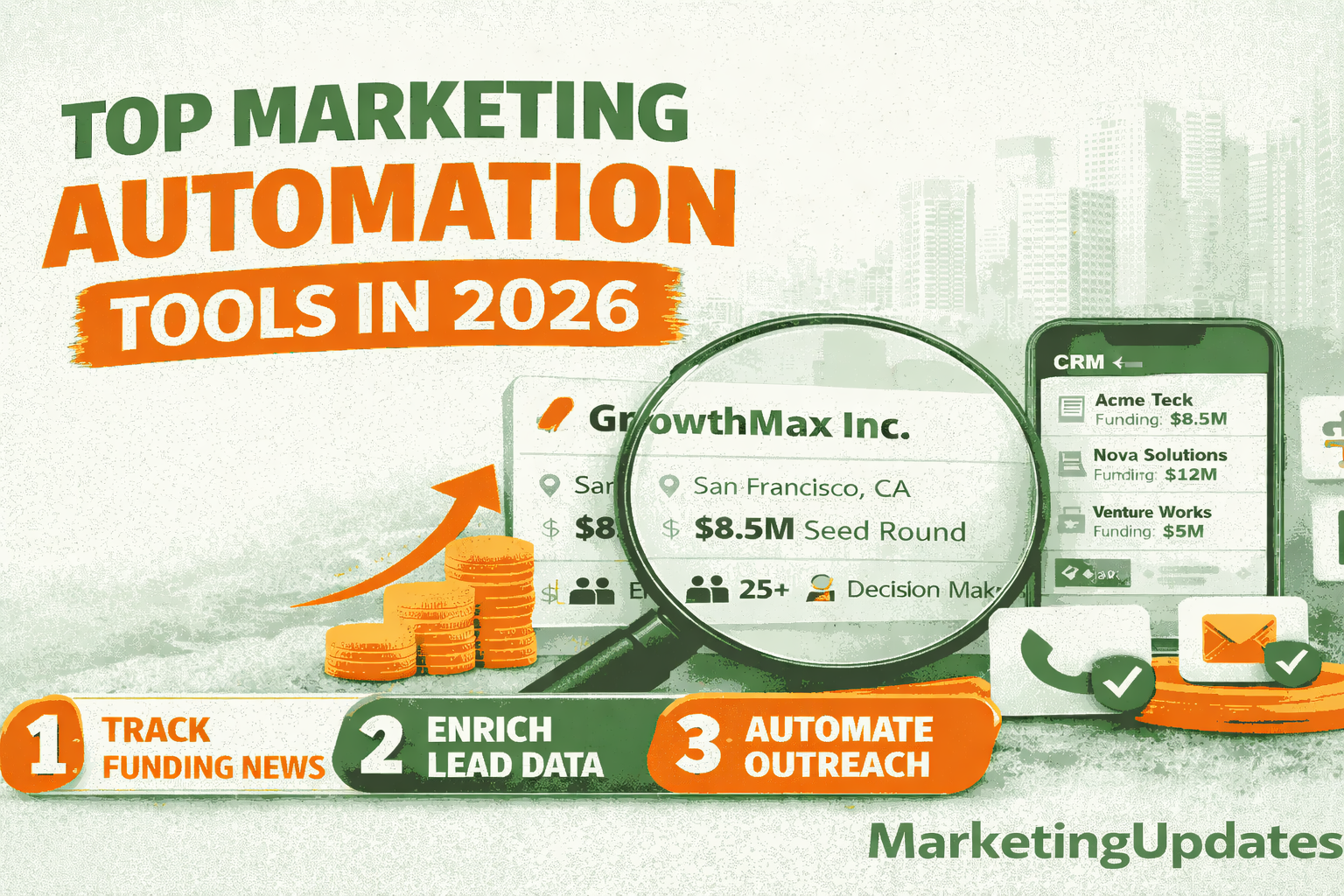
Customer relationship management has evolved significantly in recent years. Modern businesses no longer rely on simple contact databases to manage customer interactions. Instead, they use powerful CRM platforms combined with marketing automation to streamline lead generation, nurture prospects, and improve customer engagement.
CRM systems with marketing automation allow businesses to manage sales pipelines, automate marketing campaigns, track customer behavior, and analyze campaign performance from a single platform. This integration eliminates the need for multiple disconnected tools and helps teams work more efficiently.
As competition in digital marketing continues to increase, companies are investing in CRM tools to automate repetitive tasks, personalize customer experiences, and provide actionable insights. In this article, we will explore the 10 best CRM with marketing automation tools in 2026, their features, and which types of businesses they are best suited for.
What is CRM with Marketing Automation?
CRM with marketing automation refers to a software solution that combines customer relationship management with automated marketing capabilities. A CRM system stores and organizes customer information such as contact details, communication history, and purchase behavior. Marketing automation tools, on the other hand, automate marketing activities like email campaigns, lead nurturing workflows, and customer segmentation.
When these two systems work together, businesses gain a powerful platform that manages the entire customer lifecycle—from the first interaction to post-purchase engagement.
For example, when a visitor signs up on a website, the CRM automatically records their details. At the same time, the marketing automation system can trigger a welcome email sequence, track their engagement with the content, and assign a lead score based on their behavior. This information helps sales teams identify the most promising prospects and focus their efforts where it matters most.
Why CRM with Marketing Automation is Important
Modern marketing requires data-driven decisions and personalized communication. Managing these processes manually is both time-consuming and inefficient. CRM with marketing automation solves this problem by streamlining workflows and ensuring that every customer interaction is properly tracked and optimized.
One of the main advantages is the ability to nurture leads automatically. Instead of sending emails manually, businesses can create automated sequences that deliver relevant content to potential customers over time. This consistent engagement builds trust and increases the chances of conversion.

Another important benefit is improved collaboration between marketing and sales teams. Marketing teams can track how leads interact with campaigns, while sales teams can access detailed insights about customer interests and behavior. This shared information creates a smoother transition from marketing to sales, reducing missed opportunities.
Furthermore, automation allows companies to scale their marketing efforts without significantly increasing operational costs. Tasks such as follow-up emails, campaign scheduling, and customer segmentation can all be handled automatically.
Key Differences Between CRM and Marketing Automation
Customer Relationship Management (CRM) and marketing automation are both essential tools for modern businesses, but they serve different purposes.
CRM systems are primarily designed to manage customer relationships and interactions across the entire customer lifecycle. They help businesses track leads, manage sales pipelines, monitor customer communications, and provide support to ensure long-term retention. Essentially, a CRM gives a 360-degree view of every customer, from the first interaction to post-sale service.
On the other hand, marketing automation software focuses on streamlining and optimizing marketing tasks, saving time while improving efficiency. It is designed to automate lead generation, email campaigns, and audience segmentation, allowing businesses to nurture prospects at scale.
While marketing automation tools can sometimes handle CRM-related tasks, the key distinction lies in their scope:
- CRM covers the entire customer journey, including sales, service, and post-purchase engagement.
- Marketing automation primarily targets the early stages of the funnel, such as lead capture, nurturing, and engagement, helping businesses convert prospects into qualified leads.
By integrating both systems, companies can create a seamless workflow where marketing drives leads efficiently, and CRM ensures those leads are managed, nurtured, and converted effectively.
The 10 Best CRM with Marketing Automation in 2026
CRM and marketing automation serve different purposes but work best when combined. CRM platforms benefit from automation to streamline tasks, while marketing automation gains from CRM features to better understand customers and create more targeted, high-converting campaigns.
The 10 platforms below fall into two groups: CRM tools with built-in marketing automation or marketing automation platforms that include CRM capabilities.
1. HubSpot CRM
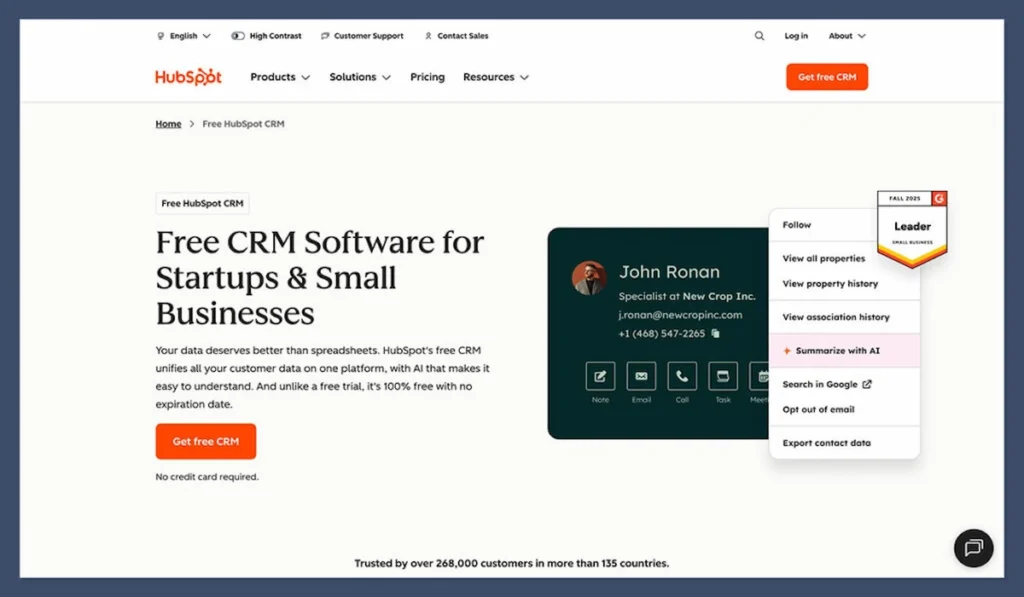
HubSpot CRM is one of the most popular CRM platforms that offers powerful marketing automation features. It is widely used by startups, small businesses, and growing companies because of its user-friendly interface and generous free plan.
The platform allows businesses to manage contacts, automate email campaigns, create landing pages, and track customer interactions in one place. HubSpot’s automation workflows make it easy to nurture leads by sending personalized emails based on user behavior.
Another major advantage of HubSpot CRM is its strong analytics dashboard. Marketers can monitor campaign performance, analyze lead sources, and measure ROI without relying on external tools.
HubSpot is particularly suitable for businesses that want an all-in-one marketing and sales platform without complex setup.
2. Salesforce
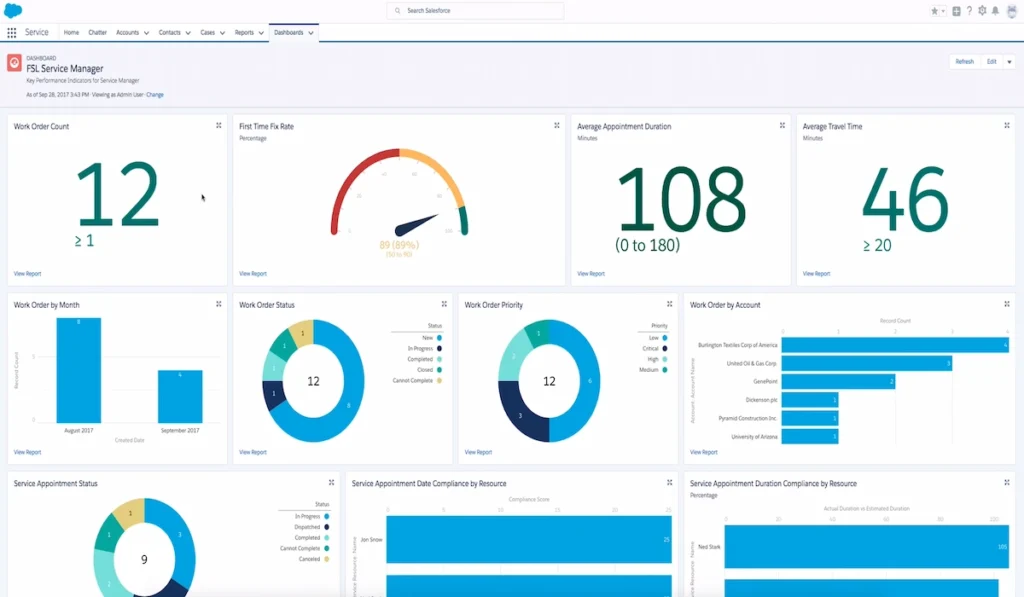
Salesforce CRM is one of the most powerful CRM platforms available today and is widely used by large enterprises. Its marketing automation capabilities are delivered through Salesforce Marketing Cloud, which provides advanced tools for customer segmentation, journey automation, and predictive analytics.
The platform is highly customizable, enabling companies to create tailored workflows tailored to their specific business processes. Salesforce also integrates with thousands of third-party applications, making it extremely flexible for large organizations.
Although Salesforce can be more complex than other CRM tools, it offers unmatched scalability and advanced automation features for businesses that require enterprise-level solutions.
3. Zoho CRM
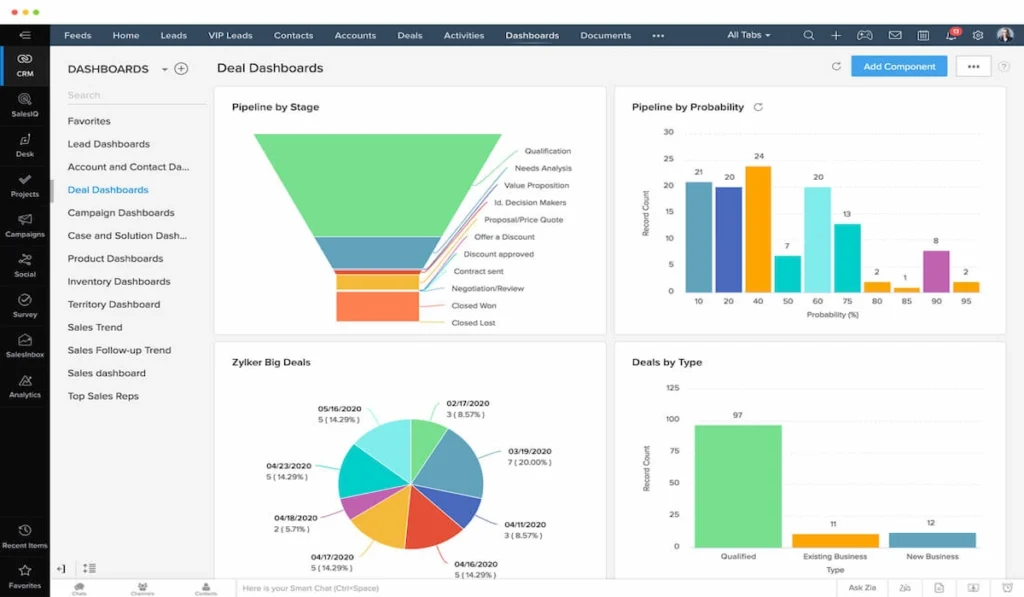
Zoho CRM is an affordable yet powerful CRM platform that includes built-in marketing automation features. It is especially popular among small- and medium-sized businesses seeking a cost-effective solution.
Zoho CRM allows companies to automate email campaigns, segment leads, and track customer journeys. The platform also includes AI-powered insights through Zoho’s assistant, which helps businesses predict customer behavior and optimize marketing strategies.
Another benefit of Zoho CRM is its seamless integration with other Zoho products, creating a complete ecosystem for business management.
4. Active Campaign
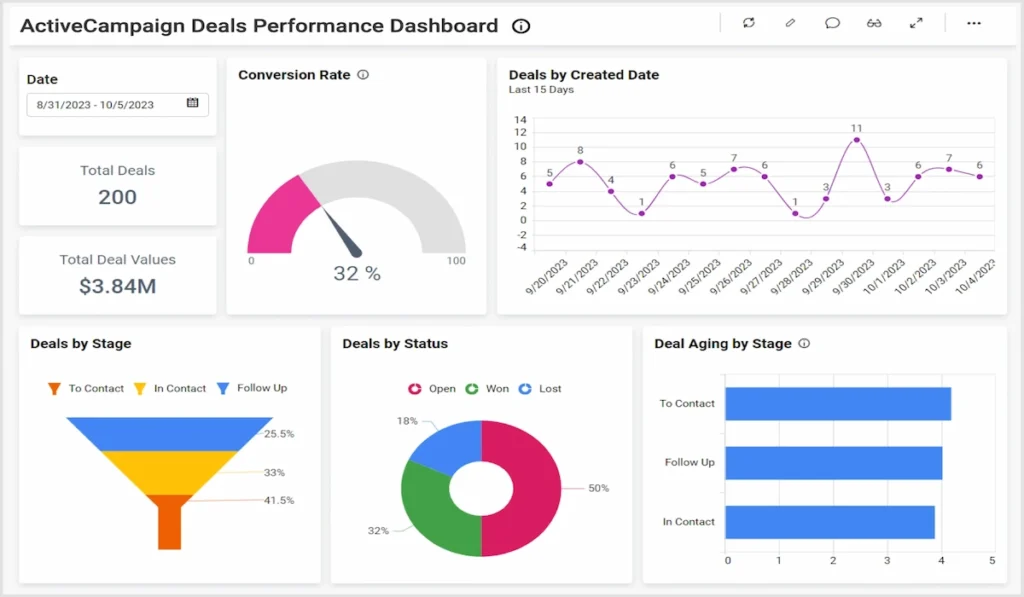
ActiveCampaign is widely known for its advanced marketing automation capabilities. While it started as an email marketing platform, it has evolved into a full CRM solution designed for automation-focused marketing strategies.
Businesses can create sophisticated automation workflows based on customer behavior, engagement level, and purchase history. The platform also offers powerful segmentation and personalization features that allow marketers to deliver highly targeted campaigns.
ActiveCampaign is particularly useful for companies that rely heavily on email marketing and automated customer journeys.
5. Freshsales
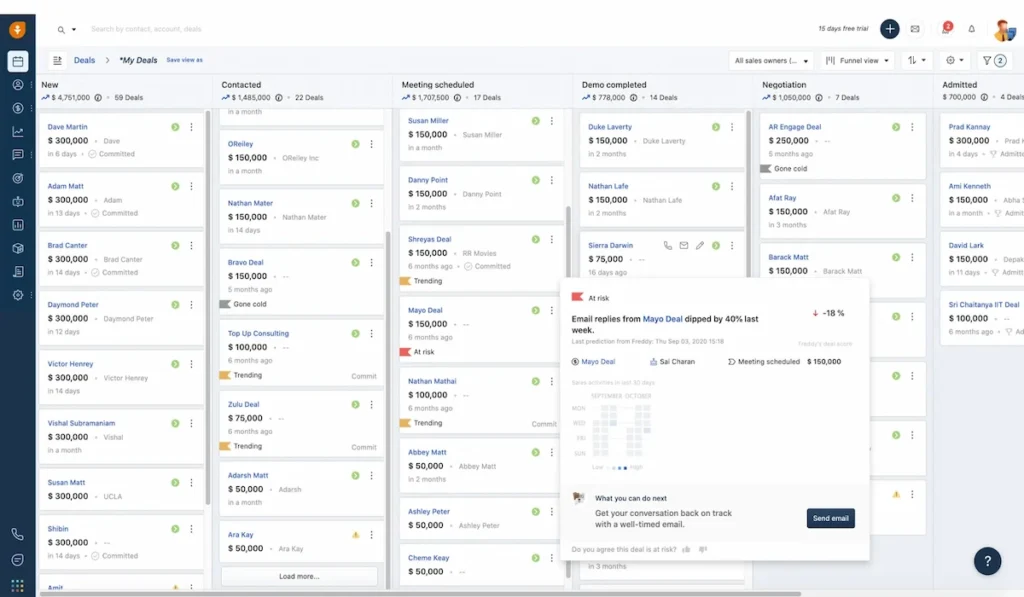
Freshsales, developed by Freshworks, is a CRM platform designed to simplify sales and marketing processes. It combines contact management, lead scoring, and marketing automation in a single platform.
The system automatically tracks customer interactions across email, phone, and website channels, providing sales teams with valuable insights into lead behavior. Freshsales also includes AI-based recommendations that help teams identify high-value prospects.
Its clean interface and automation features make it an excellent option for businesses that want a CRM focused on improving sales productivity.
6. Keap
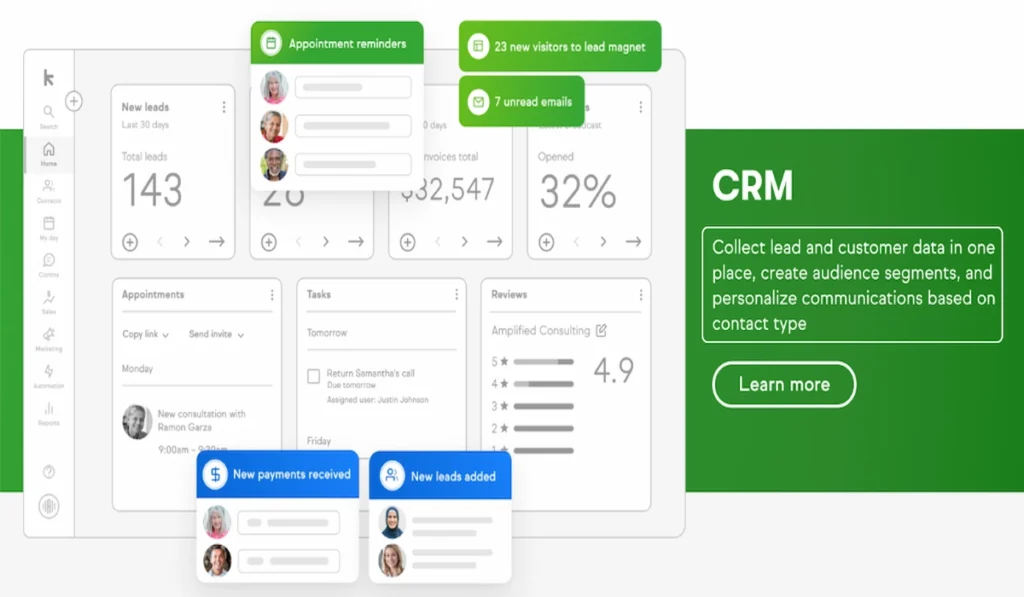
Keap is a CRM and marketing automation platform specifically designed for small businesses and entrepreneurs. It offers tools for lead capture, automated email campaigns, appointment scheduling, and customer follow-ups.
One of Keap’s strongest features is its visual automation builder, which allows users to design marketing workflows without technical knowledge. Businesses can easily create automated sequences that nurture leads and convert them into paying customers.
For small businesses that need a simple yet powerful automation system, Keap is a practical solution.
7. Pipedrive
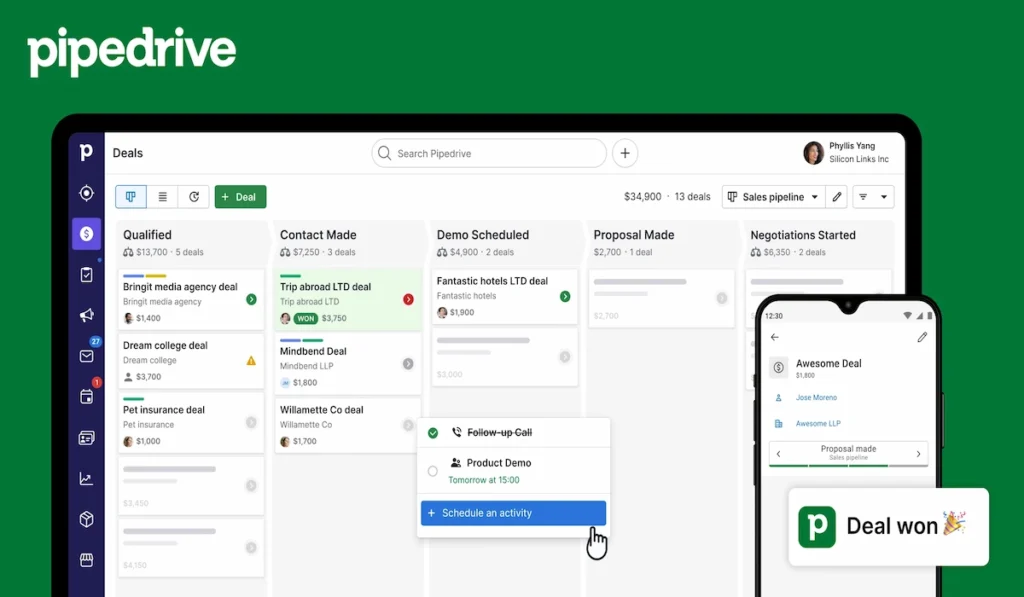
Pipedrive is a sales-focused CRM that has expanded its capabilities to include marketing automation features. The platform is known for its visual sales pipeline, which makes it easy for teams to track deals and manage leads.
With automation tools, businesses can schedule follow-ups, send automated emails, and trigger actions based on customer behavior. Pipedrive also integrates with many marketing platforms, allowing companies to build a connected sales and marketing ecosystem.
It is particularly suitable for organizations that want a CRM primarily focused on improving sales processes.
8. EngageBay
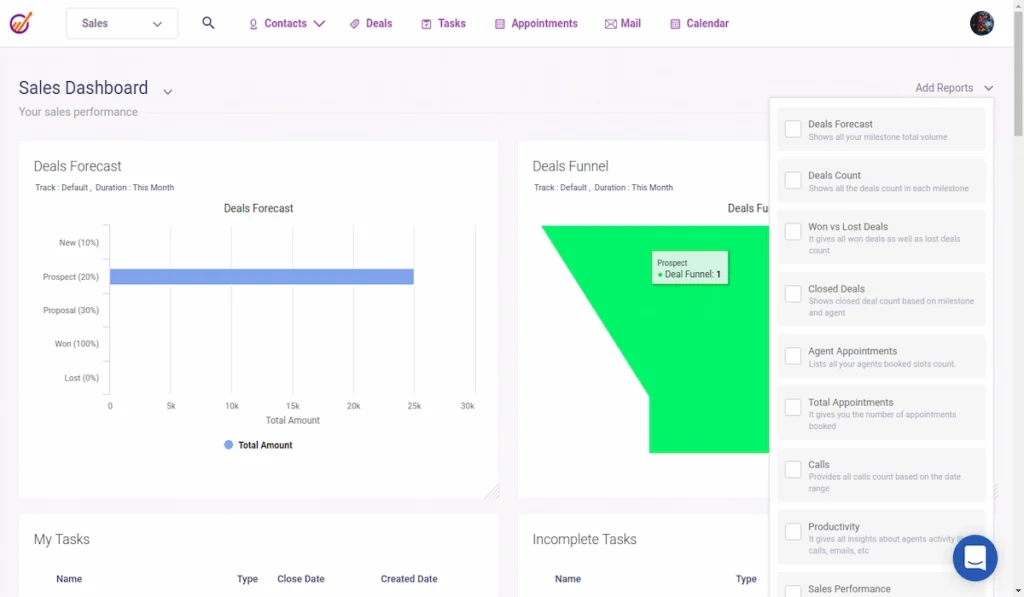
EngageBay is an all-in-one CRM, marketing automation, and customer support platform designed for startups and small businesses. It provides tools for email marketing, landing pages, lead scoring, and automated workflows.
EngageBay stands out for its wide range of marketing features at a relatively low price compared to other CRM platforms. This makes it a strong option for businesses with limited budgets.
The platform also includes built-in helpdesk and live chat tools, allowing companies to manage customer support along with marketing and sales.
9. Drip
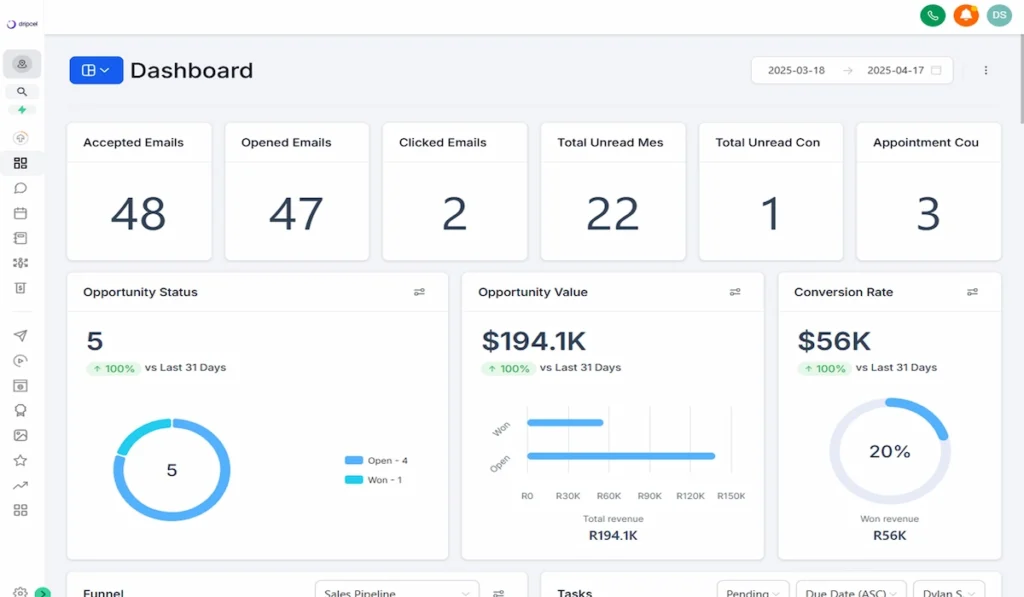
Drip is a CRM platform tailored for e-commerce businesses. It focuses on personalized marketing automation designed to increase customer engagement and repeat purchases.
Drip integrates seamlessly with major e-commerce platforms and allows businesses to track customer behavior such as browsing history and purchase patterns. This data helps marketers create highly targeted campaigns that improve conversions.
E-commerce brands that rely on personalized email marketing often prefer Drip for its specialized features.
10. Brevo (formerly Sendinblue)
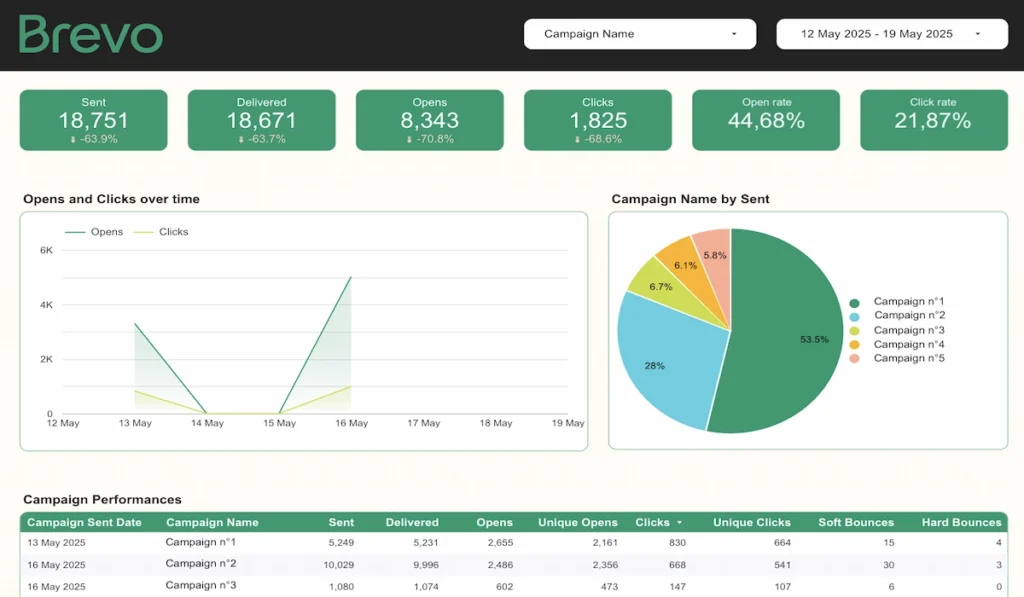
Brevo, previously known as Sendinblue, is a CRM and marketing automation platform that focuses on multi-channel communication. Businesses can manage email marketing, SMS campaigns, and customer relationships from a single dashboard.
The platform includes automation workflows that trigger messages based on customer actions, helping businesses maintain consistent engagement with their audience.
Brevo is a strong option for companies that want a marketing automation platform with integrated CRM capabilities and multi-channel communication tools.
How to Choose the Right CRM with Marketing Automation
Selecting the right CRM platform depends on several factors, including business size, marketing complexity, and budget. Companies should evaluate how well a CRM integrates with their existing tools and whether it supports their long-term growth.
Ease of use is another important consideration. A platform with intuitive automation builders and clear dashboards will help teams adopt the system more quickly. Additionally, businesses should consider scalability, as a CRM should be able to support larger databases and more complex workflows as the company grows.
Conclusion
CRM platforms with marketing automation tools have become essential for modern businesses that want to improve efficiency and deliver personalized customer experiences. By combining customer data management with automated marketing workflows, these tools help organizations capture leads, nurture prospects, and convert them into loyal customers.
The tools listed above are among the best CRM solutions available in 2026. Each platform offers unique features designed for different types of businesses, from startups and small companies to large enterprises.
Choosing the right CRM ultimately depends on your organization’s goals, budget, and marketing strategy. However, implementing a CRM with strong automation capabilities can significantly improve marketing performance and long-term customer relationships.