






When a major snowstorm hit Toronto, most brands would have considered it a setback for outdoor advertising. Heavy snowfall usually reduces foot traffic, disrupts public movement, and limits visibility for traditional billboards. But instead of pausing the activity, Stella Artois saw an opportunity to make the weather part of the creative idea itself. What followed became one of the most talked-about examples of weather-reactive advertising and a smart Toronto snowstorm marketing stunt.
- What Happened During the Toronto Snowstorm?
- The Idea Behind the Giant Chalice Installation
- How This Fits Into the “Perfect Serve” Brand Strategy
- Why the Campaign Worked Beyond the Visual
- Weather-Reactive Advertising Done Right
- Social Media Impact and Public Reaction
- What Other Brands Can Learn
- A Moment That Felt Natural
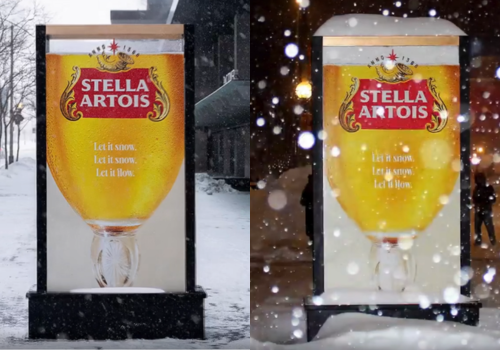
The brand installed a giant replica of its iconic chalice glass in a busy downtown area. As snow continued to fall across Toronto, it slowly filled the oversized glass. The accumulation of white snow inside the chalice naturally resembled the creamy foam head of a freshly poured Stella Artois. Without digital screens, animation, or special effects, the snowfall completed the visual. The environment became part of the message.
What Happened During the Toronto Snowstorm?

Toronto experienced significant snowfall during that period, creating difficult travel conditions and drawing citywide attention to the winter weather. In the middle of this storm, the large Stella Artois chalice installation stood prominently outdoors. As pedestrians moved through snow-covered streets, they noticed something unusual: the snow collecting inside the glass looked almost identical to beer foam.
The simplicity of the snow-filled beer glass marketing stunt is what made it powerful. There was no need for explanation. The idea communicated itself instantly. Snow equals foam. Chalice equals Stella Artois. Together, they created a “Perfect Serve” visual without pouring a single drop of beer.
This outdoor brand installation in Toronto became more than just a display; it transformed into a real-time marketing activation shaped by nature. The longer it snowed, the more complete the illusion became.
The Idea Behind the Giant Chalice Installation
At the centre of this experiential OOH campaign was a clear and focused concept. Stella Artois has long emphasised the ritual of serving beer correctly in its signature chalice. The brand’s identity is tied closely to presentation, foam quality, and pouring technique. By installing an oversized chalice outdoors in winter, the company created a contextual advertising example that aligned perfectly with its long-standing message.
This was not an interactive weather advertisement in the digital sense. Instead, it was environmental marketing in physical form. The snowfall itself acted as the creative mechanism. Rather than using weather data to change the copy on a digital billboard, the brand allowed natural snowfall to physically alter the installation’s appearance.
That distinction matters. Many weather-based campaigns rely on technology to adjust messaging. This campaign relied on patience and timing. It demonstrated that seasonal experiential marketing does not always require advanced digital tools. Sometimes, the most effective smart outdoor marketing idea is one that integrates seamlessly with its surroundings.


How This Fits Into the “Perfect Serve” Brand Strategy
The Perfect Serve marketing concept has been central to Stella Artois for years. The brand promotes a specific pouring ritual that highlights precision and elegance. From the angle of the pour to the final foam layer, the ritual reinforces Stella’s premium positioning.
The Toronto activation did not introduce a new theme. Instead, it reinforced an existing one in a visually memorable way. The snow acted as a stand-in for the signature foam head, visually linking winter conditions to the brand’s established identity. This alignment strengthened the premium brand positioning strategy rather than distracting from it.
Many innovative beer advertising campaigns attempt bold or shocking visuals to capture attention. In contrast, this activation relied on brand consistency. The chalice was instantly recognisable, and the snow completing the foam illusion made the concept feel cohesive rather than gimmicky. It felt like a natural extension of the brand’s story.
Why the Campaign Worked Beyond the Visual
At first glance, the giant chalice filling with snow was a clever image. However, the campaign’s success went deeper than aesthetics. Timing played a major role. The installation appeared during a moment when the entire city was focused on the snowstorm. That shared experience increased the likelihood of attention and engagement.
Simplicity also contributed to its effectiveness. There were no complicated instructions or interactive elements requiring participation. People could observe, understand, and appreciate the concept immediately. In a media landscape crowded with loud messaging, a minimalistic snowfall advertising concept stood out precisely because it did not demand excessive attention.
Emotionally, the activation shifted the storm’s tone. Snowstorms often create frustration and inconvenience. Seeing the snowfall transformed into a playful brand moment added a sense of surprise and lightness. This subtle emotional shift made the campaign memorable.
Additionally, the visual was highly shareable. Photos and short videos circulated on social media, turning the physical installation into a social media-driven OOH campaign. The offline-to-online amplification extended reach beyond the immediate location, demonstrating how experiential brand storytelling can travel digitally without aggressive promotion.
Weather-Reactive Advertising Done Right
Weather-reactive advertising is not new. Brands frequently adjust messaging based on temperature, rain, or seasonal changes. However, many of those campaigns feel transactional, such as promoting umbrellas during rainfall or hot drinks during cold weather.
The Stella Artois activation stood out because it did not simply respond to the weather with copy. Instead, it integrated the environment directly into the design. The snowfall became part of the structure’s transformation, making it a real-world brand activation example that felt authentic.
This contextual marketing strategy avoided forced messaging. The installation did not explicitly mention the storm or make jokes about the cold. Instead, it allowed viewers to connect the dots themselves. That subtlety increased credibility and reduced the sense of overt advertising.
As brands explore creative out-of-home advertising examples for 2025 and beyond, this campaign provides a clear benchmark. It demonstrates that reactive advertising campaigns can be thoughtful and aligned with brand identity rather than opportunistic.
Social Media Impact and Public Reaction
Although the activation existed in a physical space, its impact expanded through social sharing. Passersby captured images of the snow accumulating inside the chalice and posted them online. The visual contrast between the white snow and the branded glass created a strong composition that translated well into photos.
This organic distribution transformed the installation into a viral brand activation without relying solely on paid amplification. The design naturally encouraged documentation. In modern outdoor advertising, that built-in shareability is critical. A physical display that remains confined to its location has limited value. One that inspires user-generated content gains extended life.
The campaign’s ability to move from street-level attention to digital visibility illustrates the power of visually self-explanatory experiential OOH campaigns.
For more creative outdoor advertising examples, see how Blinkit and Zomato turned billboards into cultural moments.
What Other Brands Can Learn
The key lesson from this Toronto snowstorm marketing stunt is not about building oversized props. It is about perspective. When unexpected conditions arise, brands can either withdraw or adapt creatively.
Stella Artois chose adaptation. By embracing the snowfall rather than avoiding it, the brand turned disruption into opportunity. The campaign also reinforces the value of simplicity. Instead of layering multiple messages, it focused on a single strong visual linked directly to brand identity.
Another important takeaway is alignment. The activation did not stray from the brand’s established image. It supported the Perfect Serve narrative and strengthened the association between the chalice and premium quality.
For marketers studying innovative beer advertising campaigns, this example highlights how environmental interaction and brand consistency can work together effectively.
A Moment That Felt Natural
In the end, the success of this campaign lies in how natural it felt. The snowfall was not artificially created. The transformation was not digitally manipulated. Nature played a visible role in shaping the final image.
That authenticity made the experience believable and engaging. It did not feel like a forced marketing trick. It felt like a timely idea executed with restraint.
As outdoor advertising continues to evolve, campaigns that harmonise with their surroundings may outperform those that compete aggressively for attention. The Stella Artois snowstorm activation demonstrates that contextual advertising can be elegant, memorable, and strategically sound without excessive complexity.
By turning a heavy snowfall in Toronto into a Perfect Serve moment, Stella Artois delivered a smart example of weather-reactive advertising that blended creativity, timing, and brand identity into one cohesive experience.