




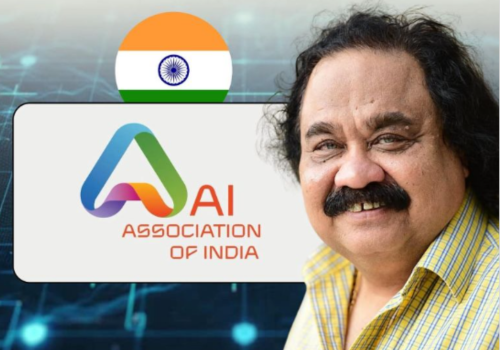

India’s AI ecosystem has expanded at remarkable speed over the past few years. From startups and enterprises to agencies, creators, and independent professionals, Artificial Intelligence has quietly become embedded in everyday work. Yet despite this rapid adoption, one thing was missing: a dedicated industry body focused solely on AI.
The launch of the Artificial Intelligence Association of India (AIAI) fills that gap. More than just another association, its formation signals a shift from fragmented innovation toward collective responsibility, shared standards, and long-term ecosystem thinking.
Rather than positioning itself as a regulator, AIAI is designed as a collaborative platform—bringing together stakeholders from technology, marketing, media, design, automation, and other AI-driven sectors. That distinction is important, because it reflects where India’s AI journey currently stands.
Why an AI Industry Body Is Emerging Now
Timing matters, and AIAI’s arrival is not accidental.
AI in India has moved well beyond experimentation. What was once limited to pilots and proofs-of-concept is now deeply integrated into:
- Marketing and performance optimisation
- Workflow automation and operations
- Content creation and design
- Customer support and personalisation
- Data analysis and decision-making
As adoption scales, so do unresolved questions:
- What does responsible AI look like in day-to-day use?
- Where should ethical boundaries be drawn?
- How do businesses balance speed with accountability?
- How can skills and knowledge keep pace with tools?
Until now, these conversations were happening in silos—inside companies, online communities, or global forums that don’t always reflect Indian realities. The formation of AIAI reflects a clear need for coordination at a national, industry-led level.
Moving From Innovation in Isolation to Shared Frameworks
One of the most important roles AIAI can play is creating shared language and reference points for AI adoption.



When industries grow rapidly without coordination, confusion often follows:
- Different definitions of “ethical AI”
- Inconsistent practices across sectors
- Uneven understanding of risks and responsibilities
By acting as a neutral convening space, the association can help align perspectives across industries that use AI in very different ways—developers, marketers, designers, founders, and enterprise leaders.
This doesn’t mean slowing innovation. It means reducing friction and uncertainty so innovation can scale more sustainably.
A Focus on Ethics Without Framing It as a Constraint
One of AIAI’s stated priorities is responsible and ethical AI use. That focus is especially relevant in creative and digital-first industries, where AI tools increasingly shape:
- How content is generated
- How audiences are targeted
- How decisions are automated
- How trust is built—or lost
Crucially, the association does not appear to position ethics as a brake on progress. Instead, it frames responsible AI as infrastructure—something that enables long-term adoption rather than restricting it.
This matters because trust is fast becoming a competitive advantage. Brands, platforms, and professionals that use AI transparently and thoughtfully are more likely to retain credibility as scrutiny increases.
What This Means for Businesses and Professionals
For companies and individuals already working with AI, AIAI could become a practical resource rather than a symbolic one—if executed well.
Potential benefits include:
- A forum for shared learning and real-world case studies
- Industry-driven best practices instead of abstract guidelines
- Dialogue between practitioners and policymakers
- Reduced uncertainty for smaller businesses and teams
- Greater confidence in experimenting responsibly
For freelancers, agencies, and startups, this kind of collective knowledge can lower the barrier to adoption. Instead of figuring everything out alone, they gain access to patterns, standards, and peer insight.
A Signal That India’s AI Ecosystem Is Maturing
Industry bodies tend to emerge at a specific stage of growth—when speed alone is no longer enough.
The launch of AIAI suggests that India’s AI conversation is evolving:
- From whether to adopt AI → to how to adopt it sustainably
- From isolated tools → to interconnected systems
- From individual advantage → to ecosystem health
This is a sign of maturity. It indicates that AI in India is no longer seen as a short-term advantage, but as a foundational capability that needs long-term stewardship.
Why This Matters Beyond AI Professionals
Even for those not directly working in AI, the association’s impact could ripple outward.
AI increasingly influences:
- What content people see
- How services are delivered
- How decisions are made behind the scenes
An organised industry voice can help ensure those systems evolve with accountability, cultural context, and local realities in mind—rather than being shaped entirely by external frameworks.
Final Thought
The launch of the Artificial Intelligence Association of India represents more than the creation of a new organisation. It reflects an ecosystem beginning to organise itself around shared responsibility, collaboration, and long-term impact.
Its true influence will depend on participation, transparency, and execution. But its very existence signals that India’s AI journey is entering a more deliberate, structured phase—one where innovation and responsibility are no longer treated as opposites, but as partners.