





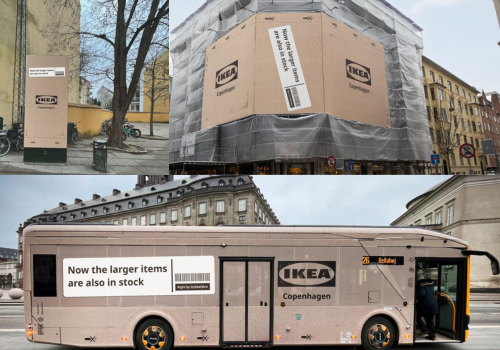

Marketing campaigns rarely manage to capture global attention while clearly communicating a business strategy. Yet that’s exactly what IKEA achieved when it transformed parts of Copenhagen into what looked like a massive flat-pack package. The creative stunt wasn’t just visually striking—it was a clever way to communicate a major change in the company’s retail strategy.
- A City That Looked Like an IKEA Box
- The Retail Shift Behind the Campaign
- Why IKEA Is Changing Its Retail Strategy
- Urban Retail Is Becoming the Future
- Experiential Marketing at Its Best
- Strengthening Brand Identity Through Creativity
- What Other Brands Can Learn From This Campaign
- The Future of IKEA’s Urban Expansion
- Final Thoughts
For decades, IKEA has been known for its large warehouse stores located on the outskirts of cities. Customers typically traveled long distances, walked through massive showrooms, and then picked up flat-packed furniture from huge self-service areas. But as shopping habits evolve and cities become more urbanized, the furniture giant is adapting its approach.
The Copenhagen campaign symbolised this shift perfectly.
A City That Looked Like an IKEA Box
In the campaign, elements of the city were visually transformed to resemble IKEA’s famous flat-pack boxes. Streets, buildings, and urban spaces were wrapped in designs that mimicked the iconic packaging style people instantly associate with the brand.
At first glance, it looked like an enormous IKEA product ready to be assembled.
The concept was simple but powerful: if IKEA furniture comes in flat packs, why not make the city look like one too? The visual transformation created curiosity, encouraging people to stop, take photos, and share the installation online.
This turned a local marketing activation into a viral moment.
The Retail Shift Behind the Campaign
While the installation grabbed attention, the real message behind it was strategic.



IKEA announced that large furniture items would now be available for immediate pickup at its central Copenhagen store. This marks an important change in how the company operates in urban environments.
Traditionally, city-center IKEA stores functioned more like showrooms. Customers could explore products, but larger furniture pieces still required ordering and delivery from larger warehouses outside the city.
Now, shoppers can purchase and pick up larger items directly from the city store.
This significantly improves convenience for customers living in urban areas.
Why IKEA Is Changing Its Retail Strategy
The IKEA campaign reflects a broader transformation happening across the retail industry. Consumer behavior has shifted dramatically over the past decade, especially in major cities.
People increasingly expect faster purchases, easier pickup options, and closer retail locations.
Large suburban warehouse stores still play an important role for IKEA, but urban shoppers often prefer smaller stores closer to home. Transporting furniture across long distances within cities can also be inconvenient.
By enabling immediate pickup of large items in city locations, IKEA is adapting to these modern expectations.
Urban Retail Is Becoming the Future
Cities around the world are growing denser, and urban consumers often rely on public transport, bicycles, or smaller vehicles rather than large cars.
This creates challenges when buying furniture.
Traditional warehouse shopping works well for suburban customers with vehicles, but city residents need more flexible solutions. IKEA’s updated retail approach focuses on making furniture shopping easier for people living in apartments and urban neighborhoods.
The Copenhagen campaign highlights this transformation by bringing the brand closer to the city lifestyle.
Experiential Marketing at Its Best
What makes the campaign particularly successful is its combination of storytelling and business strategy.
Instead of simply announcing a retail change through advertising, IKEA turned the message into a physical experience.
People walking through the installation immediately understood the reference to IKEA’s flat-pack identity. The visual metaphor communicated the brand’s message without requiring long explanations.
Experiential marketing campaigns like this work well because they create memorable moments that audiences naturally want to share.
Photos and videos from the installation quickly spread across social media platforms, giving the campaign organic reach far beyond the city itself.
Strengthening Brand Identity Through Creativity
IKEA has always been known for playful and creative marketing. The flat-pack city concept reinforces the brand’s identity while staying consistent with its design philosophy.
The idea connects directly to one of the brand’s most recognizable elements: flat-packed furniture.
By turning an entire city into a giant version of its packaging, IKEA strengthened its brand recognition in a fun, engaging way.
At the same time, it communicated a meaningful operational change to customers.
What Other Brands Can Learn From This Campaign
There are several lessons businesses can learn from this marketing approach.
First, campaigns become more powerful when they communicate a real business change rather than simply promoting a product.
Second, creativity works best when it connects directly to a brand’s core identity. IKEA didn’t create a random spectacle—it built the idea around something customers already associate with the company.
Finally, physical experiences can amplify digital reach. A campaign that people encounter in the real world often generates massive online exposure when audiences share it on social platforms.
The Future of IKEA’s Urban Expansion
The Copenhagen initiative may represent just the beginning of IKEA’s urban retail transformation.
As cities continue to grow and consumer habits evolve, brands must adapt their retail formats to stay competitive. IKEA has already experimented with smaller city stores in several markets, focusing on accessibility and convenience.
Making large items available for immediate pickup in city locations could become a standard feature of future stores.
If successful, the model could expand to other major cities worldwide.
Final Thoughts
The campaign that turned Copenhagen into a giant flat-pack was more than a clever marketing stunt. It symbolized a meaningful shift in IKEA’s approach to urban retail.
By combining creativity with strategic communication, the company captured attention while clearly explaining an important change to its customers.
As retail continues evolving in response to urban lifestyles and modern shopping expectations, campaigns like this show how brands can use storytelling and design to communicate transformation in a memorable way.
You do not have enough Humanizer words left. Upgrade your Surfer plan.