





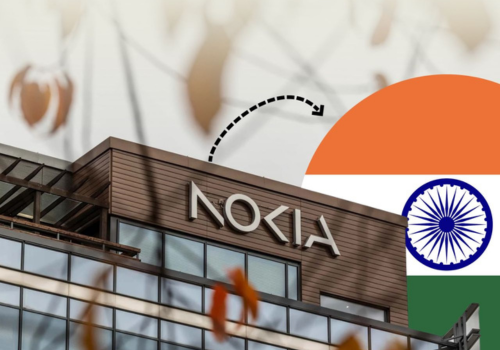

The global telecom industry is entering a new phase where high-capacity broadband infrastructure is becoming the backbone of digital economies. In this context, Nokia’s decision to launch its largest global fixed networks research and development hub in Chennai is more than just an expansion. It represents a long-term strategic commitment to the future of fibre-based connectivity.
- The New R&D Hub: A Major Investment in Network Innovation
- Why Fibre Networks Are Becoming Critical Infrastructure
- Focus on Next-Generation Broadband Technologies
- Why Chennai Is a Strategic Location
- Strengthening India’s Role in Global Telecom Innovation
- Supporting the Global Fibre Expansion
- A Strategic Move Beyond 5G
- Long-Term Implications for the Telecom Industry
- Final Thoughts
With hundreds of engineers, significant investment, and a focus on next-generation broadband technologies, this facility signals how telecom infrastructure companies are preparing for the next era of ultra-fast digital connectivity.
The New R&D Hub: A Major Investment in Network Innovation
The new facility, located in Siruseri in Chennai, is the largest R&D center globally for Nokia’s fixed networks business. The first phase alone will require an investment of around ₹270 crore, with further expansion expected in subsequent phases.
Beyond the financial commitment, the facility is expected to create over 200 high-skill engineering jobs and strengthen India’s role in global telecom innovation.
The center will serve as a global innovation hub for technologies related to broadband access networks, enabling research and development in multiple areas of fixed connectivity.
From a strategic perspective, this investment reflects Nokia’s belief that fixed broadband—especially fibre—will remain central to global digital infrastructure for decades to come.
Why Fibre Networks Are Becoming Critical Infrastructure
To understand the significance of this investment, it’s important to look at broader industry trends. The demand for data is growing rapidly due to several factors:
- Streaming platforms and cloud services are driving continuous high data traffic
- Artificial intelligence applications that require fast and reliable networks
- Remote work and hybrid workplaces are increasing dependency on broadband connectivity
- Smart homes and IoT devices are generating constant network activity
These technologies require high-capacity, low-latency networks, and fibre infrastructure remains the most reliable way to deliver these capabilities at scale.


Compared with legacy copper networks, fibre provides dramatically higher bandwidth and can support next-generation speeds for many years without frequent upgrades.
For telecom providers and technology companies, investing in fibre research is essentially investing in the future foundation of the internet.
Focus on Next-Generation Broadband Technologies
The Chennai R&D center will focus heavily on advanced broadband and optical technologies, including:
- 10G, 25G, 50G, and 100G passive optical networks (PON) for high-capacity fibre connectivity
- Fixed wireless access solutions to extend broadband coverage efficiently
- Wi-Fi innovations for faster and more reliable wireless networks
- Access network and home controller technologies to improve in-home connectivity and network management
These technologies are designed to support ultra-high-speed internet access and future network services.
In simple terms, these innovations will help telecom operators:
- Deliver faster internet speeds to homes and businesses
- Support millions of connected devices simultaneously
- Handle growing global data traffic efficiently
This demonstrates why such R&D facilities are not just regional investments—they are critical components of the global telecom ecosystem.
Why Chennai Is a Strategic Location
Choosing this location for the facility was not accidental. Chennai has become one of India’s most important technology hubs, especially for telecom and engineering research.
Several factors make the city attractive for global R&D operations:
- A large pool of skilled engineers and telecom professionals available for advanced technology development
- Strong academic institutions and technical universities that support research and innovation
- Government support for technology investment through policies and infrastructure development
- Established telecom and IT infrastructure that enables efficient research and collaboration
Industry experts increasingly view Chennai as a global innovation cluster for telecom technology, making it a logical choice for Nokia’s largest research hub for fixed networks.
The collaboration between Nokia and regional authorities also reflects how public-private partnerships can accelerate technology innovation and digital infrastructure development.
Strengthening India’s Role in Global Telecom Innovation
The new R&D facility also highlights India’s growing influence in the global telecom industry. Many multinational technology companies now use India as a base for several key activities, including:
- Network software development that powers modern telecom infrastructure
- Telecom equipment engineering for global communication networks
- Next-generation broadband research focused on faster and more reliable connectivity
Nokia already employs thousands of engineers across India, and its operations support both local telecom operators and international markets.
By expanding its R&D presence in Chennai, the company is reinforcing India’s position as a key contributor to global telecommunications innovation.
Supporting the Global Fibre Expansion
Telecom operators worldwide are investing heavily in fibre network expansion. Governments and service providers are pushing for wider broadband coverage because high-speed connectivity is now considered essential infrastructure—much like electricity or transportation networks.
Fibre deployment is accelerating across several important sectors, including:
- Urban smart cities, where high-speed networks support digital services and connected infrastructure
- Rural broadband programs are designed to bring reliable internet access to underserved communities
- Enterprise and industrial networks that require fast and stable connectivity for operations and automation
- Cloud and data center connectivity, where fibre ensures large volumes of data move quickly and securely
By developing new technologies at the Chennai facility, Nokia aims to help telecom operators deploy fibre networks more efficiently and cost-effectively.
In other words, this R&D hub is not just building technology—it is helping shape the next generation of global internet infrastructure.
A Strategic Move Beyond 5G
While much of the telecom industry has focused on 5G in recent years, fixed broadband remains equally important.
In many cases, fibre networks actually support mobile networks by providing high-capacity backhaul connections between cell towers and data centers.
This means fibre infrastructure is essential not only for home internet but also for the performance of advanced mobile networks.
By investing heavily in fixed network research, Nokia is positioning itself to lead in a market where fibre and wireless technologies are increasingly converging.
Long-Term Implications for the Telecom Industry
The Chennai R&D hub signals several important trends shaping the telecom sector.
First, companies are investing more heavily in network research and innovation to meet future demand.
Second, fibre infrastructure is being recognized as a long-term strategic asset, not just a short-term technology upgrade.
Third, global telecom innovation is becoming more geographically distributed, with emerging tech hubs playing a larger role.
These shifts highlight how telecom infrastructure is evolving from simple connectivity to a platform for digital transformation.
Final Thoughts
The launch of Nokia’s largest fixed networks R&D hub in Chennai represents more than a corporate expansion. It reflects a strategic vision for the future of global connectivity.
As digital services, AI technologies, and cloud platforms continue to grow, high-capacity fibre networks will become even more critical.
By investing in advanced broadband research and building one of its largest global labs in Chennai, Nokia is clearly betting on a future where fibre remains the backbone of the world’s digital infrastructure.
For the telecom industry—and for the digital economy as a whole—this move signals that the fibre era is only just beginning.