





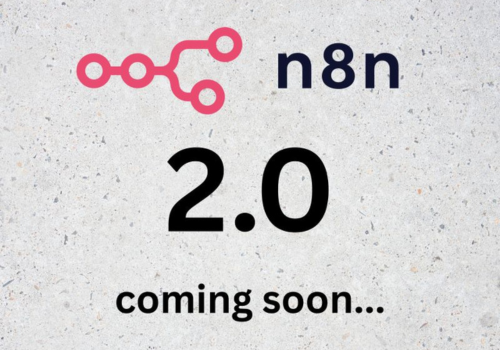

The release of n8n Version 2.0 is not just another product update—it’s a clear signal that workflow automation platforms are entering a new phase of maturity. For teams that rely on automation to support real business operations, this upgrade reflects a shift from experimentation toward long-term, production-grade infrastructure.
- From Simple Automations to Mission-Critical Systems
- A Workflow Canvas Built for Complexity, Not Just Convenience
- Backend Changes That Prioritise Stability and Security
- Migration Treated as a Product Feature, Not an Afterthought
- How This Upgrade Connects to n8n’s Growing Template Ecosystem
- What n8n 2.0 Means for Real Users
- A Broader Signal for the No-Code Automation Space
- Final Thought
At first glance, the improvements may appear incremental: better performance, a smoother interface, and backend refinements. But taken together, they reveal how n8n is repositioning itself—from a flexible builder for individual workflows to a dependable system teams can confidently scale.
From Simple Automations to Mission-Critical Systems
In the early days of no-code and low-code automation, the primary value proposition was speed. Build something quickly, connect a few tools, save time. That mindset is changing.
Today, many teams use automation to:
- Power lead routing and CRM updates
- Run AI-driven content and data pipelines
- Handle reporting, notifications, and internal ops
- Support revenue, marketing, and customer workflows
When automation becomes this embedded, performance, reliability, and maintainability start to matter as much as flexibility. n8n 2.0 is clearly designed with this reality in mind.
A Workflow Canvas Built for Complexity, Not Just Convenience
One of the most noticeable upgrades in Version 2.0 is the redesigned workflow canvas.
As workflows grow larger—with dozens or even hundreds of nodes—small inefficiencies quickly turn into real friction. Laggy navigation, slow rendering, and cluttered views make systems harder to maintain and riskier to change.
The new canvas addresses these pain points by focusing on:



- Faster rendering, even for large, complex workflows
- Smoother navigation between nodes and branches
- Reduced lag during edits and reconnections
- Clearer organisation through a refreshed sidebar and layout
For simple automations, these changes may feel subtle. For teams managing multi-step, conditional workflows that evolve over time, they’re transformative. The canvas now supports thinking at scale, not just building quickly.
Backend Changes That Prioritise Stability and Security
While UI improvements are easy to spot, some of the most important changes in n8n 2.0 live under the hood.
The upgrade includes a significant backend overhaul that modernises legacy components and improves how the platform handles:
- Configuration management
- Environment variables
- Permissions and access control
- Long-term stability
These changes matter because they reduce the kinds of hidden risks that emerge as automation systems grow—misconfigured environments, brittle setups, or unclear permission boundaries.
Crucially, n8n manages to do this without abandoning its open and flexible philosophy. The platform is becoming more enterprise-ready while still serving developers, marketers, and operators who value control and transparency.
This reflects a broader trend across the automation space: reliability is now as important as speed.
Migration Treated as a Product Feature, Not an Afterthought
One of the strongest signals of platform maturity in Version 2.0 is how n8n approaches migration.
Instead of treating upgrades as something users must navigate blindly, n8n provides:
- Pre-migration reports
- Clear identification of potential breaking changes
- Guidance before teams move to the new version
This might sound like a small detail, but it’s not. When upgrades are predictable and transparent, teams feel safer building critical systems on top of the platform. Migration tooling isn’t just about convenience—it’s about trust.
Platforms that expect users to “figure it out” tend to remain hobbyist tools. Platforms that invest in safe transitions position themselves as long-term infrastructure.
How This Upgrade Connects to n8n’s Growing Template Ecosystem
The timing of Version 2.0 becomes even more meaningful when viewed alongside another recent milestone: n8n crossing 7,000+ workflow automation templates.
Templates lower the barrier to entry. Version 2.0 raises the ceiling.
Together, they create a powerful combination:
- Templates help users start faster
- A more stable, scalable platform helps them grow safely
As automation patterns become reusable and shared, platform reliability becomes non-negotiable. A large template ecosystem only works if users trust that workflows will remain performant and maintainable over time.
What n8n 2.0 Means for Real Users
For developers, marketers, operators, and founders, this upgrade delivers tangible benefits:
- Greater confidence in scaling automation across teams
- Better performance for data-heavy and AI-driven workflows
- Lower friction when maintaining and evolving systems
- Reduced risk when upgrading or refactoring workflows
Importantly, n8n didn’t chase flashy features for the sake of headlines. Instead, it strengthened the foundation—often the clearest sign that a product is thinking long-term.
A Broader Signal for the No-Code Automation Space
n8n 2.0 also reflects where the wider no-code and automation ecosystem is heading.
Automation is no longer just about saving time. It’s about:
- Building systems that last
- Supporting collaboration
- Integrating AI responsibly
- Operating with predictable performance
Platforms that fail to mature will struggle as users place more of their business logic into automated workflows.
Final Thought
n8n’s Version 2.0 upgrade isn’t just a technical release—it’s a statement of intent. It shows a platform recognising that automation has moved from experimentation to essential infrastructure.
By focusing on performance, stability, migration safety, and scalability, n8n is signalling that long-term usability now matters more than quick wins.
For teams already investing heavily in automation, that direction may be more valuable than any single new feature.