



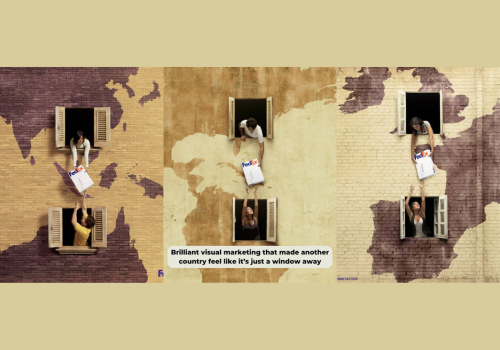

In 2010, FedEx released a print campaign that quietly redefined how people think about international shipping. Instead of talking about speed, logistics, or networks, the brand showed something much simpler: people handing packages to each other through windows.
Each visual featured a painted world map on a building wall. Windows lined up across countries, and people leaned out, passing FedEx packages as if the next nation was just next door.
The message didn’t need words.
From the US to Brazil.
From London to Spain.
From China to Australia.
Global delivery was shown as effortless, human, and familiar.
At a time when most logistics advertising focused on aircraft, warehouses, and infrastructure, FedEx chose a different approach. The campaign translated a complex global system into a moment anyone could understand: handing something to another person.
What made the campaign stand out was its clarity. There were no claims about “fastest” or “best.” No technical explanations. Just a simple visual metaphor that made international shipping feel local.
More than a decade later, the campaign is still referenced in marketing circles because it demonstrates a powerful lesson: when a brand explains a big idea through everyday human behavior, the message sticks.
FedEx didn’t sell delivery routes or logistics networks.
It sold reassurance.
And that’s why this campaign continues to be remembered as one of the strongest examples of visual storytelling in global advertising.