
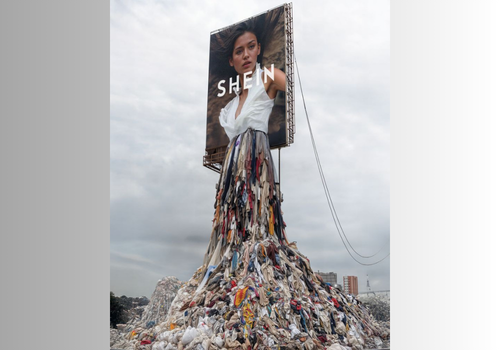

Sometimes, a single image can communicate what years of reports, data, and sustainability campaigns fail to make people feel. A striking AI-generated visual by Emanuele Morelli has done exactly that—forcing viewers to confront the uncomfortable reality behind fast fashion.
The image depicts a model standing tall on a billboard, her dress seamlessly transforming into a massive pile of discarded clothing. It is not just visually arresting; it is symbolic of a system built on overproduction, overconsumption, and disposability.
When Art Says What Data Cannot
For years, the environmental impact of fast fashion has been well-documented. Reports have highlighted alarming statistics, including the generation of tens of millions of tons of textile waste annually. Yet, despite this information being widely available, consumer behavior has remained largely unchanged.
What makes this image different is its ability to translate abstract numbers into something tangible and emotional. It bridges the gap between awareness and understanding, making the consequences of consumption impossible to ignore.
The Scale of the Fast Fashion Waste Crisis
The global fashion industry produces an enormous amount of waste each year, much of which ends up in landfills or is incinerated. Cheap production cycles and rapidly changing trends have created a culture where clothing is treated as disposable rather than durable.
Fast fashion brands have mastered the art of speed and affordability, but this efficiency comes at a significant environmental cost. From water pollution caused by dyeing processes to the accumulation of non-biodegradable fabrics, the impact extends far beyond what is visible to the average consumer.
The Psychology Behind Overconsumption
The success of fast fashion is not accidental—it is driven by a carefully engineered system designed to maximize consumption. Micro-trends are constantly introduced to keep consumers engaged, while low prices reduce the perceived value of individual items.
Social media platforms play a crucial role in amplifying this cycle, where algorithms prioritize novelty and encourage frequent purchasing. Many brands use AI-powered tools for social media marketing to identify trends, target audiences, and create a sense of urgency that drives impulse buying.



The Illusion of Affordability
One of the most compelling aspects of fast fashion is its affordability. However, this low cost often masks the true price of production. When a garment is sold at an extremely low price, the difference is often absorbed elsewhere—through environmental degradation, labor exploitation, or compromised quality.
This creates a disconnect between what consumers pay and the actual cost of the product, making it easier to justify frequent purchases without considering long-term consequences.
Environmental and Social Impact
The environmental impact of fast fashion extends across multiple dimensions. Water sources are contaminated by toxic chemicals, microplastics from synthetic fabrics enter ecosystems, and massive amounts of waste accumulate in landfills.
At the same time, the industry’s labor practices have been widely criticized, with workers often facing low wages and challenging working conditions. These issues highlight the broader ethical implications of consumption, raising questions about responsibility and accountability.
The Role of Data and Consumer Awareness
As awareness grows, consumers are beginning to question the sustainability of their purchasing habits. Brands are increasingly using CRM and marketing automation platforms to understand consumer behavior and adapt their strategies accordingly.
This shift indicates a growing demand for transparency and accountability, as consumers seek to align their choices with their values.
The Rise of Circular Fashion
Despite the challenges, there are signs of positive change within the industry. Circular fashion models, including resale, recycling, and upcycling, are gaining traction as viable alternatives to traditional consumption patterns.
Resale markets, in particular, are experiencing rapid growth, offering consumers a more sustainable way to engage with fashion. This shift reflects a broader movement toward conscious consumption, where value is placed on longevity rather than disposability.
Why This Image Matters
The significance of this AI-generated image lies in its ability to provoke reflection. It does not provide solutions or make explicit demands; instead, it invites viewers to reconsider their relationship with fashion.
By presenting a visual metaphor for waste, it challenges the normalization of overconsumption and encourages a deeper understanding of the consequences associated with everyday choices.
FAQs
What does the AI image represent?
It symbolizes the environmental impact of fast fashion and the accumulation of textile waste.
Why is fast fashion harmful?
Due to its contribution to waste, pollution, and labor exploitation.
Can consumers make a difference?
Yes, through mindful purchasing, supporting sustainable brands, and adopting circular fashion practices.
Conclusion
The fast fashion industry has long operated on a model that prioritizes speed and affordability over sustainability. While data and reports have highlighted its impact, it is often images like this that truly resonate with audiences.
By transforming statistics into a visual narrative, this AI-generated artwork serves as a powerful reminder of the hidden costs behind our consumption habits. It challenges us to look beyond price tags and consider the broader implications of our choices.
Because in the end, what we wear is not just a reflection of style—it is a reflection of values.