








Google’s decision to expand Message Assets beyond WhatsApp to include Facebook Messenger and Zalo is more than just a small update to ad formats. It shows that Google is starting to rethink how lead generation works in today’s mobile-first world.
User attention is shorter than ever. People want quick answers, simple interactions, and fast communication with businesses. Because of this change in user behavior, traditional advertising funnels are becoming less effective.
Instead of pushing users through long steps like landing pages, forms, and delayed responses, Google is now focusing on a faster approach: real-time conversations.
This signals an important shift in digital marketing. Lead generation is slowly moving away from page-based funnels toward conversation-first experiences.
From Clicks to Conversations
Traditional lead funnels usually follow a simple structure:
Ad click → Landing page → Form submission → Follow-up
While this process has worked for years, it also creates several points of friction. Each step increases the chance that a potential customer will leave before converting.
This is especially true on mobile devices. Slow page loading, confusing layouts, or long forms often cause users to abandon the process before completing it.


Messaging ads simplify this entire journey.
With Message Assets, the conversation itself becomes the conversion. Instead of visiting a website and filling out a form, users can message the business directly.
This small change makes the experience feel more natural. People are generally more comfortable asking a question in a chat than completing a long form.
Messaging removes several common obstacles, including page load delays, form fatigue, and unnecessary steps in the conversion process.
As a result, the path from interest to interaction becomes much faster and smoother.
Why Cross-Platform Messaging Matters to Google
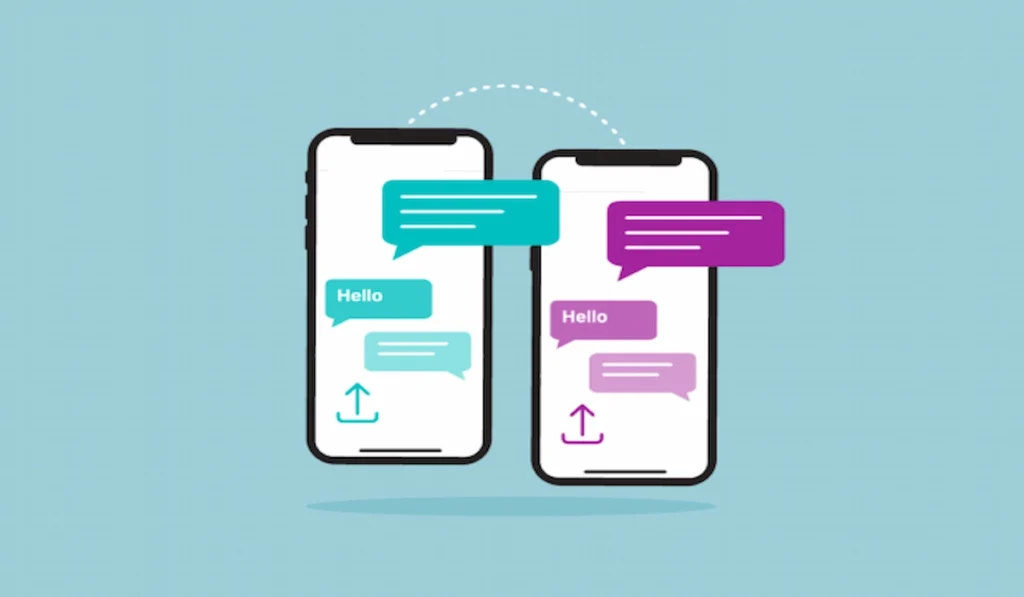
By supporting WhatsApp, Facebook Messenger, and Zalo, Google is aligning its advertising system with how people already communicate in daily life.
This strategy is important for several reasons.
It Matches Regional User Behavior
In many parts of the world, messaging apps are the main way people interact with businesses. This is particularly true in regions across Asia, Latin America, and parts of Europe.
In these markets, messaging platforms often replace traditional websites as the first point of contact between customers and brands.
By integrating these platforms directly into Google Ads, the company allows advertisers to connect with users in ways that feel familiar and convenient.
It Reduces Dependence on Landing Pages
Not every business has a well-optimized website or high-performing mobile landing page. Building and maintaining these pages requires technical knowledge, design work, and ongoing optimization.
Messaging ads reduce this dependency.
Businesses can now generate leads without relying heavily on complex website infrastructure. Instead, they can start conversations directly through messaging platforms.
This lowers the barrier for many small businesses that want to advertise online but lack advanced web development resources.
It Keeps Google Central to the Funnel
Even though conversations take place on third-party platforms like WhatsApp or Messenger, Google still controls the most important part of the process: intent discovery.
Google Ads captures user intent through search queries and targeting signals. It then directs that traffic into messaging platforms where conversations begin.
This allows Google to maintain control over traffic flow, optimization, and performance measurement while expanding how conversions happen.
Faster Funnels but New Challenges
Messaging funnels behave very differently compared to traditional marketing funnels.
In many cases, they convert faster because users can ask questions and receive responses instantly. This immediate interaction can help businesses qualify leads more quickly.
However, messaging funnels also introduce new operational challenges.
Instead of optimizing landing pages, businesses must now focus on managing conversations effectively.
Important factors include response speed, message quality, automation systems, and CRM integration.
Response time becomes especially important. Users who start conversations often expect replies within minutes, not hours.
If responses are slow or inconsistent, potential customers may lose interest quickly.
This means the main bottleneck in lead generation is no longer the website. Instead, it shifts to the business’s ability to manage incoming conversations efficiently.
Companies that treat messaging ads simply as form replacements often struggle. The real advantage comes when messaging is treated as a complete communication channel that combines marketing, sales, and customer service.
How This Fits Google’s Broader Advertising Strategy
The expansion of Message Assets aligns with Google’s broader strategy for the future of digital advertising.
Across many of its products, Google is working to simplify ad experiences and remove unnecessary friction.
We have already seen this direction through tools such as Performance Max campaigns, automated bidding systems, and AI-generated ad creatives.
These tools reduce manual work for advertisers while allowing Google’s algorithms to optimize campaigns based on user intent and behavior signals.
Messaging ads follow the same philosophy.
Instead of forcing users into traditional website funnels, Google is adapting its advertising system to match modern user behavior.
People today prefer quick answers, instant communication, and minimal effort when interacting with businesses.
By supporting messaging platforms, Google makes advertising more compatible with how users already behave online.
What Advertisers Need to Rethink Before Scaling Messaging Ads
Although messaging ads create exciting opportunities, they are not a simple replacement for traditional lead forms.
Businesses need to prepare their systems before scaling this type of campaign.
Messaging campaigns work best when response times are fast and predictable. Automated replies or chat assistants can quickly acknowledge new messages, while human agents handle deeper conversations.
It is also important to choose the right messaging platform depending on the region and target audience. Some markets rely heavily on WhatsApp, while others prefer Messenger or local platforms like Zalo.
Advertisers should also track what happens after the first message. A conversation alone does not guarantee a qualified lead or a completed sale.
Without proper tracking and workflow management, businesses may generate large volumes of conversations but struggle to convert them into actual customers.
Successful messaging campaigns require structured processes, clear communication strategies, and well-organized inbox management.
Why This Redefines the Idea of a Conversion
Perhaps the most important impact of Google’s messaging expansion is how it changes the meaning of a conversion.
Traditionally, a conversion has been defined as actions like submitting a form, reaching a thank-you page, or adding a contact to a Marketing CRM system.
Messaging changes that definition.
The conversion is no longer the end of the funnel. Instead, it becomes the beginning of a conversation.
This shift brings marketing and sales teams closer together because interactions with potential customers now happen in real time.
Instead of waiting for follow-up calls or emails, businesses can immediately engage with interested users and guide them toward the next step.
This approach reflects the growing importance of conversational marketing, where dialogue replaces static web experiences.
Final Thoughts
Google’s expansion of Message Assets is not simply about adding more chat platforms to its advertising system. It represents a broader shift in how businesses capture and respond to customer interest.
As messaging becomes a primary interaction method, lead generation is moving away from static pages and toward real-time conversations.
For advertisers, this creates new opportunities to connect with potential customers more quickly and naturally.
However, success with messaging ads requires more than just enabling the feature. Businesses must also adapt their workflows, response systems, and communication strategies to handle conversations efficiently.
In a digital environment where speed and convenience matter more than ever, the ability to respond quickly and communicate clearly may become the most important factor in converting interest into real business results.
The future of lead generation may not start with a form submission.
It may start with a simple message.