





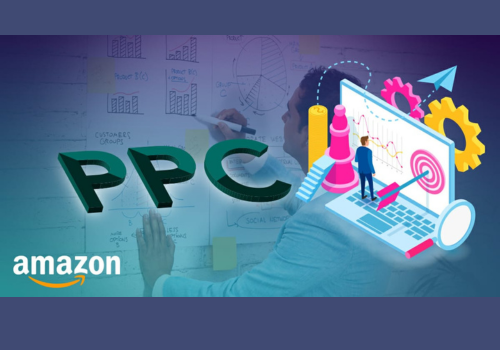

Launching a new product on Amazon is often misunderstood as a patience game. Many sellers believe the right move is to wait—wait for reviews, wait for organic traction, wait for the algorithm to “notice” them. As a result, PPC is frequently treated as a later lever, something to turn on once social proof appears.
In reality, that thinking often works against new products.
For fresh listings, the launch phase is not about reputation yet. It’s about momentum, data, and signals—and paid traffic is one of the fastest ways to create all three. Sellers who delay PPC often delay learning, which is far more expensive than ad spend.
The Misunderstood Advantage of Zero-Review Listings
One of the biggest myths in Amazon selling is that zero reviews automatically hurt performance.
From a buyer psychology perspective, reviews matter—but from Amazon’s system perspective, a new product with zero reviews is neutral, not penalised. Until a rating appears, Amazon does not visually flag the product as “untrusted.” In search results, it sits alongside reviewed products, competing primarily on relevance, price, and conversion behaviour.
That makes the early launch window uniquely powerful.
Once reviews appear—especially if they’re mixed or slow to accumulate—the listing becomes categorised in a different way. Running PPC early takes advantage of this neutral phase, before social proof starts influencing click behaviour.
In short:
Zero reviews don’t hurt visibility.
Lack of traffic does.


Why Early PPC Is About Learning, Not Profit
One of the biggest mistakes sellers make is expecting early PPC to be profitable.
At launch, PPC’s primary job is not efficiency—it’s information.
Early campaigns help sellers:
- Validate whether the listing converts at all
- Identify pricing resistance quickly
- See which keywords bring buying traffic vs. browsing traffic
- Uncover mismatches between product promise and buyer expectation
Without traffic, sellers are guessing. With traffic, they’re diagnosing.
A product that “isn’t selling” organically may actually have:
- Weak main image
- Confusing title positioning
- Incorrect keyword targeting
- Pricing slightly outside the market’s tolerance
PPC exposes these issues in days instead of weeks.
Amazon’s Algorithm Needs Signals, Not Hope
Amazon’s ranking system is driven by behaviour.
It looks for signals like:
- Click-through rate
- Conversion rate
- Sales velocity
- Keyword relevance
New products don’t have these signals yet. Waiting for organic traffic to magically appear often results in a deadlock: no visibility without sales, and no sales without visibility.
Early PPC breaks that loop.
By driving targeted traffic, sellers generate the data Amazon needs to understand where—and whether—the product belongs. Even modest, controlled ad spend can help a listing start finding its footing in search results.
Listing Quality Still Decides Everything
PPC doesn’t fix weak listings—it magnifies them.
Before running ads aggressively, sellers should ensure the fundamentals are solid:
- Clear, benefit-led main image
- Strong title aligned with search intent
- Bullet points that answer objections quickly
- A+ Content that supports confidence
- Pricing that matches category expectations
Paid traffic is like turning up the volume. If the message is unclear, louder doesn’t help—it just reveals the problem faster. That’s not a downside; it’s valuable feedback, as long as sellers are prepared to act on it.
Budget Is the Real Constraint for New Sellers
For new launches, the most important PPC question isn’t campaign structure—it’s budget tolerance.
New products are more expensive to advertise because:
- They lack organic momentum
- They haven’t earned trust signals yet
- The algorithm hasn’t learned who converts best
Treating PPC as a short-term experiment often leads to premature shutdowns. Sellers see poor efficiency early and pull back before enough data is collected.
A better mindset is to treat early PPC as an operational cost of discovery. The goal isn’t immediate ROI—it’s clarity:
- Does the product convert at market prices?
- Are shoppers clicking but not buying?
- Which keywords actually deserve long-term investment?
Turning Early Data Into Long-Term Growth
Once sufficient traffic flows through a listing, optimisation can finally begin.
At this stage, sellers can start refining:
- Keyword targeting and match types
- Bid strategies
- Creative elements (images, bullets, A+ Content)
- Pricing and promotional tactics
Only after this learning phase does efficiency improve. Trying to optimise before data exists often leads to false conclusions—like blaming demand when the issue is presentation.
Early PPC creates the foundation for sustainable growth by replacing assumptions with evidence.
Final Thought
For new Amazon products, waiting for reviews before advertising often delays the very activity that generates them.
Early PPC isn’t about forcing success. It’s about discovering reality—whether the product resonates, where it struggles, and what needs adjustment. In the launch phase, action creates information. And in Amazon selling, information is what turns a new listing into a scalable business.
For sellers serious about growth, PPC isn’t the reward at the end of the journey—it’s the starting signal.