






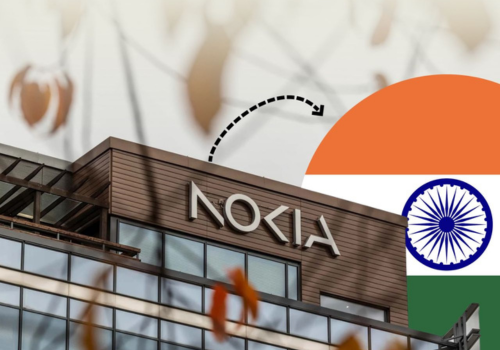

Nokia has announced the launch of its largest fixed networks research and development (R&D) facility in Chennai, marking a significant expansion of its innovation footprint in India.
While mobile connectivity often captures public attention, this move highlights something more foundational: the growing strategic importance of fixed and fibre networks in powering the next phase of global digital growth.
The Chennai centre will focus on advancing next-generation broadband and fibre technologies, reinforcing Nokia’s long-term commitment to strengthening global digital infrastructure while deepening its roots in India’s telecom ecosystem.
Strengthening the Backbone of Digital Growth
Mobile networks may dominate headlines, but fixed networks form the invisible backbone of modern connectivity.
They power:
- Fibre-to-the-home (FTTH) broadband
- Enterprise and campus networks
- 5G and future 6G backhaul
- Cloud data centres
- AI infrastructure and edge computing
Without robust fibre infrastructure, even the most advanced wireless systems struggle to scale.
Nokia’s new R&D hub in Chennai is expected to focus on:
- High-speed fibre access technologies
- Scalable broadband platforms
- Network reliability and automation
- Energy-efficient infrastructure systems
As data consumption accelerates across households and businesses, demand for faster, lower-latency, and more resilient networks continues to rise. This facility positions Nokia to engineer the systems that make that growth sustainable.



Why Fixed Networks Matter More Than Ever
Several macro shifts make this investment particularly timely:
Remote and Hybrid Work
The pandemic permanently increased reliance on high-capacity home broadband. Video conferencing, cloud collaboration, and distributed teams require consistent fibre-grade reliability.
AI and Cloud Expansion
AI-driven workloads and cloud computing depend heavily on dense fibre backbones connecting data centres and edge locations.
Smart Cities and IoT
Urban infrastructure—from traffic systems to surveillance—requires fixed connectivity that can handle massive data flows without interruption.
Rural Broadband Expansion
Governments worldwide are prioritising fibre deployment to underserved regions, creating long-term infrastructure demand.
In this environment, innovation in fixed networks is no longer secondary to wireless—it’s foundational.
Boost to India’s Telecom Innovation Ecosystem
The expansion also reinforces India’s growing role as a global telecom innovation hub.
Chennai, already known for:
- Strong engineering talent
- Established technology parks
- A mature IT services ecosystem
is well positioned to support advanced R&D operations.
This move reflects a broader trend: global telecom majors are not just manufacturing in India—they’re building core intellectual property and engineering capabilities here.
High-skilled job creation, cross-functional collaboration, and deeper integration into global product pipelines strengthen India’s position in the global telecom value chain.
A Shift From Manufacturing to Innovation
Historically, telecom expansion in emerging markets often focused on production or support functions. What distinguishes this development is its emphasis on product design and advanced research.
R&D investment signals:
- Long-term commitment
- Strategic confidence in local talent
- Integration into global technology roadmaps
By concentrating fixed networks R&D in Chennai, Nokia is embedding India into its global broadband strategy—not just as a market, but as a development engine.
Sustainability and Energy Efficiency as Competitive Levers
Another important dimension of modern fibre infrastructure is energy performance.
Telecom networks consume significant power, and operators face increasing pressure to reduce carbon footprints. Innovation in:
- Power-efficient optical systems
- Smarter network automation
- Adaptive bandwidth allocation
can significantly lower operational costs and environmental impact.
If Nokia integrates sustainability into its fibre R&D roadmap, the Chennai centre could influence how next-generation networks balance performance with efficiency.
Why This Investment Signals a Long-Term Telecom Shift
Telecom competition is no longer defined solely by spectrum auctions or handset ecosystems. Increasingly, it’s about:
- Infrastructure depth
- Fibre density
- Latency optimisation
- Integration with cloud and AI systems
As 5G matures and 6G research begins, the importance of high-capacity fibre backhaul and core networks will only grow.
By expanding its fixed networks R&D capacity now, Nokia is effectively preparing for the infrastructure demands of the next decade.
Final Thought
Nokia’s largest fixed networks R&D hub in Chennai isn’t just a regional expansion—it’s a strategic signal.
As global data demand accelerates and digital transformation becomes mission-critical, fibre and fixed networks are emerging as the silent drivers of economic growth. By investing in advanced broadband research in India, Nokia is positioning itself at the centre of that evolution.
In the telecom industry’s next chapter, the companies shaping fibre innovation may ultimately shape everything built on top of it.