




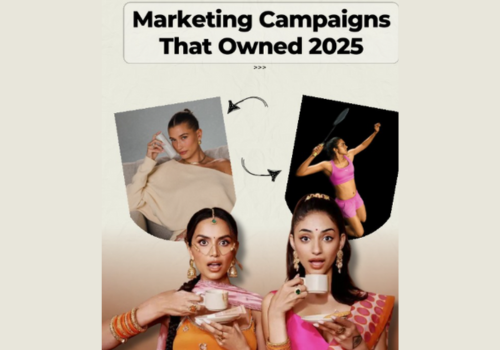

2025 was a year when marketing felt human again.
Not louder.
Not flashier.
Just smarter, more aware, and deeply rooted in culture.
Across categories — beauty, fashion, food, travel, and tech — some campaigns stood out not because they chased attention, but because they earned it. They understood timing, behaviour, and how people actually live, scroll, shop, and talk.
Here are a few campaigns from 2025 that didn’t just run — they stayed with us.
indē wild: Turning Everyday Chaos into Brand Truth
indē wild captured something most beauty brands miss: real life isn’t polished.
Instead of overproduced visuals, the brand leaned into raw, everyday moments from skincare routines — imperfect, chaotic, and honest. The result didn’t feel like advertising. It felt familiar.
That authenticity made the campaign resonate, especially with younger audiences who are tired of aspirational perfection and want brands that reflect reality.
Lesson: Relatability beats refinement.

PUMA x PV Sindhu: Presence Over Noise
PUMA took a quieter route with its partnership announcement featuring PV Sindhu.
No dramatic launch film.
No forced storytelling.
Just clean, high-visibility outdoor placements that let the athlete — and the association — speak for itself. The simplicity worked because the credibility was already there.
Lesson: Sometimes brand confidence means saying less.
Nike’s Community-First Thinking in China
Nike’s pop-up soup spots near Shanghai’s Ersha Island running community showed how well the brand understands local culture.
By offering warm drinks in a familiar format, Nike didn’t sell products — it supported a routine. The brand became part of the runner’s world, not an interruption in it.
Lesson: When brands show up where people already are, marketing feels natural.
Heinz and the Power of a Familiar Shape
Heinz’s “Looks Familiar” campaign played on an insight so simple it felt obvious once you saw it: French fry boxes look a lot like the Heinz logo.
Instead of explaining it, Heinz showed it. The visual did all the work — sparking recognition, conversation, and brand recall without a single hard sell.
Lesson: Strong brands don’t need to explain themselves.
Switzerland Tourism: Luxury With a Purpose
Switzerland Tourism flipped the idea of luxury by placing hotels inside natural landscapes — visually reinforcing conservation instead of consumption.
The imagery was calm, intentional, and memorable. It didn’t shout sustainability. It showed it.
Lesson: Purpose lands better when it’s felt, not preached.
Why These Campaigns Worked
What connects all these ideas isn’t budget or scale. It’s understanding.
They respected:
- Cultural context
- Human behaviour
- Attention spans
- Emotional truth
Instead of trying to go viral, they focused on being meaningful. And that’s why people remembered them.
Final Thought
Marketing in 2025 reminded us of something important:
The best campaigns don’t fight for attention.
They fit into life so naturally that people notice on their own.
And that’s what turns marketing into moments.