




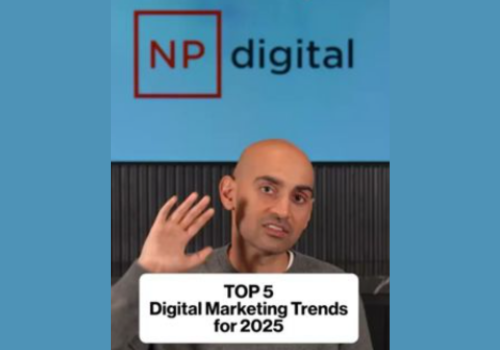

Digital marketing is entering a phase where relying on a single channel, tactic, or familiar playbook is no longer enough. Recent commentary from Neil Patel highlights several shifts that are already well underway—but their real importance lies in what they reveal about how marketing actually works as we move toward 2025.
- Search Is No Longer Just a Google Problem
- Why Smaller Creators Are Gaining More Influence Than Big Influencers
- Content Is Shifting From Volume to Depth
- AI Is Reshaping How Answers Are Found (and Trusted)
- What These Shifts Mean for Marketers in Practical Terms
- Why This Matters Going Into 2025
- Final Thought
Taken together, these changes point to one unavoidable reality:
visibility is becoming more distributed, more fragmented, and far more intent-driven than before. Brands that continue to optimise for isolated metrics risk losing relevance in a system that now rewards presence across multiple touchpoints.
Search Is No Longer Just a Google Problem
For years, SEO was treated as shorthand for “ranking on Google.” That mental model is breaking down fast.
Today, discovery happens everywhere:
- YouTube for explainers and reviews
- TikTok for first-touch discovery and trends
- Reddit and community forums for credibility checks
- Marketplaces like Amazon for purchase intent
- Social platforms for peer validation
- AI assistants for summarised answers
While Google remains dominant, it’s no longer the starting point for every journey. Users now move fluidly across platforms depending on context, urgency, and intent.
The shift toward “search everywhere” doesn’t mean abandoning Google. It means recognising that optimisation must follow behaviour, not platforms. Brands that only invest in traditional SEO risk missing intent that forms—and is often decided—elsewhere.
Why Smaller Creators Are Gaining More Influence Than Big Influencers
Influencer marketing isn’t disappearing, but it is recalibrating.
Large creators with massive reach no longer guarantee:

- Attention
- Trust
- Conversion
Instead, smaller creators are proving more effective because they operate inside real conversations, not broadcast channels. They often deliver:
- Higher engagement rates
- Stronger niche credibility
- More contextual influence at decision moments
This reflects a broader shift in how trust is built online. Audiences increasingly value proximity over popularity. A recommendation from someone who feels “like us” often carries more weight than one from a distant celebrity account.
For brands, this means reallocating budgets away from reach-at-all-costs and toward relevance, alignment, and credibility.
Content Is Shifting From Volume to Depth
Another change Neil Patel frequently highlights is the diminishing return of high-volume, low-depth content.
Short-form content still plays a role—especially for discovery—but it’s no longer sufficient on its own. As competition intensifies, brands are realising that depth builds differentiation.
Formats gaining importance include:
- Webinars and workshops
- Case studies and long-form explainers
- Newsletters with strong POVs
- Podcasts and live discussions
These formats work because they:
- Build trust over time
- Support education and evaluation
- Create repeat engagement rather than one-off clicks
In a noisy ecosystem, attention is earned through usefulness, not frequency.
AI Is Reshaping How Answers Are Found (and Trusted)
Perhaps the most consequential shift is how AI tools are changing search behaviour itself.
Users are increasingly turning to AI-driven assistants for:
- Summaries instead of links
- Recommendations instead of rankings
- Explanations instead of exploration
This fundamentally alters what visibility means.
It’s no longer just about:
- Ranking #1
- Driving clicks
It’s about:
- Being referenced
- Being represented accurately
- Being consistent across platforms and data sources
This is where marketing begins to overlap with knowledge representation, not just content distribution.
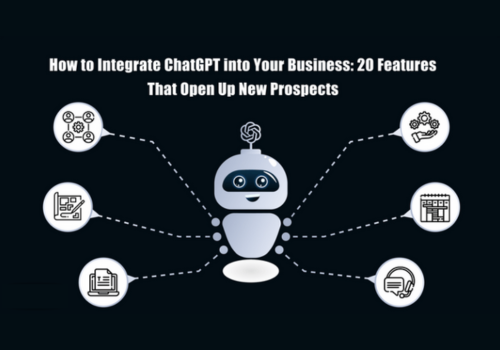
A deeper look at this shift can already be seen in predicted changes to how AI systems like ChatGPT may surface and prioritise information—signalling that SEO, as we know it, is likely to evolve again very soon.
What These Shifts Mean for Marketers in Practical Terms
Taken together, these changes point to a marketing environment defined by:
- Distributed discovery instead of centralised funnels
- Fewer shortcuts and hacks
- Greater emphasis on trust, clarity, and intent
- Smarter allocation of creator and content budgets
- Longer feedback loops—but stronger brand equity
Brands that adapt early won’t just gain reach. They’ll gain resilience—visibility that isn’t dependent on a single algorithm or platform.
Why This Matters Going Into 2025
What makes these shifts especially important is timing.
By 2025:
- User behaviour will be more fragmented, not less
- AI-mediated discovery will be normal, not novel
- Trust signals will outweigh pure optimisation
- Brands that lag will find it harder to “catch up”
The advantage won’t go to those who master one channel—but to those who understand how users move across many.
Final Thought
The marketing shifts Neil Patel talks about aren’t predictions. They’re already unfolding in real time.
The real differentiator heading into 2025 will be execution:
- Who adapts strategy early
- Who builds for distributed visibility
- Who prioritises trust over tactics
Marketing success will no longer come from mastering a single platform—but from understanding how intent flows across an increasingly interconnected ecosystem.