


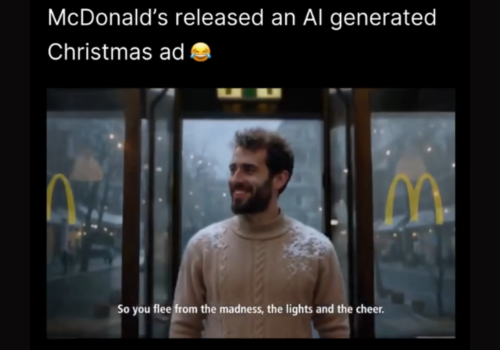

McDonald’s recently rolled out an AI-generated ad that left people more confused than impressed.
The studio behind it later shared that they spent seven weeks crafting prompts and ran thousands of AI iterations to get the final output. But instead of applause, the reaction was instant backlash. Comments on YouTube were turned off within hours, and soon after, the ad was quietly pulled.
So what went wrong?
At first glance, nothing was obviously terrible. But the visuals felt… strange. Snow that didn’t behave like snow. Hands that moved in ways hands shouldn’t. Everything looked almost real — just not real enough.
And that’s exactly the problem.
There’s a reason people couldn’t stop talking about it, and it has less to do with tech and more to do with psychology.
When something looks close to human but slightly off, our brains don’t relax — they panic. It creates discomfort instead of connection. That uneasy feeling doesn’t disappear; it sticks. And unfortunately, it sticks to the brand that caused it.
That’s what happened here.

Research backs this up. Studies show that when people know an ad is AI-generated, they trust it less — even if the content is identical to a human-made version. It feels colder. Less natural. Less believable. And when trust drops, so does purchase intent.
In McDonald’s case, the tech did what it was asked to do. But the ad forgot the most important part: people don’t bond with perfection — they bond with familiarity and warmth.
AI can generate visuals.
It can’t generate empathy.
This doesn’t mean AI has no place in advertising. It absolutely does. But when brands go all-in on automation without asking how it feels to a human watching it, the risk is real.
The irony? McDonald’s is one of the most emotionally familiar brands in the world. Comfort food. Childhood memories. Shared moments.
And this ad felt none of that.
The takeaway for marketers is simple:
Technology should support creativity, not replace it.
Because no matter how advanced the tools get, people still connect with things that feel human.