

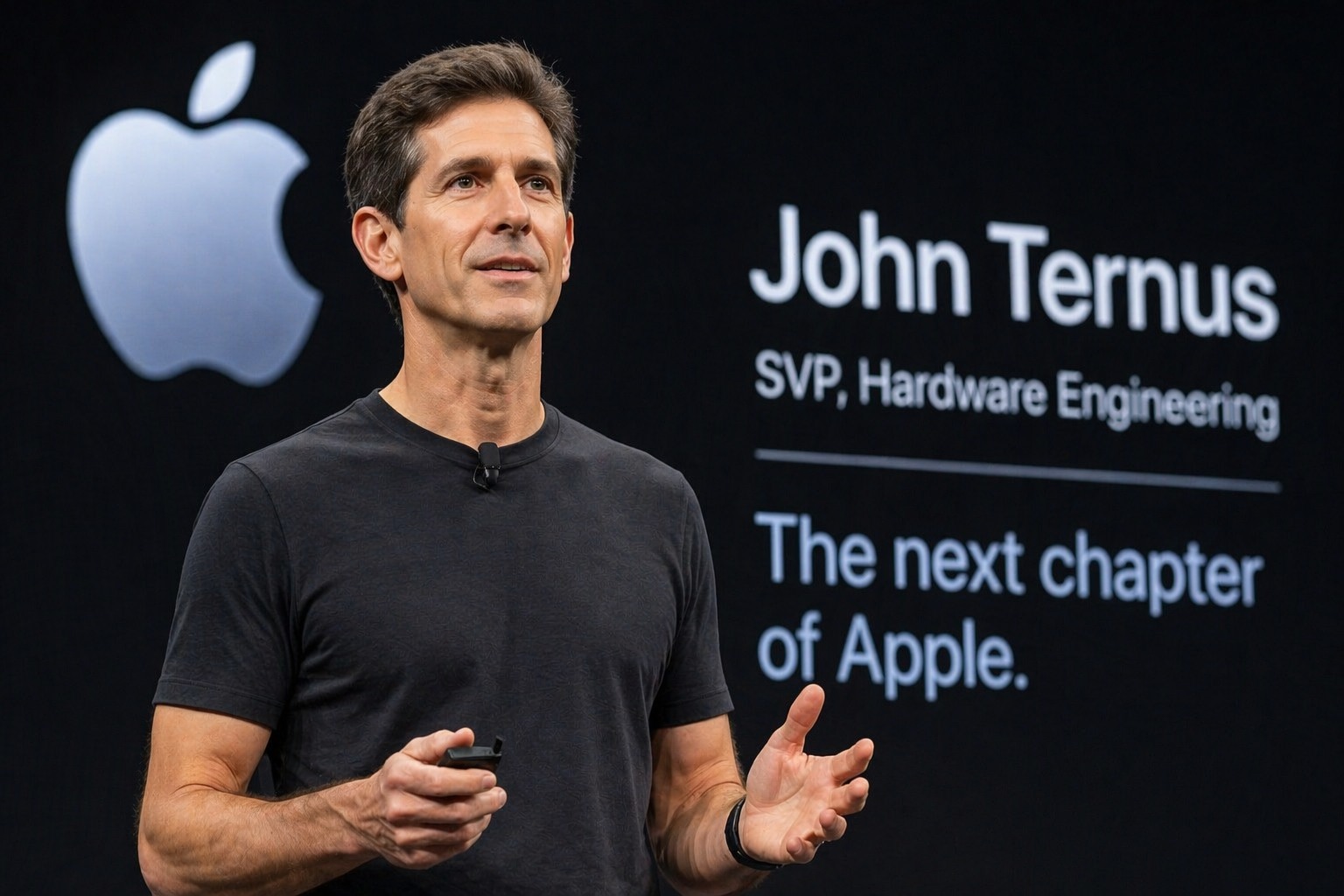

In one of the most significant leadership transitions in over a decade, Apple has officially named John Ternus as the successor to CEO Tim Cook. The transition, set to take effect on September 1, marks a defining moment for the company as it prepares for its next phase of innovation and growth.
While Cook will remain closely involved as executive chairman, the spotlight now shifts to Ternus—a leader whose journey within Apple reflects both deep technical expertise and long-term institutional understanding.
A Carefully Planned Transition
Leadership changes at Apple are rarely abrupt. The company is known for its methodical and long-term approach to succession planning, ensuring continuity and stability.
Ternus’s appointment was widely anticipated within industry circles, particularly after the shifting of responsibilities among senior executives over the past few years. With Jeff Williams stepping back from operational roles, Ternus increasingly emerged as the natural successor, gaining visibility and influence across product and strategic decisions.
Who Is John Ternus?
John Ternus brings over two decades of experience within Apple, having joined the company’s product design team in 2001. Over the years, he has played a pivotal role in shaping nearly every major hardware product in Apple’s portfolio, from iPhones and iPads to Macs and AirPods.
His contributions extend beyond execution—he has been deeply involved in defining product direction, overseeing engineering teams, and guiding some of Apple’s most critical technological transitions, including the shift to Apple silicon.
From Engineer to CEO
Ternus’s journey began at the University of Pennsylvania, where he studied mechanical engineering while also excelling as a competitive swimmer. This combination of technical discipline and athletic determination reflects a mindset that aligns closely with Apple’s culture of precision and performance.
Before joining Apple, he worked at Virtual Research Systems, gaining early exposure to emerging technologies such as virtual reality—experience that would later prove relevant in Apple’s ventures into mixed reality and advanced hardware ecosystems.


Rising Through Apple’s Ranks
Ternus’s growth within Apple has been steady and strategic. Starting as part of the product design team, he gradually took on more responsibility, eventually becoming vice president of hardware engineering in 2013.
His role expanded significantly in 2020 when he took charge of iPhone hardware engineering, one of the company’s most critical business segments. By 2021, he was promoted to senior vice president of hardware engineering, placing him at the core of Apple’s executive leadership.
A Visible and Influential Leader
In recent years, Ternus has become one of the most recognizable faces at Apple’s keynote events, presenting major product launches and engaging directly with global audiences.
This increased visibility was not accidental. It reflected Apple’s broader strategy of preparing him for a leadership role, gradually positioning him as a key decision-maker across product roadmaps, innovation strategies, and long-term vision.
What His Leadership Means for Apple
Ternus’s appointment signals a subtle but important shift in Apple’s priorities. While Tim Cook’s tenure was defined by operational excellence and global scale, Ternus represents a more engineering-driven leadership approach.
This transition comes at a time when Apple is exploring new frontiers, including artificial intelligence, mixed reality, and next-generation computing platforms. His technical background aligns closely with these ambitions, suggesting a renewed focus on product innovation.
The Strategic Importance of Internal Leadership
Apple’s decision to promote from within reinforces its long-standing philosophy of maintaining cultural continuity. Unlike many companies that look externally for leadership, Apple prioritizes internal candidates who understand its values, processes, and long-term vision.
This approach reduces disruption and ensures that strategic direction remains consistent, even as leadership evolves.
Leadership in the Age of Data and AI
As Apple enters its next phase, leadership will increasingly require a balance between technical expertise and data-driven decision-making. Companies at this scale often rely on CRM and marketing automation platforms to manage customer insights, optimize engagement, and guide strategic initiatives.
At the same time, the growing role of AI in product ecosystems means leaders must understand not just technology, but how it shapes user experience and market dynamics. Many brands today leverage AI-powered tools for social media marketing to maintain relevance and engagement in a rapidly evolving digital landscape.
A New Chapter for Apple
At 51, Ternus is positioned to lead Apple for potentially a decade or more, providing long-term stability while guiding the company through a period of technological transformation.
His leadership represents continuity, but also evolution—an opportunity for Apple to build on its legacy while adapting to new challenges and opportunities.
FAQs
Who is John Ternus?
He is Apple’s senior vice president of hardware engineering and the newly appointed CEO successor.
When will he become CEO?
He is set to take over on September 1.
Why was he chosen?
Due to his technical expertise, long tenure, and leadership within Apple’s product ecosystem.
Conclusion
The transition from Tim Cook to John Ternus marks more than a change in leadership—it represents a shift in how Apple is preparing for its future. By placing an engineer at the helm, the company is signaling a renewed focus on innovation, product excellence, and technological advancement.
As Apple continues to evolve, Ternus’s leadership will play a crucial role in shaping the next chapter of one of the world’s most influential companies.