



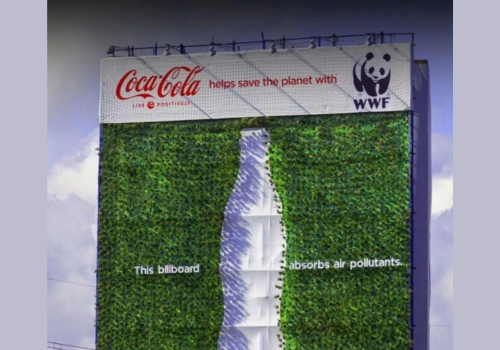

Marketing & Brand Strategy News — Back in 2011, Coca-Cola partnered with WWF to launch a green billboard campaign that quietly redefined what outdoor advertising could be. Instead of vinyl flex and loud brand messaging, the company installed a living billboard made of real plants, designed to absorb air pollutants while visually forming the iconic Coca-Cola bottle.
At the time, it was a bold creative experiment. Today, it feels almost prophetic.
Advertising That Didn’t Just Talk Sustainability—It Practiced It
This campaign wasn’t built to push a product or drive short-term sales. From a marketing perspective, it focused on:
- Brand responsibility over brand promotion
- Cultural relevance over campaign noise
- Long-term memory over momentary attention
The message was simple yet powerful:
What if advertising could give something back to the environment instead of only taking attention from it?
Why This Campaign Hits Harder in 2025
Fast forward to now, and cities like Delhi face severe air pollution every winter—AQI alerts, masks, school closures, and health warnings have become routine. Against this backdrop, Coca-Cola’s living billboard feels less like a campaign and more like a statement on what brand action should look like.
While today’s marketing ecosystem is flooded with hashtags, quick reels, and reactive trend-jacking, this idea lived physically in the real world, improving the environment while communicating a brand value.
A Lesson for Modern Marketers
The Coca-Cola x WWF billboard reminds us that:
- The strongest campaigns don’t always shout
- Meaningful ideas age better than viral moments
- Real-world impact builds deeper brand trust than digital impressions
Some campaigns don’t chase attention.
They earn it by making people pause and think.

And that’s why this 2011 idea feels more relevant today than ever before.