

The modern consumer packaged goods (CPG) ecosystem is defined by a central paradox: multinational conglomerates possess near-limitless supply chain capabilities, multi-billion-dollar balance sheets, and entrenched direct-store-delivery (DSD) networks, yet they consistently fail at cultural brand incubation. Over the past three decades, legacy beverage corporations—The Coca-Cola Company, PepsiCo, and Keurig Dr Pepper—have increasingly outsourced authentic innovation to agile, culture-led challenger brands.
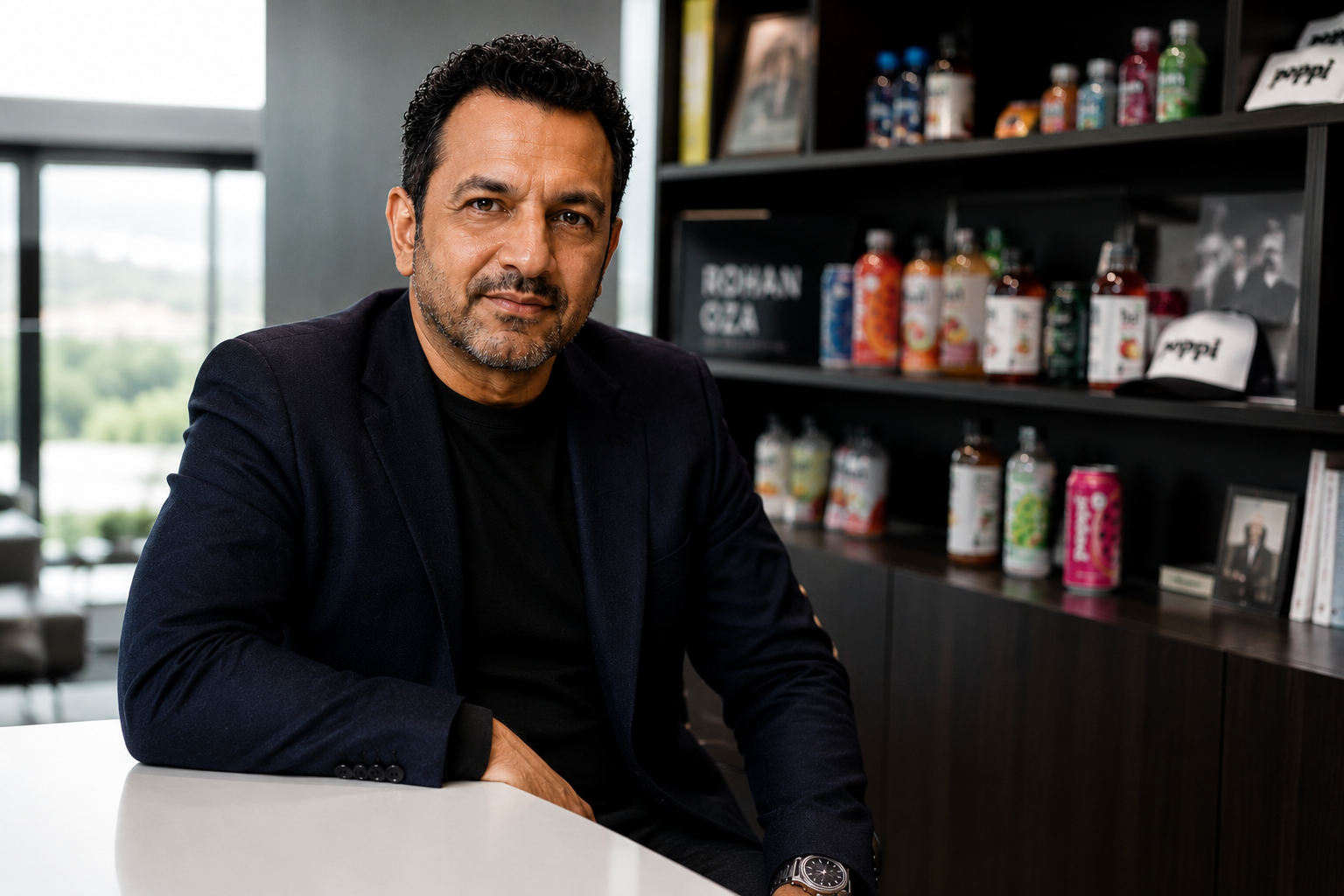
At the center of this transformation stands Rohan Oza.
Known across the industry as the “Brandfather,” Oza has orchestrated a cumulative $7.75 billion in marquee beverage exits:
- Energy Brands / Glacéau (Vitaminwater & Smartwater): Acquired by The Coca-Cola Company for $4.1 billion in cash (May 2007). HTML+ 1
- Bai Brands: Acquired by Keurig Dr Pepper (Dr Pepper Snapple Group) for $1.7 billion (November 2016). HTML+ 1
- Poppi: Acquired by PepsiCo for $1.95 billion gross (May 2025). HTML+ 1
+-----------------------------------------------------------------------------------------+
|                       ROHAN OZA'S BILLION-DOLLAR EXIT TIMELINE                          |
+---------------------+-------------------+------------------------+----------------------+
| Company             | Year of Exit      | Acquiring Conglomerate | Acquisition Value    |
+---------------------+-------------------+------------------------+----------------------+
| Glacéau             | May 2007          | The Coca-Cola Company  | $4.10 Billion        |
| Bai Brands          | November 2016     | Keurig Dr Pepper       | $1.70 Billion        |
| Poppi               | May 2025          | PepsiCo                | $1.95 Billion        |
+---------------------+-------------------+------------------------+----------------------+
| TOTAL LIQUIDITY     |                   |                        | $7.75 Billion        |
+---------------------+-------------------+------------------------+----------------------+
This case study analyzes the marketing architecture, structural equity models, venture capital operations at CAVU Consumer Partners, and acquisition mechanics behind Rohan Oza’s career.
The Formative Years & The Institutional Friction Paradox
Early Career Disruption: Livingstone to Mars, Inc.
Born and raised in Livingstone, Zambia, Rohan Oza spent his youth immersed in global soft drink culture. After moving to the United Kingdom to earn an undergraduate degree from the University of Nottingham, he entered institutional brand management at Mars, Inc. in 1992, working on the Snickers account.
His initial corporate tenure was cut short. At age 22, his manager removed him from the management training track, stating bluntly that he was “not sure marketing is your thing.” Returning temporarily to Zambia, Oza resolved to master the American consumer landscape, moving to the United States in 1995 to earn an MBA from the University of Michigan.
Corporate Battles Inside The Coca-Cola Company
Recruited from Michigan into The Coca-Cola Company’s global headquarters in Atlanta, Oza was tasked with managing Sprite before taking over Powerade in 2001.
- The Powerade Turnaround: Powerade was sliding at a 15% year-over-year decline prior to Oza taking charge. By abandoning conventional sport-hydration tropes and tying the brand directly to hip-hop aesthetics, inner-city basketball culture, and street-level athletic energy, Oza reversed the trajectory—delivering 35% year-over-year revenue growth within 12 months. YouTube+ 1
- The “Too Disruptive” Corporate Verdict: While commercially successful, Oza’s boundary-pushing tactics clashed with Coca-Cola’s risk-averse institutional hierarchy. Branded as “too disruptive,” he was eventually pushed out.
Rather than viewing the exit as a failure, Oza treated it as an opportunity to secure venture equity instead of a corporate salary.
Glacéau & The Invention of the Equity-for-Culture Framework
In 2002, Oza joined founder J. Darius Bikoff at Energy Brands (Glacéau) as Chief Marketing Officer. At the time, Glacéau was an emerging player generating approximately $35 million in annual revenue.
Operating on limited corporate reserves, Oza borrowed capital from his father to purchase direct equity in Glacéau. This personal stake guided his strategy: early-stage brands cannot outspend incumbent monopolies on television commercials; they must out-maneuver them through aligned cultural equity.
                TRADITIONAL VS. EQUITY-LED ENDORSEMENT MODEL

     TRADITIONAL CONTRACT                          OZA'S EQUITY PLAYBOOK
+-----------------------------+               +-----------------------------+
| Cash Endorsement Fee        |               | Meaningful Equity Stake     |
|             │               |               |             │               |
| Rigid Ad Scripting          |  ──VS──       | Product Co-Creation         |
|             │               |               |             │               |
| Zero Incentive for Longevity|               | Direct Upside at Acquisition|
+-----------------------------+               +-----------------------------+
The Curtis “50 Cent” Jackson Architecture
Prior to 2004, celebrity endorsements were transactional fee-for-service arrangements. Oza pioneered a structural shift by approaching hip-hop artist Curtis Jackson (50 Cent):
- Equity Allocation: Jackson was granted an estimated 2% equity stake in Energy Brands rather than a standard cash endorsement fee.
- Formula 50 Co-Creation: Oza and Jackson launched a signature flavor (“Formula 50”), integrating the product directly into Jackson’s brand image.
- Organic Distribution: Jackson showcased Vitaminwater in MTV music videos, late-night broadcasts, interviews, and public appearances without traditional media ad spend.
- Commercial Explosion: Within 12 months of Formula 50’s debut, Vitaminwater doubled its annual sales run rate to $160 million.
The Multi-Front Category Strategy: Smartwater & Mainstream Wellness
To prevent Glacéau from being pigeonholed as a niche subculture drink, Oza executed a parallel campaign for Smartwater, partnering with Jennifer Aniston.
- The Bifurcated Segmentation: Vitaminwater dominated urban, high-energy pop culture, while Smartwater captured sleek, minimalist wellness aesthetics.
- The Exit: In May 2007, The Coca-Cola Company acquired Glacéau for $4.1 billion in cash. Jackson reportedly walked away with over $100 million, while Oza established a repeatable model for consumer market entry.
Bai Brands & The Low-Calorie Segment Consolidation
Following the Glacéau exit, Oza targeted the emerging consumer migration away from high-sugar sodas and artificial sweeteners. He partnered with Ben Weiss, founder of Bai Brands, an antioxidant-infused beverage using coffeefruit extracts.
                              THE BAI TRANSFORMATION
+------------------------------------+------------------------------------+
| Conventional Bottled Tea/Water     | The Bai Repositioning              |
+------------------------------------+------------------------------------+
| High-sugar or artificial aftertaste| 5-calorie antioxidant infusion     |
| Bland wellness branding            | Indulgent flavor profile           |
| Fragmented local distribution      | KDP Allied Brands distribution     |
| Generic retail promotion           | Justin Timberlake (Chief Flavor Off)|
+------------------------------------+------------------------------------+
- Strategic Product Repositioning: Oza repositioned Bai from a functional health tonic into an everyday indulgence—highlighting 5-calorie density and exotic fruit flavors.
- Cultural Alignment: Bringing on Justin Timberlake as an equity partner and “Chief Flavor Officer,” Bai broke into mainstream culture, culminating in nationally televised Super Bowl ad campaigns. YouTube
- Distribution Scaling: Oza utilized Dr Pepper Snapple Group’s Allied Brands distribution network to secure critical shelf placement nationwide.
- The Exit: In November 2016, Keurig Dr Pepper acquired Bai Brands for $1.7 billion.
The Poppi Transformation — From Shark Tank Pitch to $1.95B Exit
Oza’s most comprehensive execution occurred through CAVU Consumer Partners, the growth private equity firm he co-founded in Los Angeles.
                     THE MOTHER BEVERAGE TO POPPI OVERHAUL
       +─────────────────────────────────────────────────────────────+
       | MOTHER BEVERAGE (2018)                                      |
       | • Category: Apple Cider Vinegar Gut Tonic                   |
       | • Packaging: 12oz Heavy Glass Boston Round Bottle           |
       | • Retail Channel: Regional Texas Farmers' Markets           |
       | • Core Consumer: Niche Natural Wellness Shopper             |
       +──────────────────────────────┬──────────────────────────────+
                                      │
                         THE OZA / CAVU RE-ENGINEERING
                                      │
       +──────────────────────────────▼──────────────────────────────+
       | POPPI PREBIOTIC SODA (2020-2025)                            |
       | • Category: Prebiotic Functional Soda Replacement           |
       | • Packaging: Neon Color-Blocked Aluminum Cans               |
       | • Retail Channel: 36,000+ Doors (Target, Costco, Kroger)    |
       | • Core Consumer: Omnichannel Millennial & Gen Z Demographics|
       +─────────────────────────────────────────────────────────────+
The Shark Tank Discovery
In 2018, Allison and Stephen Ellsworth appeared on ABC’s Shark Tank pitching Mother Beverage, an unrefined apple cider vinegar (ACV) drink made in their home kitchen. While other investors hesitated over the strong vinegar profile and unscalable production, Oza recognized the underlying consumer shift toward gut-microbiome health. He negotiated a $400,000 investment for a 25% equity stake.
Rebranding and Operational Execution
Over the next nine months, Oza and CAVU oversaw a complete operational and brand overhaul:
- Rebranding & Nomenclature: The name was changed from Mother Beverage (which faced trademark challenges) to Poppi, pivoting from an astringent vinegar remedy to an everyday carbonated soft drink.
- Packaging Architecture: Heavy glass bottles were replaced with neon-bright, color-blocked 12-ounce aluminum cans designed for visual impact on digital feeds and retail shelves.
- Taste Profile Optimization: The formula was refined with natural fruit juices and inulin prebiotics, reducing harsh acidity to match mainstream consumer soda expectations.
- Digital Virality to Retail Velocity: Poppi built a creator pipeline across TikTok and Instagram, driving viral social adoption that accelerated expansion across Walmart, Target, Kroger, and Amazon.
Commercial Scaling & PepsiCo Acquisition
- By 2020, Poppi generated $13 million in its first year post-rebrand.
- By 2024, the brand crossed $500 million in annual revenue, commanding major market share in modern soft drinks.
- In May 2025, PepsiCo acquired Poppi for $1.95 billion gross (~3.3x revenue multiple).
Financial Realization
At the time of acquisition, Forbes reported that Oza held ~21% of Poppi personally, while CAVU held another 37%. The transaction returned:
- Direct Personal Payout: ~$250 million post-tax.
- Fund Distribution: ~$50 million post-tax via CAVU carry.
- Founder Payout: Allison and Stephen Ellsworth retained an estimated 12% stake, yielding ~$150 million post-tax.
- Net Worth Impact: The transaction pushed Oza’s estimated net worth to ~$500 million.
Section 5: Comparative Strategic Matrix
+---------------------+-----------------------+-----------------------+-----------------------+
| Strategic Lever     | Glacéau (Vitaminwater)| Bai Brands            | Poppi                 |
+---------------------+-----------------------+-----------------------+-----------------------+
| Underlying Liquid   | Electrolyte / Vitamin | Coffeefruit Extract / | Apple Cider Vinegar / |
| Innovation          | Enhanced Water        | Antioxidant Fusion    | Inulin Prebiotic Soda |
+---------------------+-----------------------+-----------------------+-----------------------+
| Total Addressable   | Flips Plain Bottled   | Flips Artificial Diet | Flips Legacy Carbon-  |
| Market Expansion    | Water to Lifestyle    | Sodas to Clean Energy | ated Soda Categories  |
+---------------------+-----------------------+-----------------------+-----------------------+
| Cultural Partner-   | 50 Cent (Formula 50)  | Justin Timberlake     | Alix Earle, Creators, |
| ship Model          | Jennifer Aniston      | (Chief Flavor Officer)| Super Bowl Ad Runs    |
+---------------------+-----------------------+-----------------------+-----------------------+
| Acquisition Value   | $4.10 Billion         | $1.70 Billion         | $1.95 Billion         |
| & Buyer             | (Coca-Cola, 2007)     | (Keurig Dr Pepper)    | (PepsiCo, 2025)       |
+---------------------+-----------------------+-----------------------+-----------------------+
Section 6: Core Strategic Tenets of the Oza Methodology
1. “People Buy Identity Before Liquid”
Standard commodity marketing highlights functional benefits, ingredients, and processing methods. Oza’s philosophy treats the beverage container as a personal accessory and cultural statement:
- Vitaminwater projected progressive cultural relevance.
- Smartwater conveyed sleek personal wellness.
- Poppi serves as a badge of gut-conscious, design-forward living.
2. Structural Incentive Alignment
Conventional marketing views agencies and celebrity talent as fee-for-service expenses. Oza requires commercial partners to hold meaningful equity. This skin-in-the-game alignment turns celebrity ambassadors into active brand stewards invested in the ultimate acquisition exit.
3. Outsourcing Corporate Innovation
Conglomerates are structurally organized around distribution efficiency and margin optimization, often struggling to build native cultural relevance from the ground up. Oza’s venture ecosystem acts as an externalized research-and-development pipeline, which legacy giants acquire once consumer adoption and distribution velocity are proven.
Strategic Takeaways for Operators
                          THE 4 OPERATIONAL LAWS
                                    │
    ┌───────────────────────┬───────┴───────────────┬───────────────────────┐
    ▼                       ▼                       ▼                       ▼
Law 1: Own Equity       Law 2: Broaden TAM      Law 3: Packaging        Law 4: Build to
Borrow, risk, and       Reposition niche pills  Neon colors & can-art   Drop Into Global
trade cash for equity   into mainstream         turn every shelf can    DSD Distribution
ownership stakes.       everyday drinks.        into an ad unit.        Supply Chains.
- Trade Cash Compensation for Long-Term Equity: Retaining substantial equity stakes aligns long-term performance directly with exit outcomes.
- Re-Architect the Total Addressable Market: Transforming an unrefined farmers-market tonic into a carbonated soda alternative expanded Poppi’s market by billions.
- Packaging Functions as the Primary Ad Unit: In modern digital commerce, vibrant packaging serves as the top-of-funnel billboard.
- Engineer Challenger Brands for Conglomerate Absorption: Designing clean formulations and scalable operations makes challenger brands seamless, high-value acquisition targets for global beverage giants.
Further Reading & Industry Case Studies
- Explore how iconic legacy brands re-energize market demand in How Burger King ‘Hyper-Charged’ Sales by Reviving the Whopper as a ‘Forgotten Icon’.
- Discover how multi-brand consumer conglomerates scale portfolio architecture in Strategic Case Study: The Institutional Transformation of Honasa Consumer Limited.
- Learn about cultural logo design and legacy brand longevity in The Powerful Story Behind Wagh Bakri’s Tiger and Goat Logo.
- Understand the role of market fit and branding pivots in Why Dunkin’ Donuts Failed in India: A Case Study in Market Misfit and Brand Identity Crisis.