




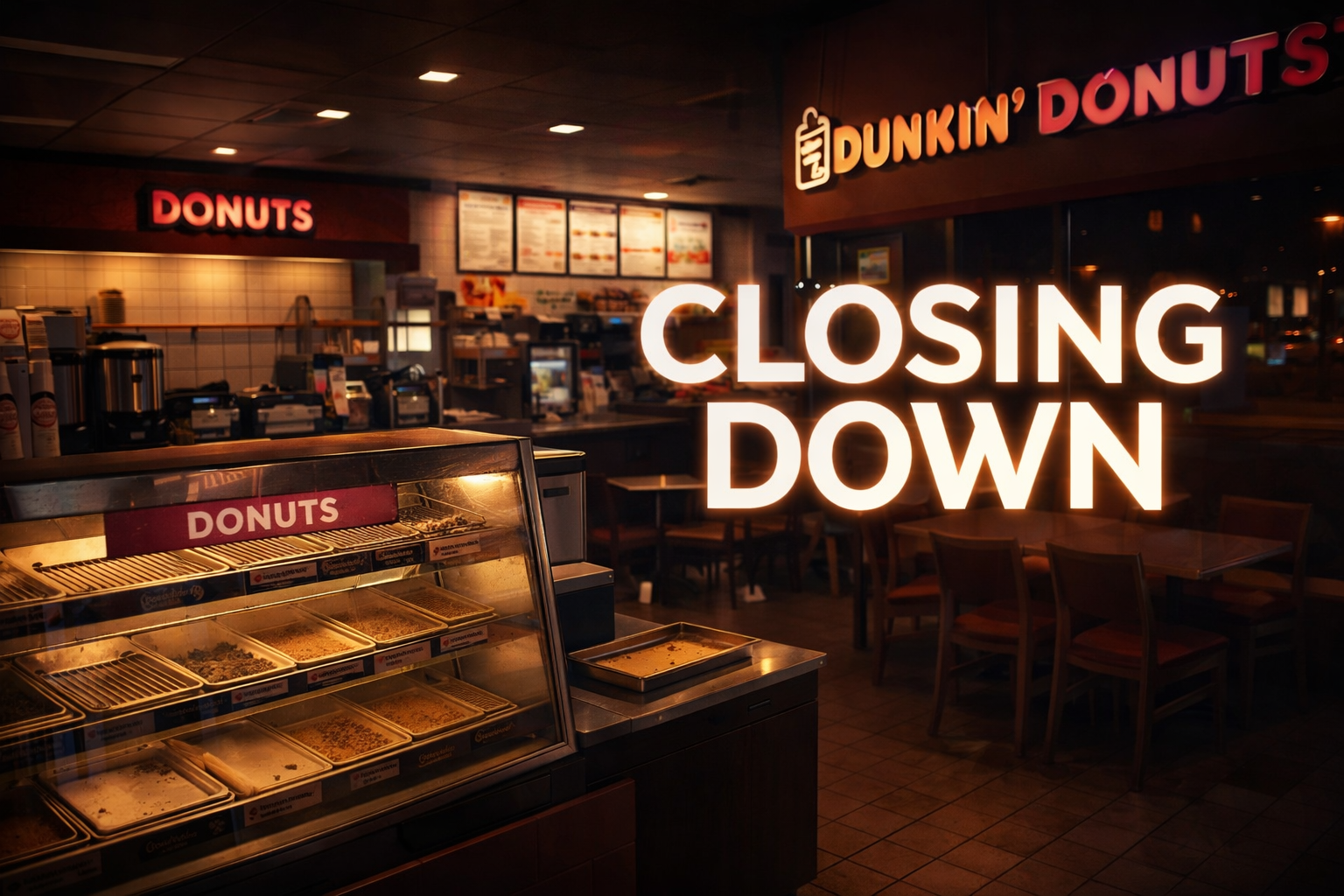

After more than a decade of attempting to establish itself in one of the world’s fastest-growing consumer markets, Dunkin’ is preparing to exit India—a move that reflects deeper structural and strategic challenges rather than just financial underperformance. Its franchise partner, Jubilant FoodWorks, has confirmed that it will not renew the agreement beyond December 31, 2026, leading to a gradual shutdown of outlets across the country.
- The Numbers Tell a Declining Story
- The Core Problem: A Concept That Didn’t Translate
- Coffee vs Chai: A Fundamental Market Misread
- Competition Beyond Coffee: The Mithai Factor
- The Pivot Problem: Losing Brand Identity
- The Role of Strategy and Marketing Execution
- A Pattern Seen Across Global Brands
- Key Lessons for Brands Entering India
- FAQs
- Conclusion
While the numbers tell part of the story—declining store count, limited revenue, and consistent losses—the real reasons behind Dunkin’s failure lie in its inability to align with Indian consumer behavior, cultural preferences, and market dynamics.
The Numbers Tell a Declining Story
From its peak of over 70 outlets in 2016 to just 27 remaining by the end of 2025, Dunkin’s footprint in India has steadily shrunk over the years. In FY25, the brand generated only Rs 37 crore in revenue while posting a loss of Rs 19.1 crore, highlighting a business model that struggled to achieve scale or profitability.
However, financial performance is often a symptom rather than the root cause. In Dunkin’s case, the numbers reflect a deeper disconnect between the brand’s core proposition and the realities of the Indian market.
The Core Problem: A Concept That Didn’t Translate
Dunkin’ was built on a distinctly American consumption habit—quick, on-the-go breakfasts centered around coffee and donuts. This model thrives in markets where consumers prioritize speed and convenience during morning routines.
In India, however, breakfast is not just a functional activity; it is often a cultural ritual. Whether it is parathas in North India or idlis and dosas in the South, breakfast tends to be savory, filling, and often consumed in a more relaxed, sit-down format. A sugary donut simply does not fit naturally into this context, making Dunkin’s core offering inherently misaligned with local preferences.
Coffee vs Chai: A Fundamental Market Misread
Another critical factor in Dunkin’s struggles was its positioning as a coffee-first brand in a market that remains deeply rooted in tea consumption. While urban coffee culture has grown over the years, chai continues to dominate across demographics, particularly in everyday consumption.
By leading with coffee, Dunkin’ positioned itself in a relatively niche segment, limiting its ability to scale. Compounding this challenge was competition from established café chains that had already built strong brand equity in India’s urban centers.



Competition Beyond Coffee: The Mithai Factor
Even when viewed as a dessert or snack option, Dunkin’ faced intense competition from local alternatives. India’s mithai shops, with their deep cultural roots and wide variety of offerings, have long dominated the sweet consumption space.
Unlike donuts, which are still perceived as a Western indulgence, traditional Indian sweets come with familiarity, emotional connection, and often better value perception. This made it difficult for Dunkin’ to carve out a distinct position in the dessert category.
The Pivot Problem: Losing Brand Identity
Recognizing these challenges, Dunkin’ attempted to adapt by expanding its menu to include burgers, wraps, vegetarian options, and even festive offerings like Diwali-themed donuts. While these changes were well-intentioned, they led to an unintended consequence—the dilution of brand identity.
Instead of becoming more relevant, the brand became harder to define. It was no longer clearly a donut chain, nor a café, nor a fast-food outlet. This lack of clarity made it difficult for consumers to understand what Dunkin’ stood for, ultimately weakening its positioning in an already crowded market.
The Role of Strategy and Marketing Execution
In today’s competitive environment, success is not just about product-market fit but also about how effectively brands use data, personalization, and digital engagement to connect with consumers. Many successful brands rely on CRM and marketing automation platforms to refine targeting, improve customer retention, and optimize campaigns across channels.
At the same time, digital storytelling and consistent brand communication play a crucial role in shaping perception. Brands that effectively use AI-powered tools for social media marketing are often better positioned to build awareness and engagement, particularly among younger audiences.
Dunkin’s challenge was not just operational—it was also about failing to create a strong, consistent narrative that resonated with Indian consumers.
A Pattern Seen Across Global Brands
Dunkin’ is not alone in facing these challenges. Several global brands, including Ford, Harley-Davidson, and Chevrolet, have exited India over the past decade after struggling to achieve sustainable growth.
While each case has its own nuances, a common theme emerges—the importance of deep market understanding and the ability to adapt without losing core identity. Entering India requires more than brand recognition; it demands cultural alignment, localized strategy, and long-term commitment.
Key Lessons for Brands Entering India
Dunkin’s journey offers valuable insights for global companies looking to enter or expand in India. One of the most important lessons is the need to build products and experiences that align with local habits rather than trying to replicate global models.
Equally important is maintaining a clear and consistent brand identity, even while adapting to local preferences. Striking this balance is often the difference between success and failure in a complex and diverse market like India.
FAQs
Why is Dunkin’ leaving India?
Due to declining performance, cultural mismatch, and inability to establish a strong market position.
What was Dunkin’s biggest mistake?
Failing to align its core offering with Indian consumer habits and preferences.
Could Dunkin return to India?
Possibly, if a new franchise partner adopts a more localized and focused strategy.
Conclusion
Dunkin’s exit from India is not just the story of a brand that failed—it is a case study in the importance of cultural understanding, strategic clarity, and market adaptation. In a country as diverse and dynamic as India, success requires more than global reputation; it demands relevance at a local level.
For marketers and businesses alike, Dunkin’s journey serves as a powerful reminder that even the strongest global brands can struggle if they fail to connect with the realities of the market they are trying to serve.