





In a landscape flooded with promotional noise, only a handful of campaigns manage to rise above clutter and truly capture public attention. Nescafe India’s print campaign—designed to discourage drunk driving while subtly reinforcing its premium coffee positioning—is one such rare example where creativity, timing, and strategic intent converge seamlessly.
- The Creative Concept: Where Art Meets Messaging
- Strategic Thinking Behind the Campaign
- The Role of Public Service Advertising in Brand Building
- Marketing Impact: Why This Campaign Works
- Execution by McCann WorldGroup India
- Nescafe Gold: Product Positioning Through Storytelling
- Broader Lessons for Marketers
- FAQs
- Conclusion
At first glance, the advertisement appears like a public service announcement, urging people not to drink and drive. However, as the visual narrative unfolds, it reveals a deeper brand play—one that positions coffee not just as a beverage, but as a smarter, more conscious alternative tied to lifestyle choices.
The Creative Concept: Where Art Meets Messaging
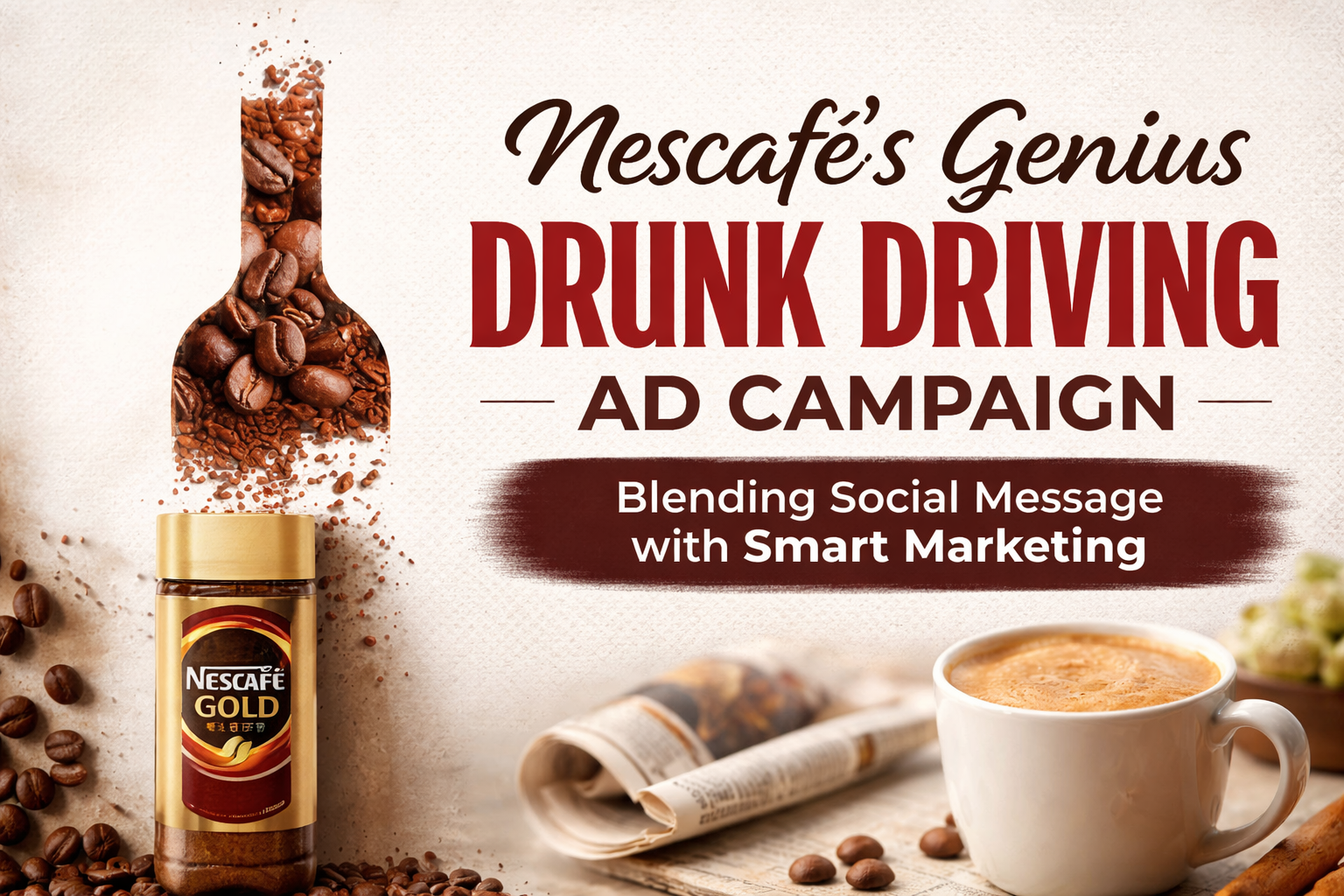
The brilliance of this campaign lies in its visual storytelling. The ad features a wine bottle silhouette, but instead of liquid, it is filled with coffee beans—creating a striking contrast that immediately grabs attention. The typography reinforces the message: “Don’t drink and drive, drink something special.”
This dual-layered messaging is what makes the campaign particularly powerful. On one level, it communicates a socially responsible message aligned with public safety. On another, it cleverly positions Nescafe Gold as the “something special,” embedding the product within the narrative without appearing overtly promotional.
Such creative execution highlights how modern advertising is shifting toward meaning-driven storytelling, where the audience is engaged emotionally before being sold to.
Strategic Thinking Behind the Campaign
What makes this campaign stand out is not just the visual execution but the strategic thinking behind it. By aligning with a universally relevant issue like drunk driving, Nescafe taps into an existing emotional trigger that resonates across demographics.
At the same time, the campaign leverages a moment of behavioral relevance—New Year celebrations—when instances of alcohol consumption are typically higher. This contextual timing ensures that the message is not only seen but also internalized by the audience.
Today, such campaigns are often amplified through structured marketing systems, where brands rely on CRM and marketing automation platforms to track engagement, audience response, and campaign effectiveness across multiple channels.


The Role of Public Service Advertising in Brand Building
Traditionally, public service messages and brand advertising have been treated as separate domains. However, campaigns like this demonstrate how the two can coexist effectively when executed with authenticity and subtlety.
By embedding a social message within a brand narrative, Nescafe not only enhances its image but also builds a deeper connection with consumers. This approach aligns with the growing expectation that brands should stand for something beyond just selling products.
In the long run, such campaigns contribute to stronger brand recall and trust, as consumers are more likely to associate the brand with meaningful actions rather than just commercial intent.
Marketing Impact: Why This Campaign Works
The campaign’s success can be attributed to several key factors, each contributing to its overall effectiveness in a highly competitive advertising environment.
Firstly, the simplicity of the idea makes it instantly understandable, while the visual execution ensures that it remains memorable. Secondly, the dual messaging creates a sense of discovery, encouraging viewers to engage more deeply with the ad.
Additionally, the campaign benefits from social media amplification, where visually striking content tends to perform better. Brands today increasingly rely on AI-powered tools for social media marketing to distribute such content strategically and maximize reach.
Execution by McCann WorldGroup India
The campaign was conceptualized and executed by McCann WorldGroup India, a creative agency known for delivering impactful and culturally relevant campaigns. Their ability to blend artistic elements with strategic messaging is clearly evident in this work.
The use of minimalistic design combined with a bold visual metaphor demonstrates a deep understanding of how modern audiences consume content—quickly, visually, and emotionally.
Nescafe Gold: Product Positioning Through Storytelling
While the campaign primarily functions as a social message, it subtly reinforces the premium positioning of Nescafe Gold. By associating the product with the idea of “something special,” the brand elevates itself beyond everyday coffee consumption.
This form of indirect positioning is particularly effective in premium segments, where consumers are not just buying a product but an experience, identity, and lifestyle.
Broader Lessons for Marketers
This campaign offers several important insights for brands looking to create impactful marketing strategies.
One of the most significant takeaways is the importance of blending relevance with creativity. A strong idea alone is not enough—it must be executed in a way that aligns with cultural context and consumer behavior.
Furthermore, the campaign demonstrates how subtle branding can often be more effective than aggressive promotion, especially in an era where consumers are increasingly resistant to overt advertising.
FAQs
What is the message of the Nescafe ad campaign?
The campaign promotes a dual message—discouraging drunk driving while positioning coffee as a smarter alternative.
Who created the campaign?
The ad was created by McCann WorldGroup India.
Why is the campaign considered effective?
It combines social messaging with brand promotion in a creative and visually engaging way.
Conclusion
Nescafe India’s drunk driving campaign stands as a compelling example of how brands can move beyond traditional advertising to create meaningful, culturally relevant narratives. By blending social responsibility with subtle product positioning, the campaign not only captures attention but also builds lasting brand equity.
In an era where consumers value authenticity and purpose, such campaigns are not just effective—they are essential for long-term brand success.