





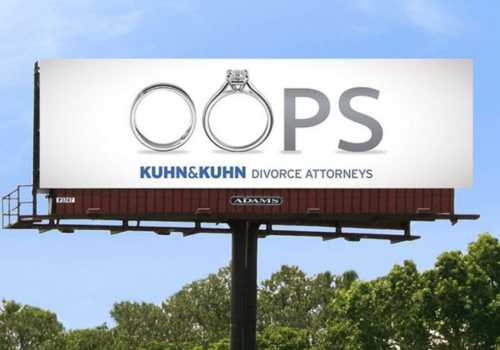

At first glance, it almost shouldn’t work.
It’s too simple. Too bold. And maybe slightly shocking. But the truth is, it works better than almost any other law firm billboard you’ll see. While other lawyer ads fade into the background, this divorce lawyer billboard grabs attention. Drivers notice it, people talk about it, and some even take photos to share online.
So what makes a seemingly basic ad outperform polished, expensive campaigns? The answer lies in marketing psychology, emotional triggers, and smart design choices. By understanding why it works, marketers and law firms can learn important lessons about advertising, memorability, and audience connection.
The Problem With Traditional Lawyer Billboards
Walk through any city, and you’ll see the pattern. Most divorce attorney billboards follow the same formula: a serious headshot of the lawyer, a dark blue or gray background, a long list of credentials, and a slogan such as “Aggressive Representation” or “Over 25 Years of Experience.”
The problem isn’t professionalism—it’s predictability. When every billboard looks the same, the brain begins to ignore them. Drivers spend only a few seconds glancing at a billboard. If the message is boring or overloaded with information, it becomes background noise.
In a competitive legal market, blending in is the worst thing you can do. Being safe often means being invisible. Traditional legal billboard advertising fails because it doesn’t capture attention, and without attention, even the most qualified lawyers can’t generate client leads.
What Makes This Billboard Stand Out
This divorce lawyer billboard works because it breaks the pattern in several key ways.
First, it is simple. The wording is short, readable, and designed to be understood in just a few seconds. Second, it is bold. Whether through strong colors, typography, or clever phrasing, it grabs attention immediately.



Most importantly, it creates an emotional connection. Instead of listing credentials or achievements, it speaks directly to someone going through a divorce. The ad may use humor, honesty, or even slight controversy to make an impression, and it includes a clear call to action so viewers know exactly what to do next.
Unlike traditional ads that try to say everything at once, this billboard focuses on one core message. That clarity makes it easier to remember and act on, which is essential for high-converting advertising.
The Psychology Behind Its Effectiveness
Marketing psychology explains why this billboard performs better than it “should.”
Pattern interruption is one factor. Drivers see countless lawyer billboards daily. Most of them are ignored because they follow the same predictable format. When an ad breaks that expectation, the brain pays attention.
Emotional triggers are another reason. Divorce is stressful, personal, and often emotional. Ads that speak to frustration, pain, or even a touch of humor resonate with the audience and are more memorable.
Cognitive ease also plays a role. Short, clear messages are processed quickly by the brain, creating a sense of trust and reliability. People are more likely to remember and respond to ads that are easy to understand.
Finally, memorability comes from boldness and surprise. A slightly unexpected or clever message stands out, increasing the chance that someone will remember the lawyer’s name or contact information when they need help.
These principles show that marketing is not just about aesthetics; it’s about human behavior and attention.
Lessons for Marketers and Lawyers
This billboard strategy provides several key lessons for law firms and marketers:
- Clarity over complexity: Focusing on one core idea is more effective than listing multiple services or achievements.
- Speak human, not corporate: Conversational language feels authentic and relatable.
- Emotion wins: Humor, honesty, and empathy grab attention and make ads memorable.
- Boldness matters: Safe ads are often ignored; bold messaging stands out.
- Offline advertising still works: Billboards provide local visibility and trust that digital ads alone cannot create.
By applying these principles, law firms can significantly improve client acquisition and engagement through outdoor advertising.
Common Mistakes Lawyers Make With Billboards
Many law firms fail with billboard campaigns because they overload the message, use formal jargon, or try to impress everyone rather than connect with the target audience.
Some firms ignore the importance of local visibility or avoid taking risks, producing ads that are safe but forgettable. These mistakes reduce effectiveness and ROI. The most successful billboards avoid clutter, speak to real emotions, and focus on a single, memorable idea.
Case Study: Breaking Down Why It Works
Even without naming the lawyer or location, we can analyze why this billboard succeeds:
- Headline: Short, bold, and easy to read in seconds.
- Visuals: Minimal but striking, with strong contrast to draw attention.
- Emotional hook: Connects to the stress or humor of the divorce process.
- Call to action: Clear and visible, prompting immediate response.
- Memorability: Slightly unexpected phrasing ensures people remember it and talk about it online.
This combination creates a high-converting billboard that outperforms traditional law firm advertising campaigns.
The Future of Legal Billboard Advertising
Some marketers assume billboards are outdated in the digital era. That’s not true. Physical visibility still builds local authority, trust, and brand recognition.
When combined with online marketing, a billboard can reinforce brand awareness. Drivers see the ad daily, and online search or website visits often increase after repeated exposure. Billboards remain a powerful tool for family law marketing, especially in competitive local markets.
Final Takeaways
This divorce lawyer billboard works because it is simple, human, bold, and memorable. It focuses on one core message, connects emotionally with the audience, and respects attention spans.
The ultimate lesson for law firms and marketers is clear: effective advertising is not about showing off credentials—it’s about connecting with people. When marketers understand psychology, attention, and human behavior, even the simplest billboard can outperform expensive campaigns.
FAQ
Do divorce lawyer billboards actually work?
Yes. When designed with clarity, emotional connection, and bold messaging, they can drive awareness and client engagement.
What makes a legal billboard memorable?
Simplicity, emotional resonance, and slightly unexpected or clever messaging create memorability.
Can humor be used in lawyer advertising?
Absolutely. Carefully applied humor makes ads relatable and shareable while maintaining professionalism.
How can law firms improve their billboard campaigns?
Focus on a single core message, connect emotionally, design for readability, and test local audience response.
Are billboards still relevant in the digital age?
Yes. Physical visibility builds trust, authority, and brand recognition that digital ads alone cannot achieve.