





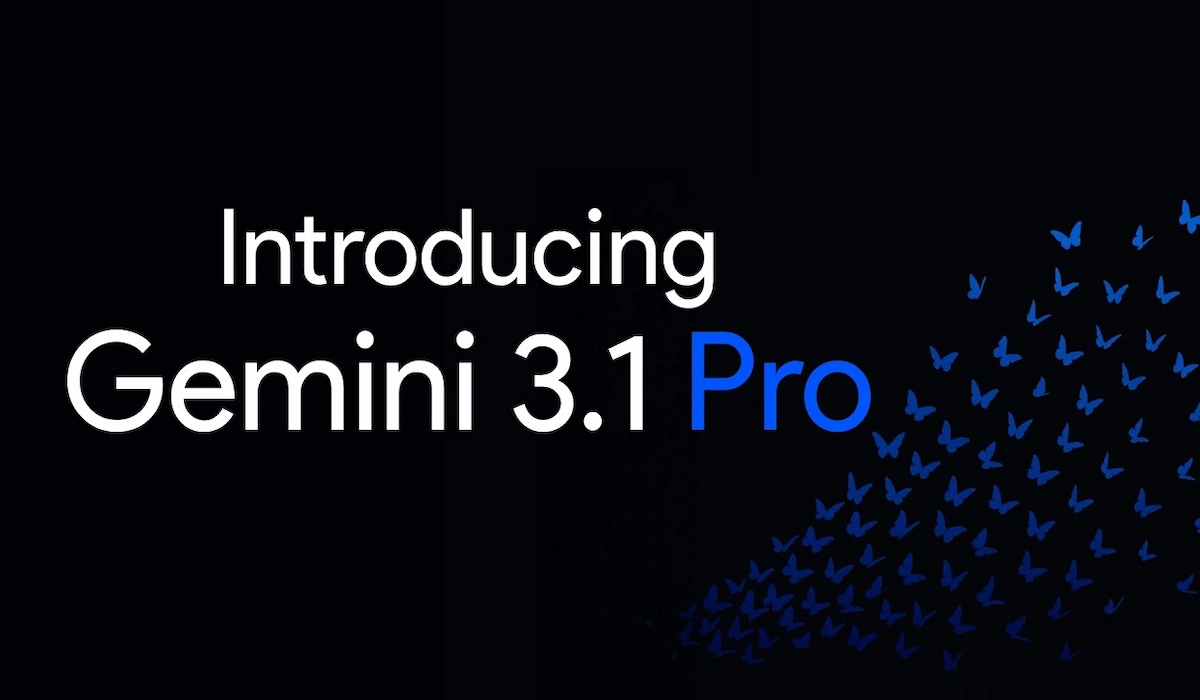

Artificial intelligence is rapidly evolving from simple question-answer systems to advanced reasoning engines capable of solving complex problems. With the launch of Gemini 3.1 Pro, Google is signaling a major shift in the AI landscape. Instead of focusing only on faster responses or larger datasets, this new model emphasizes higher-order reasoning, multi-step problem solving, and deeper analytical capabilities.
The release marks a significant milestone in the development of large language models, positioning Gemini 3.1 Pro as one of the most powerful AI systems designed for developers, businesses, and knowledge workers who require more than basic automation.
The Evolution of AI Toward Reasoning Systems
Early AI tools were mainly designed to generate text, answer questions, or automate repetitive tasks. While these systems were useful, they often struggled with complex reasoning, logical planning, or multi-step workflows.
Gemini 3.1 Pro represents a new generation of reasoning-focused AI models. Rather than simply predicting the next word in a sentence, the model can evaluate multiple possibilities, analyze structured information, and produce more accurate conclusions.
This shift reflects a broader trend in the development of artificial intelligence: AI systems are moving from reactive tools to cognitive assistants capable of deeper analysis and decision support.
What Is Gemini 3.1 Pro?
Gemini 3.1 Pro is Google’s latest multimodal reasoning model, designed to process and understand text, images, code, audio, and video simultaneously. It builds upon the Gemini 3 architecture but introduces significant improvements in reasoning performance, efficiency, and real-world usability.
One of the most impressive features is its massive context window of up to 1 million tokens, allowing the model to analyze large datasets, full code repositories, or lengthy research documents in a single prompt.
This capability enables AI to function as a powerful research assistant, connecting ideas across long documents and complex data sources.
Breakthrough Performance in Reasoning Benchmarks
The biggest advancement in Gemini 3.1 Pro is its reasoning ability. In the ARC-AGI-2 benchmark, which measures abstract reasoning skills, the model achieved a score of 77.1%, more than doubling the previous Gemini 3 Pro model’s performance.
This benchmark focuses on tasks that require:
- Pattern recognition
- Logical deduction
- Multi-step reasoning
- Problem-solving without memorized answers
Such results suggest that Gemini 3.1 Pro is significantly better at solving complex problems compared with earlier AI systems.
The model also performed strongly on advanced benchmarks such as GPQA Diamond, SWE-Bench Verified, and BrowseComp, which evaluate scientific reasoning, coding skills, and research capabilities.
Dynamic Thinking and Multi-Step Problem Solving
A key innovation in Gemini 3.1 Pro is its dynamic reasoning system. The model can adjust its depth of thinking depending on the complexity of a task.
Developers can control this through a parameter called “thinking level,” which allows the AI to switch between fast responses and deeper reasoning.
This flexibility is important for practical applications because:
- Simple queries can be answered quickly
- Complex analytical tasks receive deeper reasoning
- AI performance becomes more efficient and adaptive
This approach helps balance speed, cost, and intelligence in AI workflows.
Advanced Multimodal Capabilities
Gemini 3.1 Pro is not limited to text generation. It is a native multimodal model, meaning it can interpret and integrate multiple data types.
For example, the model can:
- Analyze images and videos
- Write and debug code
- Generate data visualizations
- Create interactive graphics or simulations
- Process large documents and datasets
One interesting capability is its ability to generate animated SVG graphics directly from text prompts, allowing developers to create lightweight visual content without traditional design tools.
These features make Gemini 3.1 Pro highly useful for software development, research, education, and creative production.
Applications for Developers and Businesses
The improved reasoning capabilities open the door to a wide range of real-world applications.
Software Development
Gemini 3.1 Pro can analyze codebases, debug programs, and generate complex software logic. This makes it a valuable tool for developers building applications or managing large code repositories.
Data Analysis
Businesses can use the model to process large datasets, generate insights, and identify patterns across documents or spreadsheets.
Research and Knowledge Work
Researchers and analysts can leverage the long context window to review entire reports, academic papers, or policy documents in a single query.
AI Agents and Automation
The model’s stronger reasoning abilities make it suitable for agent-based workflows, where AI autonomously performs multi-step tasks such as research, planning, or system monitoring.
Integration Across the Google AI Ecosystem
Google has integrated Gemini 3.1 Pro across multiple platforms to support developers and enterprise users.
The model is available through:
- Google AI Studio
- Vertex AI
- Gemini CLI
- Android Studio
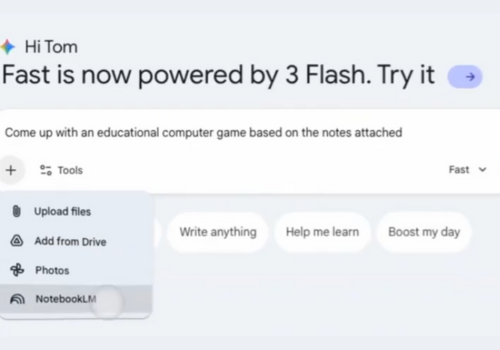
- Gemini App and NotebookLM
This ecosystem approach allows organizations to integrate advanced AI reasoning into their products and workflows more easily.
The Future of AI: From Generation to Intelligence
The introduction of Gemini 3.1 Pro reflects a broader transformation in artificial intelligence. Instead of focusing only on content generation, modern AI systems are evolving toward structured reasoning and decision-making.
Higher-order reasoning models like Gemini 3.1 Pro are expected to play a critical role in:
- scientific discovery
- engineering design
- financial analysis
- medical research
- complex enterprise automation
As these systems continue to improve, they may eventually function as collaborative thinking partners, helping humans solve problems that require deep analysis and creativity.
Conclusion
The launch of Gemini 3.1 Pro marks an important step forward in the evolution of artificial intelligence. By prioritizing reasoning, multi-step thinking, and multimodal intelligence, Google is redefining what AI systems can accomplish.
With its powerful context window, benchmark-leading reasoning performance, and flexible thinking capabilities, Gemini 3.1 Pro represents a major shift toward AI that not only generates content but truly understands and analyzes complex problems.
As AI research continues to advance, reasoning-focused models like Gemini 3.1 Pro may shape the next generation of intelligent systems, transforming how individuals and organizations work with technology.