





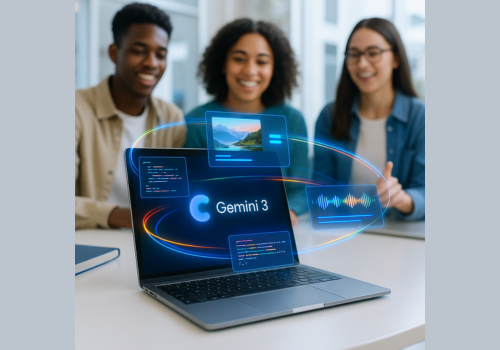

The launch of Google’s Gemini 3 is not just another model upgrade in the rapidly evolving AI race. It’s a strategic repositioning of how the company wants people—especially students and early-career users—to experience AI in their daily lives.
- Multimodal AI Moves From Feature to Foundation
- Why Students Sit at the Center of Google’s Strategy
- From Answer Engine to Academic Infrastructure
- Visual Creation as a Strategic Differentiator
- Why This Matters in the Broader AI Landscape
- A Subtle but Powerful Lock-In Strategy
- What This Signals About Google’s AI Direction
- Final Thought
Rather than competing purely on who has the smartest chatbot, Google is using Gemini 3 to push AI deeper into learning, productivity, and creation workflows. By pairing major multimodal upgrades with a free year of Gemini Pro for eligible students, Google is making a long-term play: turning Gemini into an everyday companion rather than a tool people occasionally consult.
This isn’t about winning today’s benchmarks. It’s about shaping habits for the next decade.
Multimodal AI Moves From Feature to Foundation
One of the most noticeable shifts in Gemini 3 is how it presents information.
Instead of long, text-heavy responses, Gemini increasingly delivers:
- Visual diagrams
- Structured panels
- Step-by-step breakdowns
- Summaries paired with visual context
This matters because it mirrors how people actually process information. Learning is rarely linear. It’s visual, layered, and iterative. Gemini 3 treats multimodality not as a novelty, but as the default interface.
In doing so, Google is quietly redefining what “AI answers” look like. The goal isn’t just to respond—it’s to explain in the most cognitively efficient way possible.
Why Students Sit at the Center of Google’s Strategy
The decision to offer Gemini Pro free to students isn’t a marketing freebie—it’s a distribution strategy.

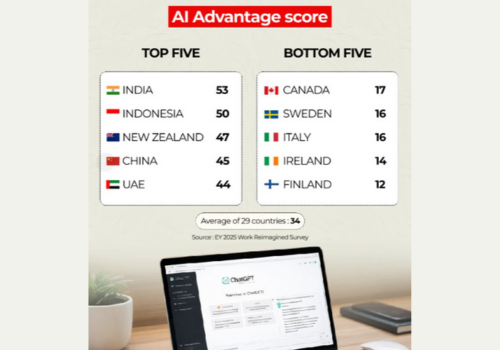

Students already rely heavily on AI for:
- Studying and revision
- Research and summarisation
- Writing and editing
- Understanding complex concepts visually
By embedding Gemini into these workflows early, Google increases the chance that:
- Gemini becomes the first AI tool students learn
- It becomes the default system they trust
- That trust carries into professional life
This mirrors how earlier generations became locked into ecosystems like Google Search, Docs, or Gmail. Habits formed during education tend to persist.
From Answer Engine to Academic Infrastructure
What truly separates Gemini 3 from earlier iterations is its ambition to reduce friction across the entire academic workflow.
Features like:
- Deep Research
- Personalised exam preparation
- Advanced writing and rewriting tools
suggest that Gemini isn’t just there to answer questions. It’s designed to own the full lifecycle of learning.
Instead of switching between:
- Search engines
- PDFs
- Note-taking apps
- Writing tools
Gemini aims to act as a single interface that:
- Ingests raw material
- Organises information
- Explains concepts
- Helps turn ideas into finished work
At that point, AI stops being a helper and becomes infrastructure.
Visual Creation as a Strategic Differentiator
Another critical dimension of Gemini 3 is visual creation.
With pro-level image generation and visual tools included, Google is moving into territory once dominated by specialised design software. Students can now:
- Turn notes into diagrams
- Create infographics
- Build visual explanations
- Assemble presentations
—all without needing advanced design skills.
This is especially important because visual communication is no longer optional. In education and work alike, the ability to show understanding is often as important as explaining it.
By lowering the barrier to visual thinking, Gemini 3 positions itself as a tool for expression, not just comprehension.
Why This Matters in the Broader AI Landscape
Most AI competition today focuses on conversational quality—who sounds more human, more creative, more insightful. Google’s approach with Gemini 3 suggests a different priority.
The emphasis is on:
- Workflow integration
- Multimodal fluency
- Long-term habit formation
Education is the ideal entry point for this strategy because it combines:
- High daily usage
- Repetitive workflows
- Long retention cycles
If Gemini becomes indispensable during exams, projects, and study sessions, it’s far more likely to remain indispensable in professional life.
A Subtle but Powerful Lock-In Strategy
What makes this approach particularly effective is that it doesn’t feel restrictive.
There’s no forced exclusivity, no aggressive replacement of existing tools. Instead, Gemini quietly makes itself useful enough to rely on. Over time, reliance turns into preference.
That’s a far stronger form of lock-in than contracts or platform limitations.
What This Signals About Google’s AI Direction
Gemini 3 makes one thing clear: Google isn’t just building smarter AI—it’s building habit-forming systems.
Rather than chasing novelty, the company is focusing on:
- Daily usefulness
- Cognitive alignment
- Seamless integration into real work
If successful, Gemini won’t just be another AI option. It will become the default mental workspace for a generation of users.
Final Thought
Gemini 3 isn’t simply an upgrade—it’s a bet on how people will think, learn, and create in an AI-first world.
By targeting students with powerful, free, multimodal tools, Google is playing a long game where adoption is driven by necessity, not hype. The true impact of Gemini 3 won’t be measured by feature lists or benchmarks—but by how naturally it becomes part of everyday thinking.
And once AI becomes habitual, switching becomes unlikely.